Olamide Ojegbenro
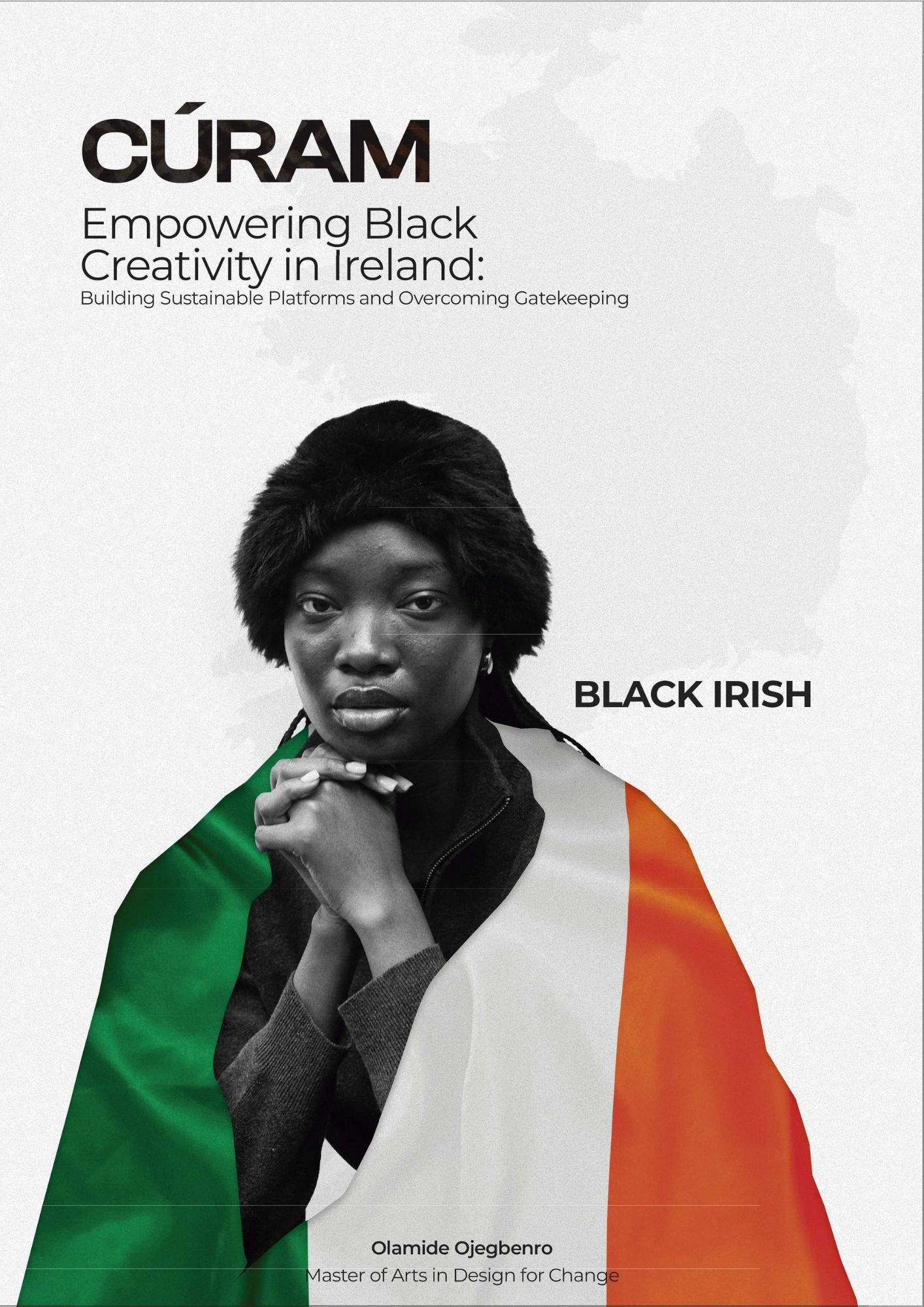
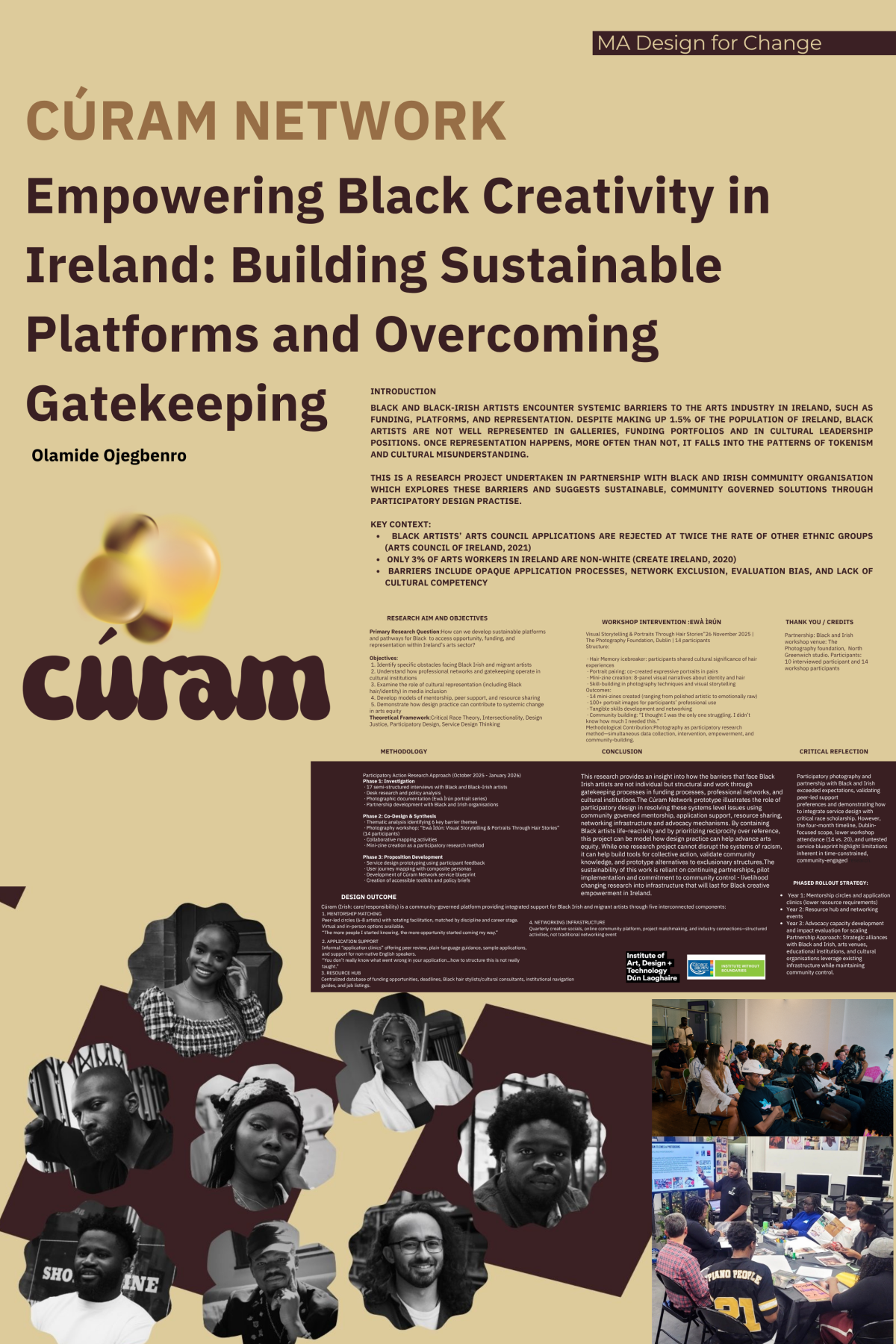
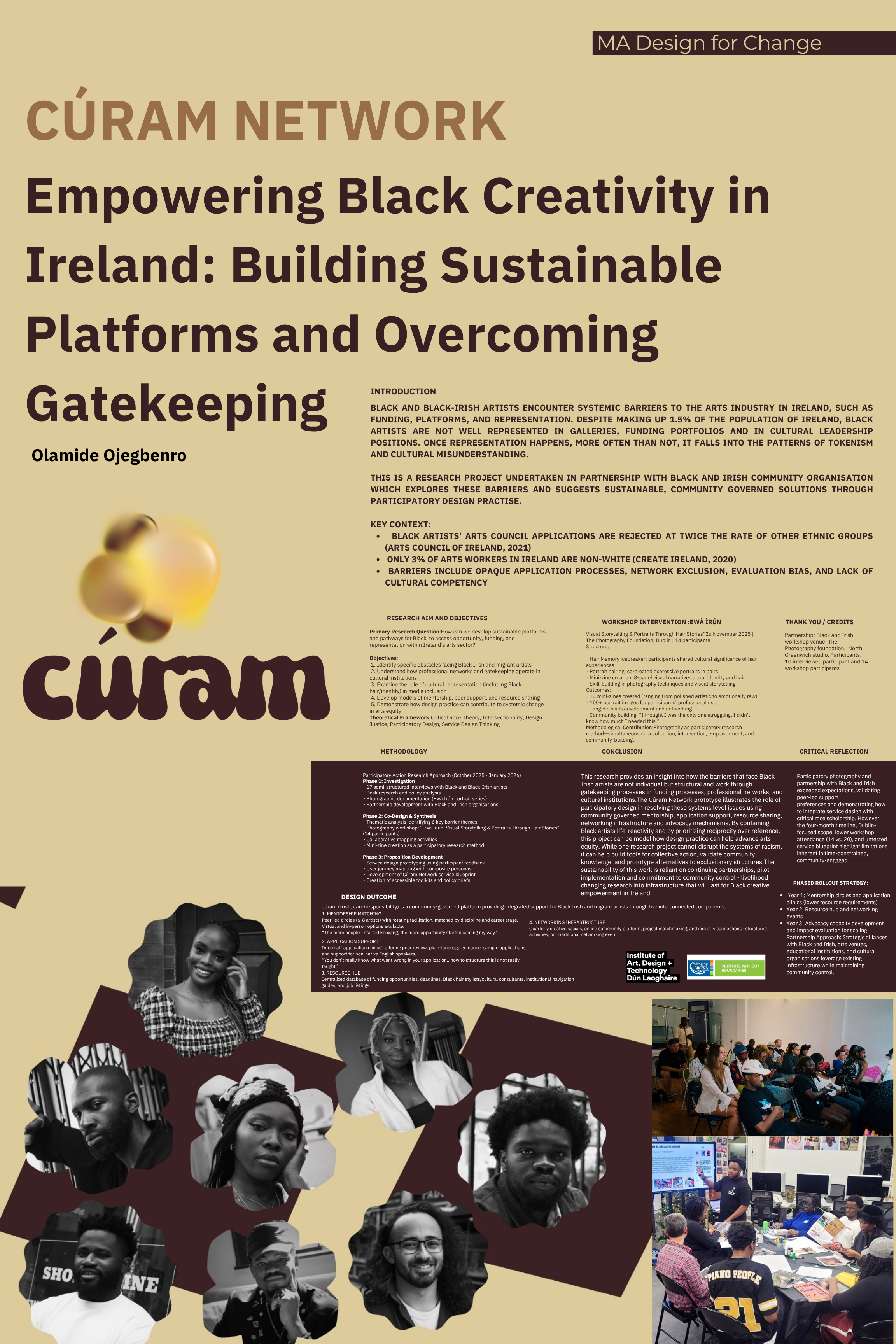
This research provides an insight into how the barriers that face Black Irish artists are not individual but structural and work through gatekeeping processes in funding processes, professional networks, and cultural institutions. The Cúram Network prototype illustrates the role of participatory design in resolving these systems level issues using community governed mentorship, application support, resource sharing, networking infrastructure and advocacy mechanisms. By containing Black artists life-reactivity and by prioritizing reciprocity over reference, this project can be model how design practice can help advance arts equity.
Objectives:
1. Identify specific obstacles facing Black Irish and migrant artists
2. Understand how professional networks and gatekeeping operate in cultural institutions
3. Examine the role of cultural representation (including Black hair/identity) in media inclusion
4. Develop models of mentorship, peer support, and resource sharing
5. Demonstrate how design practice can contribute to systemic change in arts equity
Theoretical Framework:Critical Race Theory, Intersectionality, Design Justice, Participatory Design, Service Design Thinking
Cúram (Irish: care/responsibility) is a community-governed platform providing integrated support for Black Irish and migrant artists through five interconnected components:
1. MENTORSHIP MATCHING
Peer-led circles (6-8 artists) with rotating facilitation, matched by discipline and career stage. Virtual and in-person options available.
“The more people I started knowing, the more opportunity started coming my way.”
2. APPLICATION SUPPORT
Informal “application clinics” offering peer review, plain-language guidance, sample applications, and support for non-native English speakers.
“You don’t really know what went wrong in your application…how to structure this is not really taught.”
3. RESOURCE HUB
Centralized database of funding opportunities, deadlines, Black hair stylists/cultural consultants, institutional navigation guides, and job listings.
4. NETWORKING INFRASTRUCTURE
Quarterly creative socials, online community platform, project matchmaking, and industry connections—structured activities, not traditional networking event
Olamide Ojegbenro is a multidisciplinary visual artist, portrait photographer, author, and award-winning film director from Killarney, County Kerry. He holds an MA in Design for Change and a BA in Arts Management. He is the author of Ewa Irun, exploring identity, culture, and representation. As founder of Killarney Young Filmmakers, he supports emerging creatives. His films include the award-winning Feeling Clean, the Irish-language Briseadh, and the documentary The Vintage, selected for Galway Junior Film Fleadh. His photography centres underrepresented faces, particularly BIPOC artists. He has collaborated with VSCO and international agencies, amplifying diverse voices through visual storytelling.