Philippine Haegelsteen
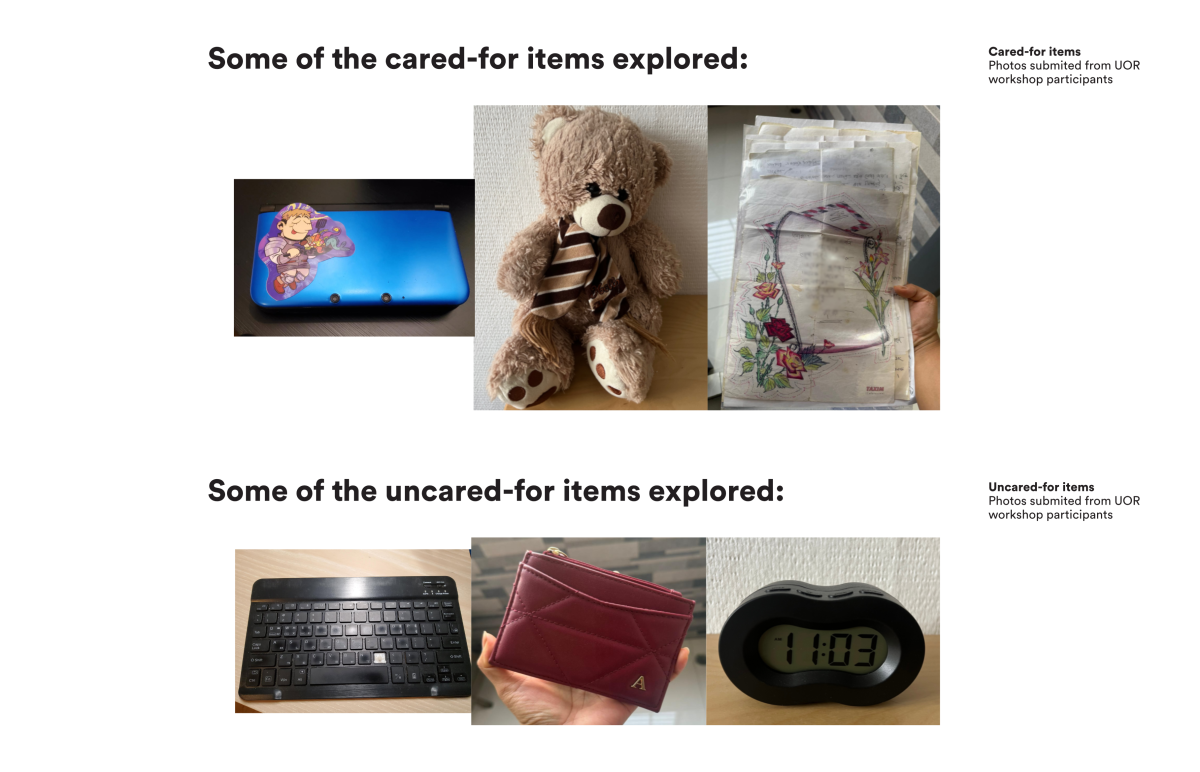
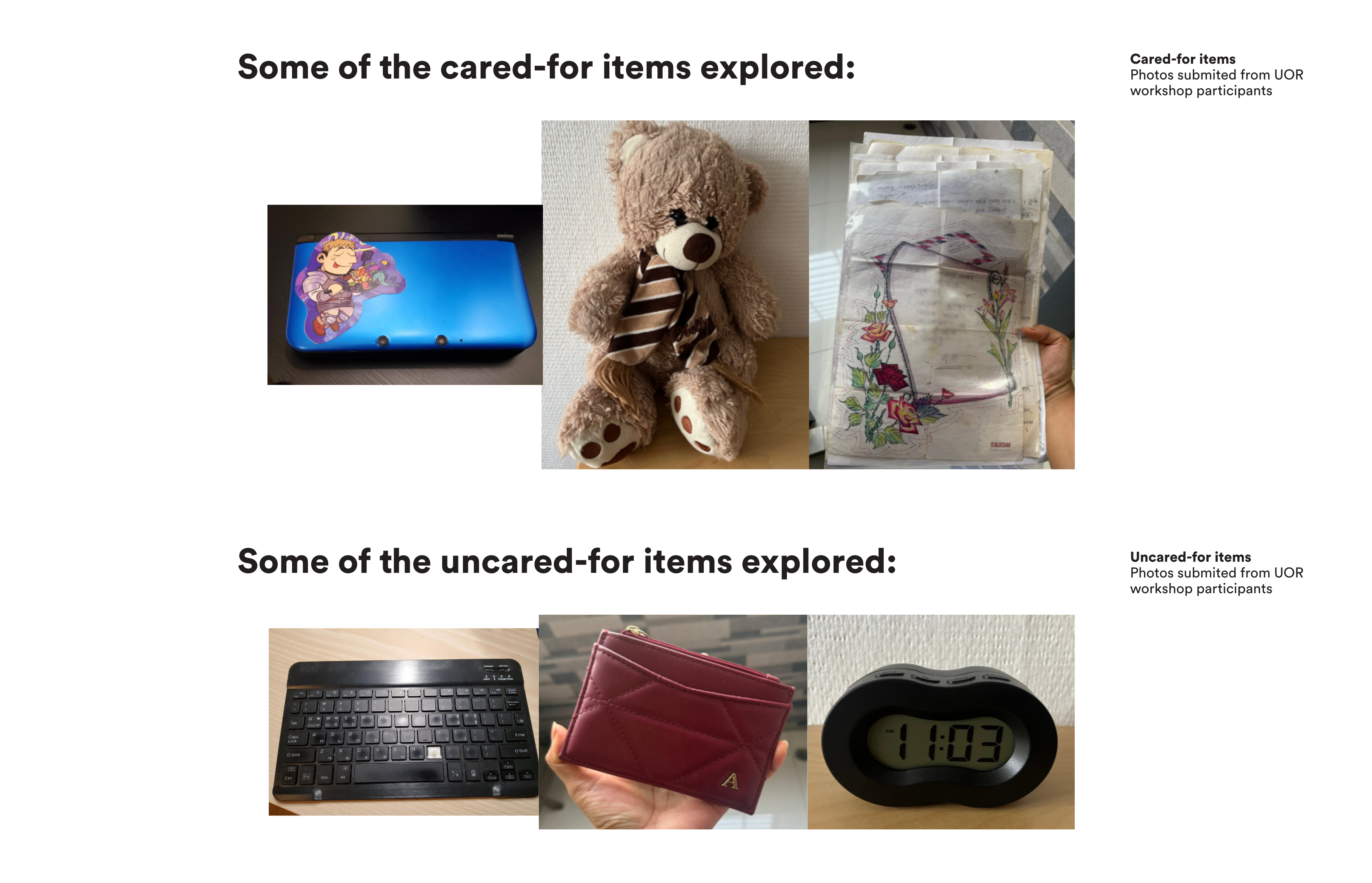
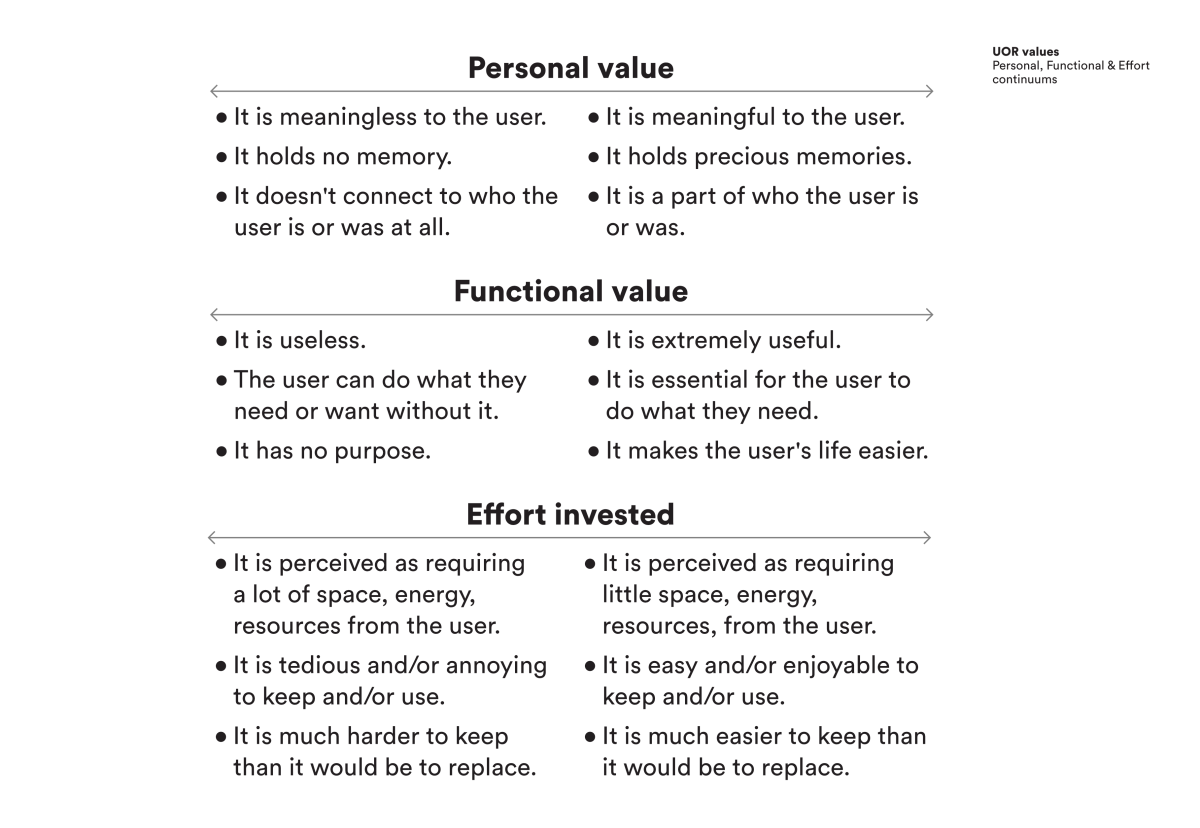
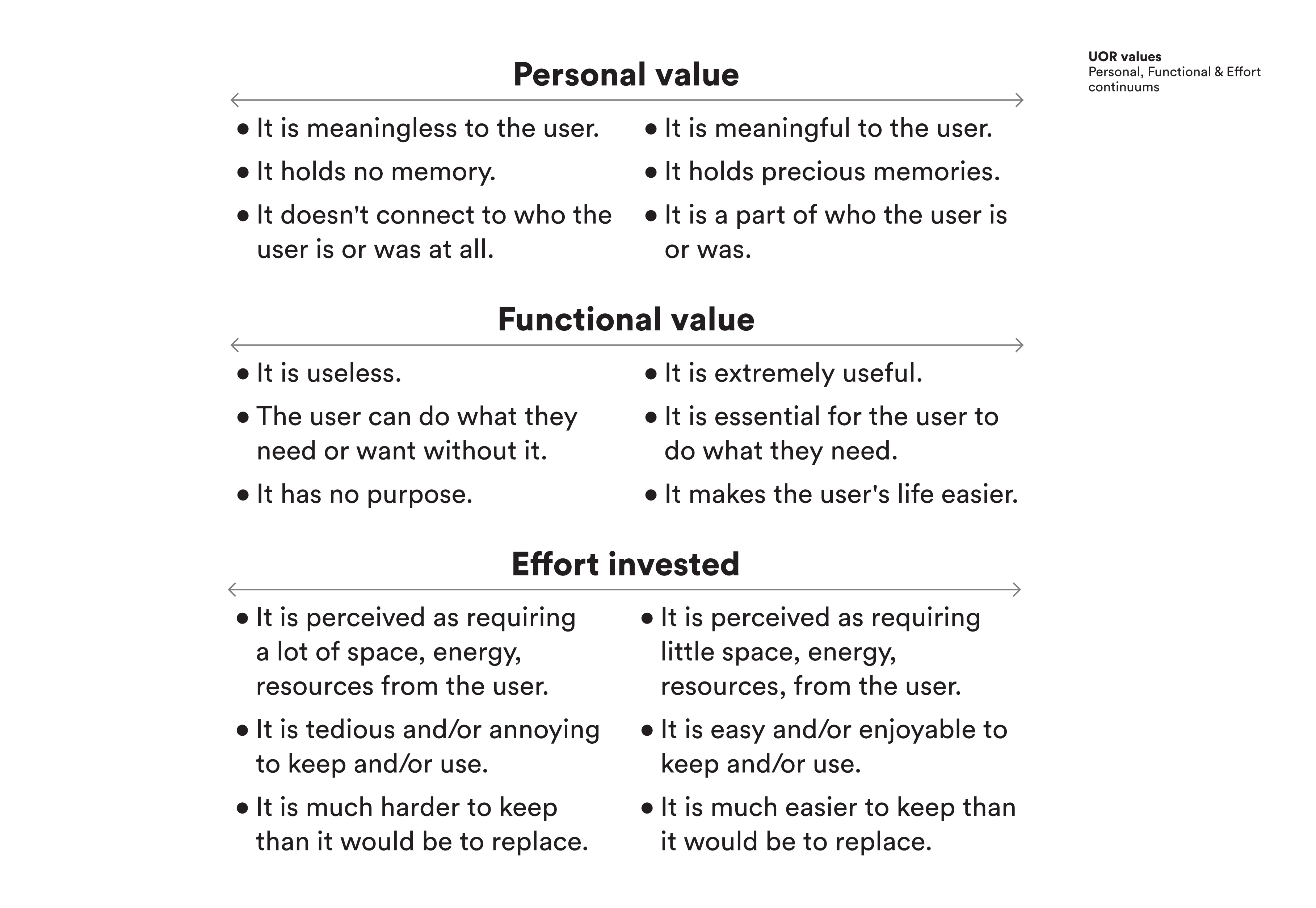
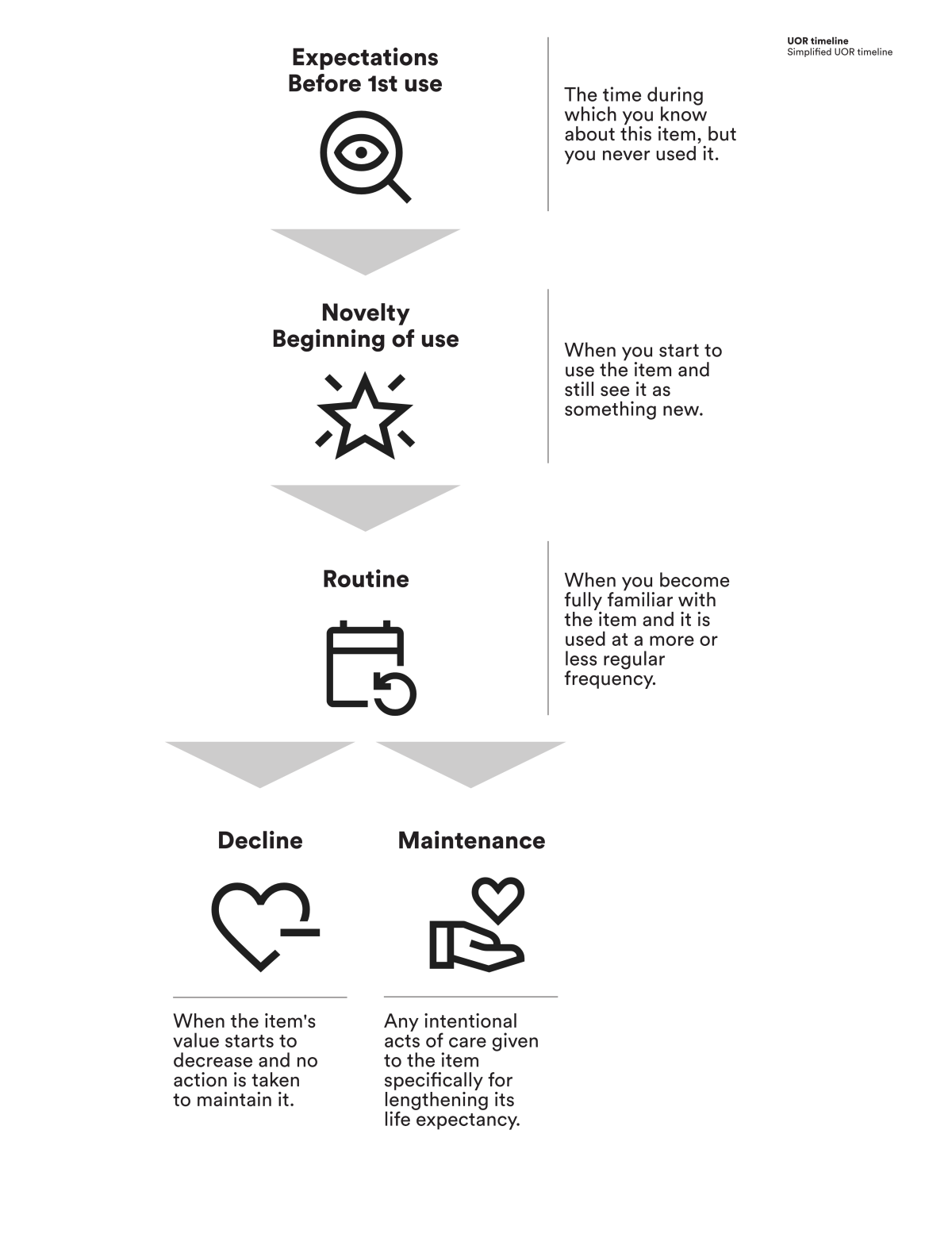
This project used various methods to investigate user-object relationships (UOR) ranging from scientific literature review to collaborative workshops. The literature reviews were used to create frameworks of analysis for UOR. One framework focused on how people assign value to their objects; through the object’s functional utility, personal relevance, and the effort required to maintain the UOR. The second framework is focused on the evolution of the UOR through time; how the object’s values shift and how the relationship may be maintained or end-up declining. These frameworks were used to investigate people's relationships with their objects, specifically focusing on their relationship with items that are cared-for vs un-cared-for.
This project aimed to critically analyse peoples’ personal relationships with objects, specifically, why and how we value them, what pushes us to use, maintain and discard them. By helping people to examine and reflect on their relationships with objects (their possessions), the aim is to encourage personal awareness of individual consumer behaviours and prompt a change toward a more sustainable approach to our relationships with objects.
Every day we interact with countless objects with more or less care. If we, the consumers, were more aware of our internal decision-making processes then maybe we could be more intentional with how we interact with these objects as well as what objects we choose to include in our life. And if creators have a better understanding of this relationship this could lead to designs which support a healthier relationship. A small shift in the way people interact with their objects, if widely adopted, could lead to widespread change in mentality and behaviour away from consumerist tendencies to more sustainability. This is the core concern under examination in this research project.
This project highlighted how people value objects differently and how these values shape UOR. During the primary research, participants shared far more about items they cared-for items than the uncared-for ones, which were often described only in terms of annoyances. The main difference between them is the user’s response to their item failing to meet expectations. The cared-for objects which didn’t meet expectations were either modified or their user found an alternative value to them unlike the uncared-for items.
Objects gain value through functional usefulness and accumulated personal meaning. Functional value can be enhanced by finding new purposes for the object, however it can also be replaced. While personal value is harder to replace and better motivates long-term care. The effort people reported to invest in their items played a major role in the user’s willingness to maintain the UOR but it was highly impacted by the functional and personal value of the object.
For more information related to this project do not hesitate to contact me.
Hi, I’m Philippine, my areas of interest are around design research and behaviour design. I took the MA Design for Change after graduating from an industrial design bachelor because I wanted to further explore the relation between objects and people. I believe that design impacts and is impacted by everyone on various levels (personal, cultural, structural, ...). My research project focused on creating and using a framework to better understand the relationship between people and their objects.