Emma Doolan
The transition from adolescence to adulthood can be a complex and time of uncertainty. Many individuals aged 18–29 experience “emerging adulthood,” marked by identity exploration, new opportunities, and feeling between life stages. Cognitive flexibility, the ability to adapt thinking to new situations, is important for managing these challenges. This study examined whether stronger identification with emerging adulthood is linked to higher cognitive flexibility. An online survey of 128 participants measured perceptions of life stage and thinking adaptability. Findings aim to improve understanding of how young adults navigate this period and how psychological development relates to flexible thinking.
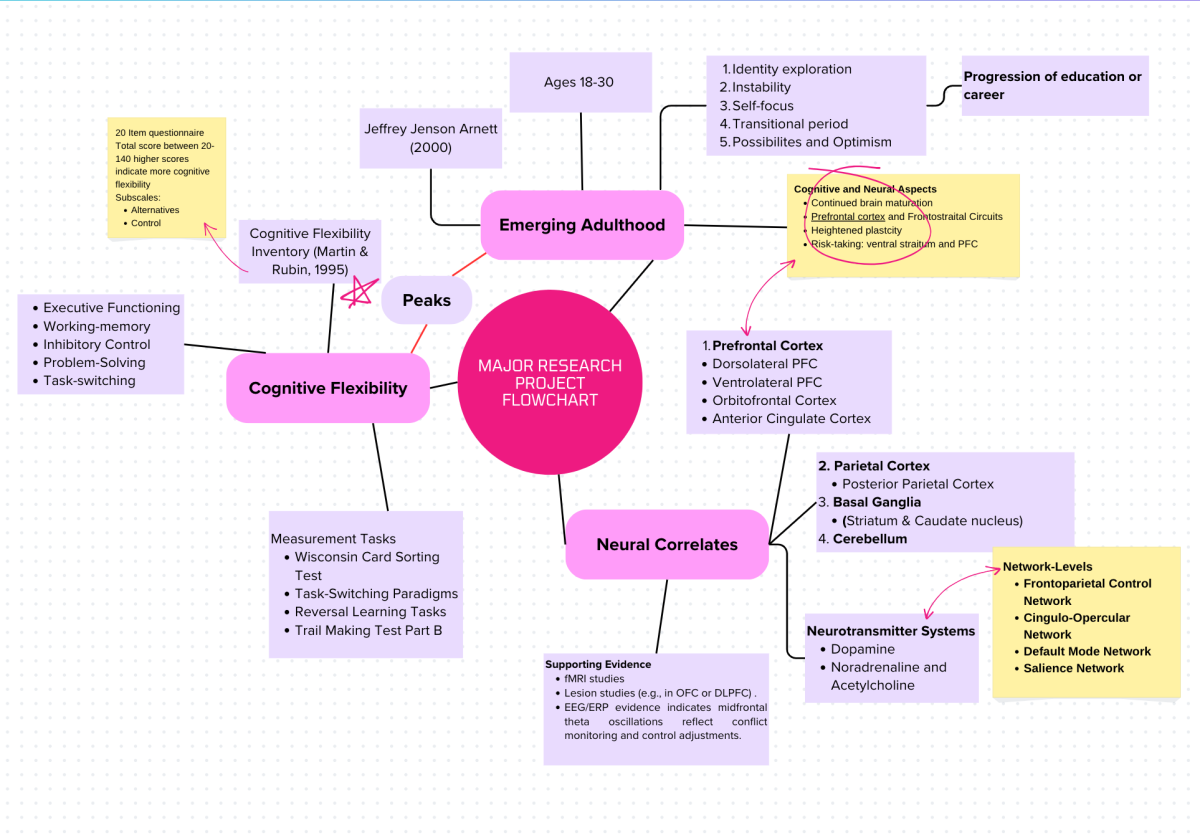
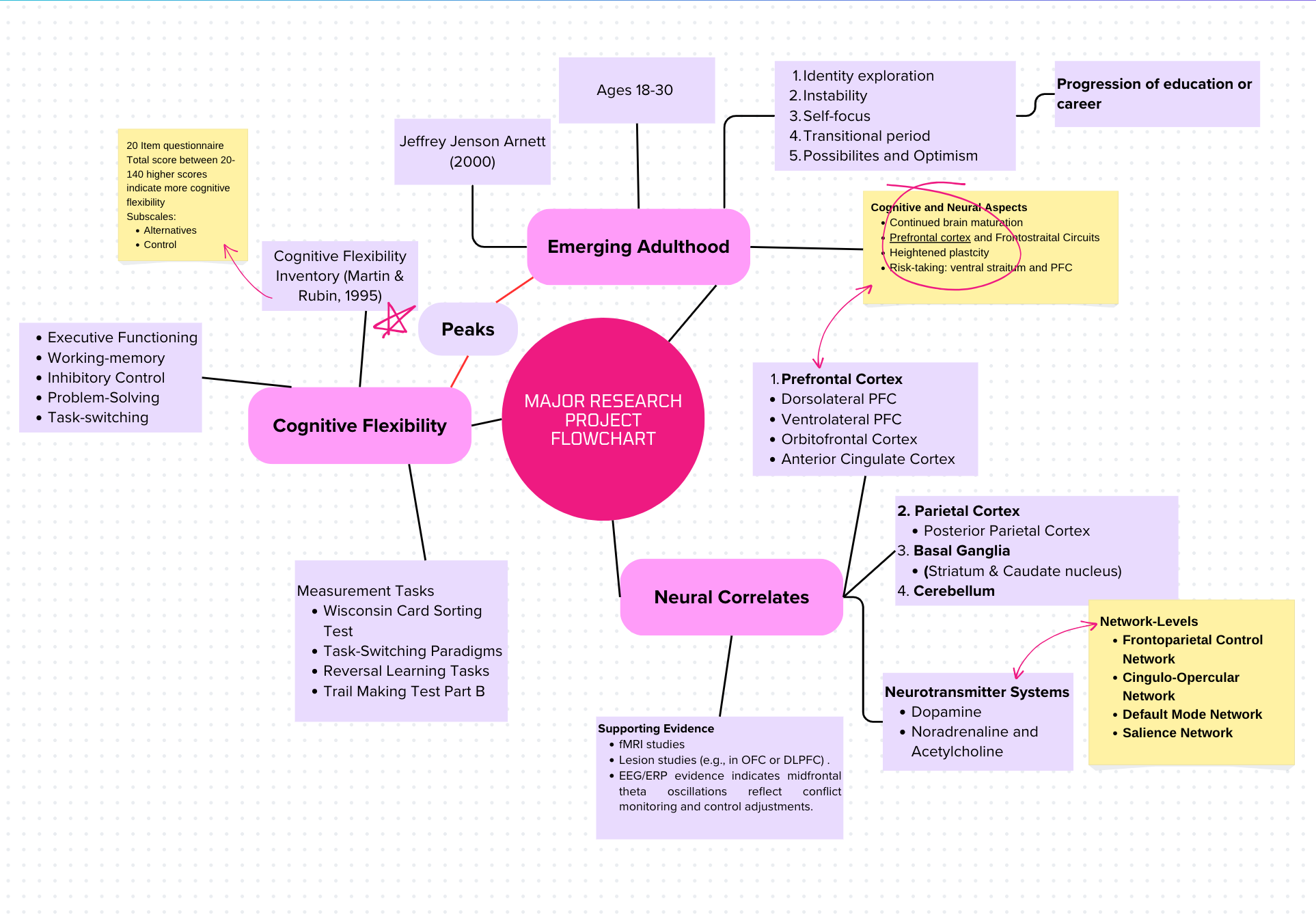
This study aimed to examine the relationship between emerging adulthood and cognitive flexibility, with a focus on understanding the cognitive processes that support adaptive functioning during this developmental stage. Specifically, it investigated whether identification with the dimensions of emerging adulthood predicts levels of cognitive flexibility, while controlling for age.
A cross-sectional design was used, with a final sample 122 participants aged 18–29 recruited through convenience sampling. Participants completed validated self-report measures such as the Inventory of the Dimensions of Emerging Adulthood and the Cognitive Flexibility Scale. The study employed correlational and multiple regression analyses to explore associations and predictive relationships. It was hypothesised that stronger identification with emerging adulthood would be associated with greater cognitive flexibility. Additionally, the study explored whether specific dimensions of emerging adulthood uniquely contributed to cognitive flexibility to obtain a further clarified understanding . By examining these relationships, the project sought to contribute to a nuanced and complex analysis of how young adults navigate identity development and life transitions, and to identify cognitive mechanisms that may support resilience and adaptability during this period.
The present study found that identification with the dimensions of emerging adulthood significantly predicts cognitive flexibility, even when controlling for age. A positive association was identified, suggesting that individuals who more strongly identify with the experiences of emerging adulthood report higher levels of cognitive flexibility. In contrast, age was not a significant predictor, indicating that cognitive flexibility during this developmental period is more closely related to subjective developmental experience than chronological age.
Although all individual dimensions of emerging adulthood were positively correlated with cognitive flexibility, none made a significant unique contribution when entered simultaneously into the regression model. This suggests that these dimensions operate as interrelated components of a specific developmental framework rather than as independent predictors. The regression models accounted for a modest proportion of variance, indicating that cognitive flexibility is influenced by additional factors beyond emerging adulthood.
Overall, the findings support theoretical perspectives emphasising the importance of psychosocial engagement during emerging adulthood. The study highlights cognitive flexibility as a potential cognitive process supporting functioning during this stage. However, findings should be interpreted with caution due to methodological limitations, including the cross-sectional design and reliance on self-report measures.
I am very pleased to be soon-graduating the BSc (Hons) Applied Psychology course at IADT (practice pathway), this course has given me a strong foundation in psychological theory, research methods, and data analysis. My interests focus on clinical psychology and neuropsychology. I have nearly three years’ experience volunteering with Bodywhys on their helpline and as a SeeMySelf mentor, supporting individuals affected by eating disorders. These roles have strengthened my communication, active listening, and crisis-support skills, and deepened my commitment to improving wellbeing. I am eager to continue developing my clinical and research competencies in psychology offer crucial support to those who need it.