Klaudia Broda
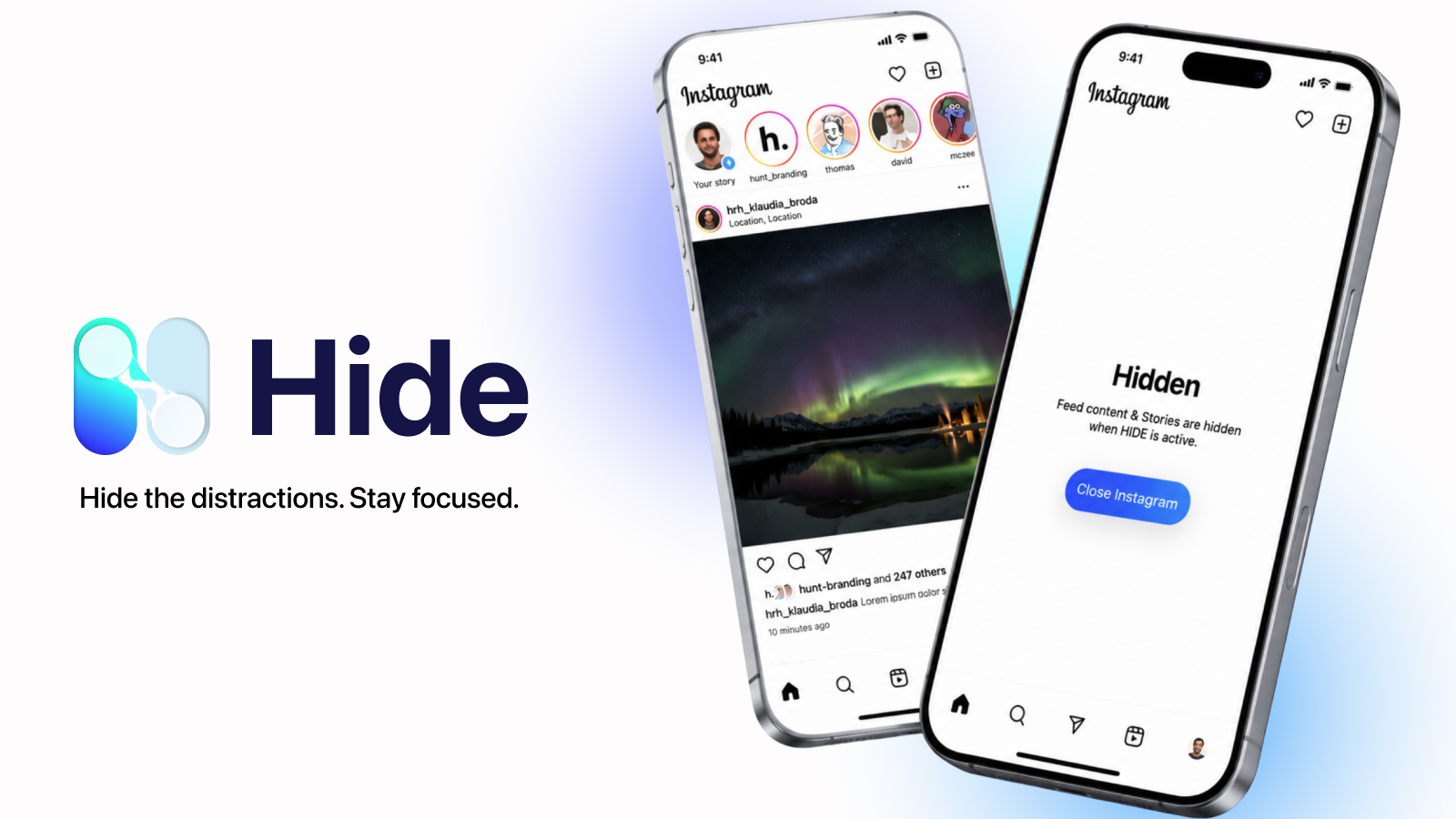
HIDE is a feature-level digital self-control tool designed to help users manage problematic smartphone use without fully restricting access to apps. Instead of blocking entire applications, HIDE allows users to hide distracting features such as reels, feeds, stories, autoplay content, and recommendations while still maintaining access to essential functions like messaging or search. Inspired by behavioural design and Apple-native interaction patterns, the project explores how digital wellbeing tools can support healthier and more intentional technology use without relying on overly restrictive or guilt-driven approaches.
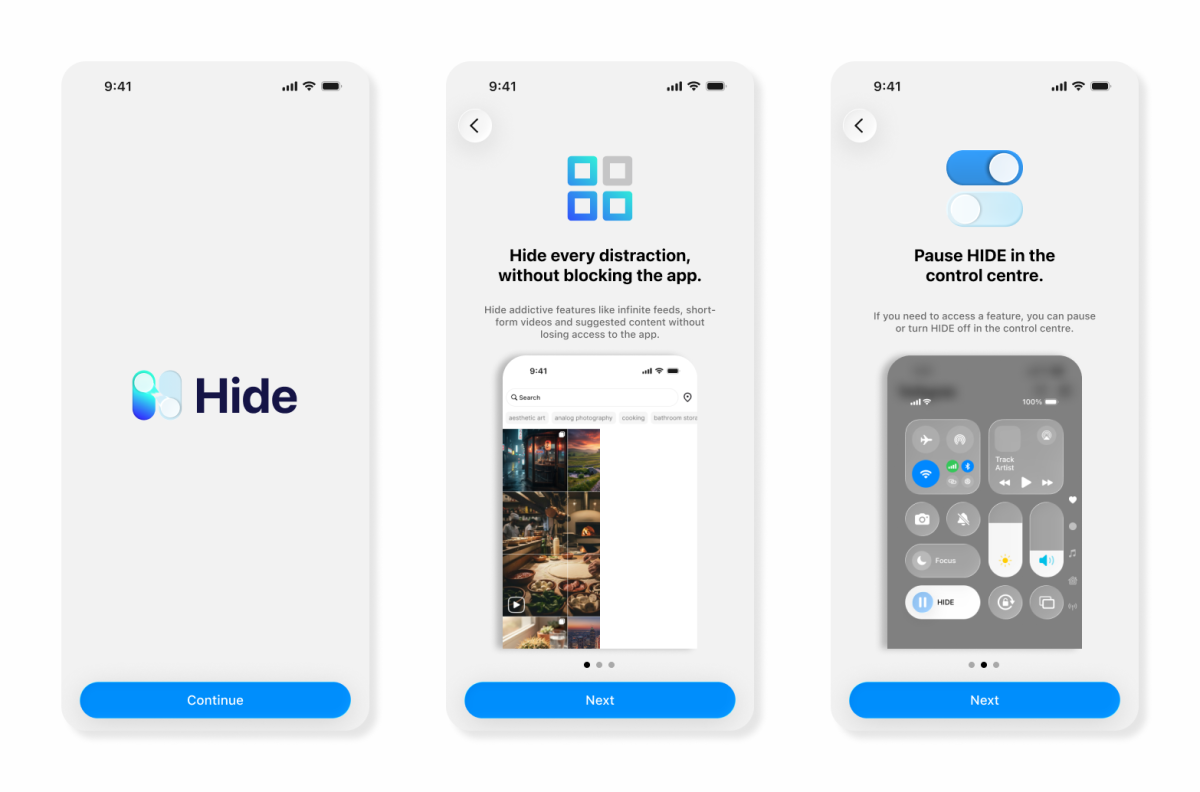
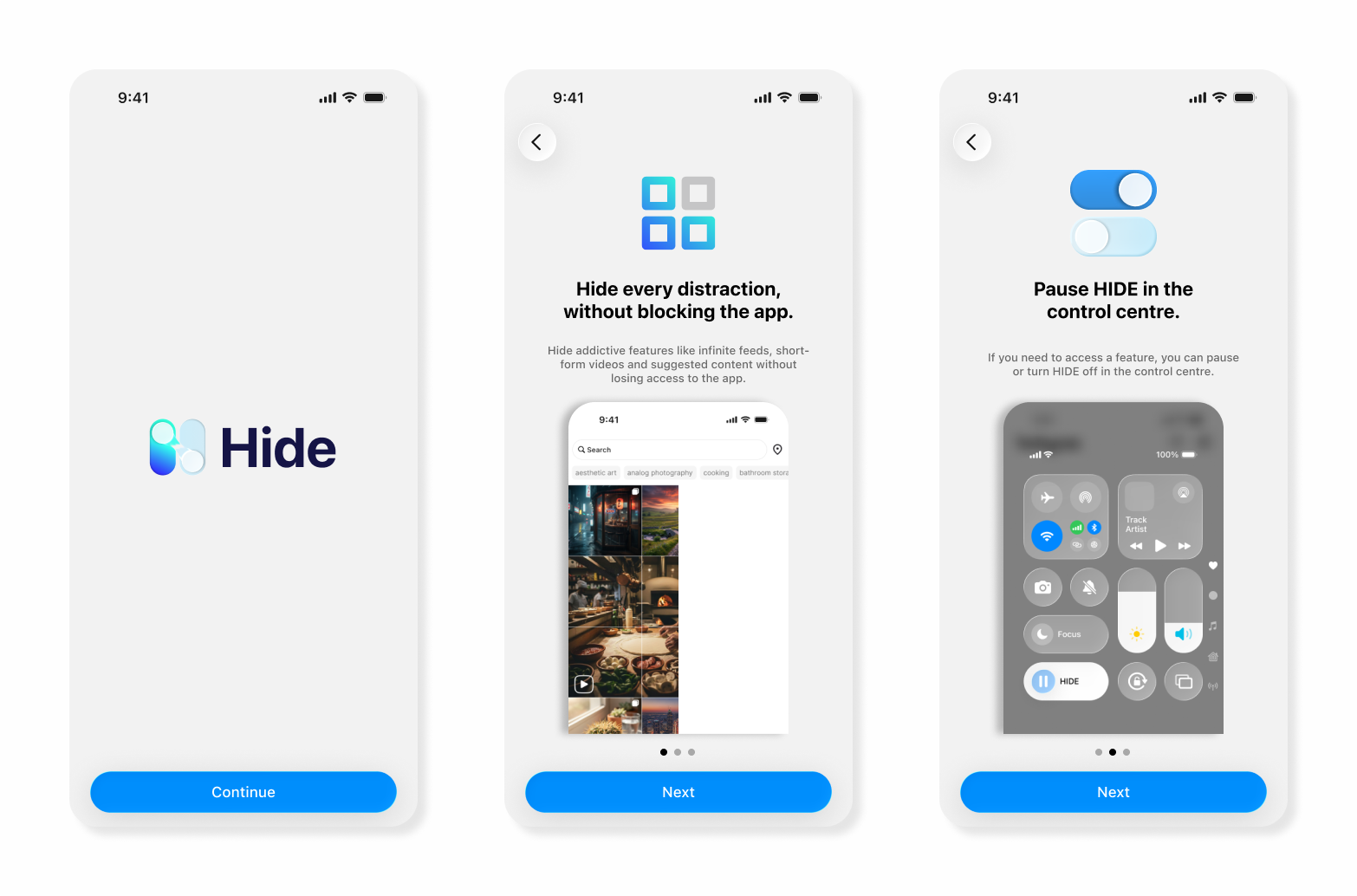
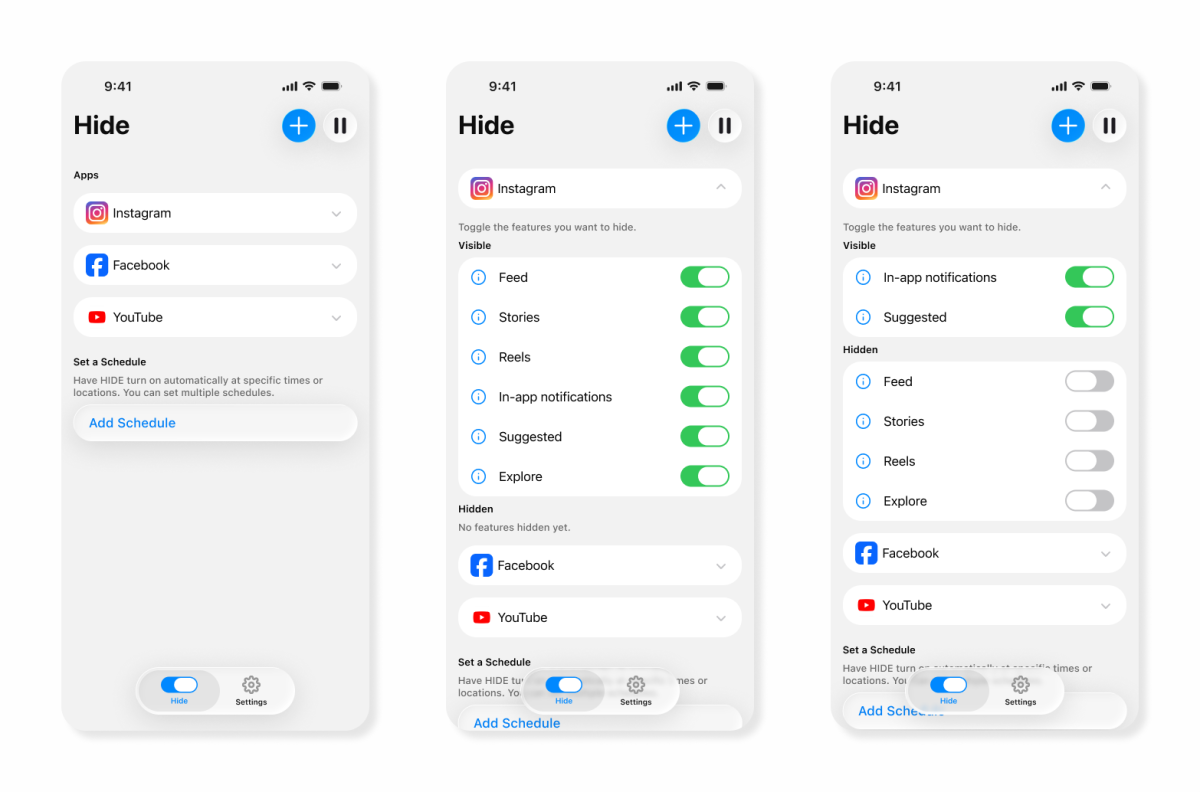
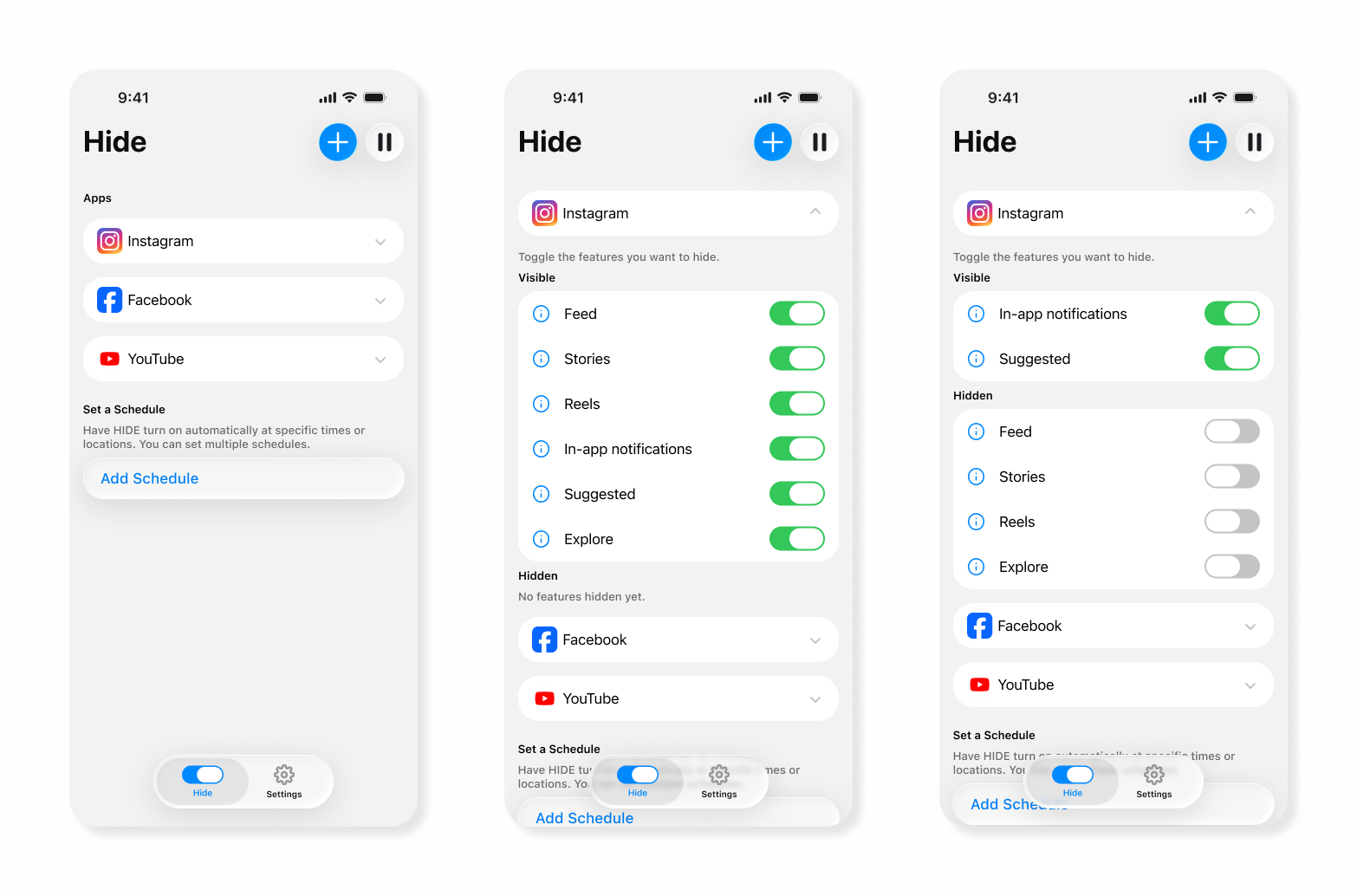
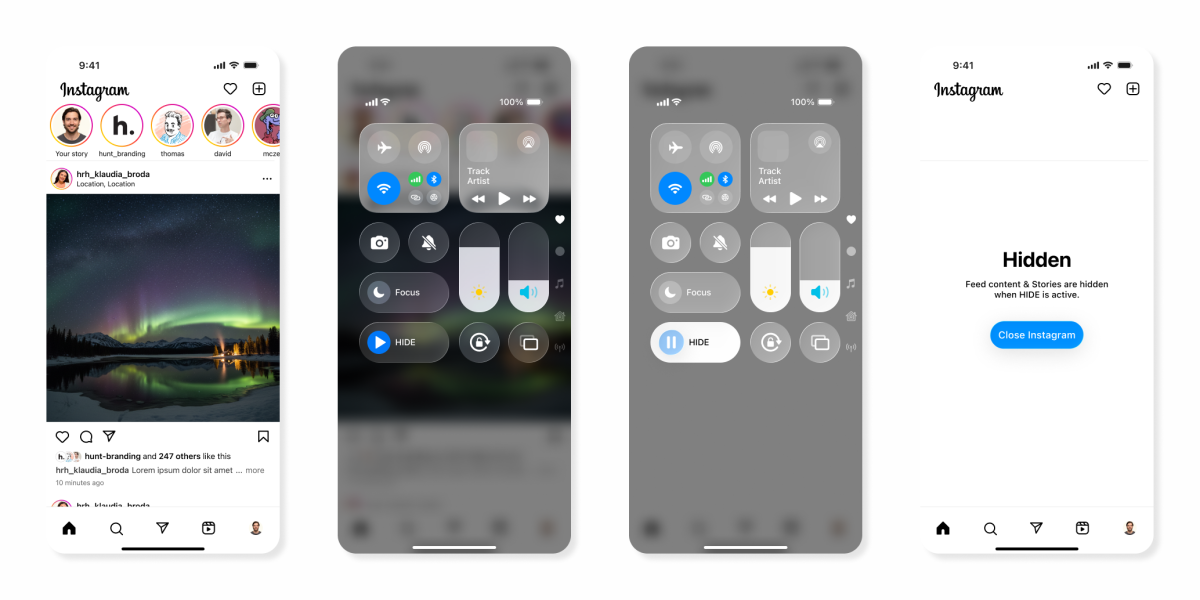
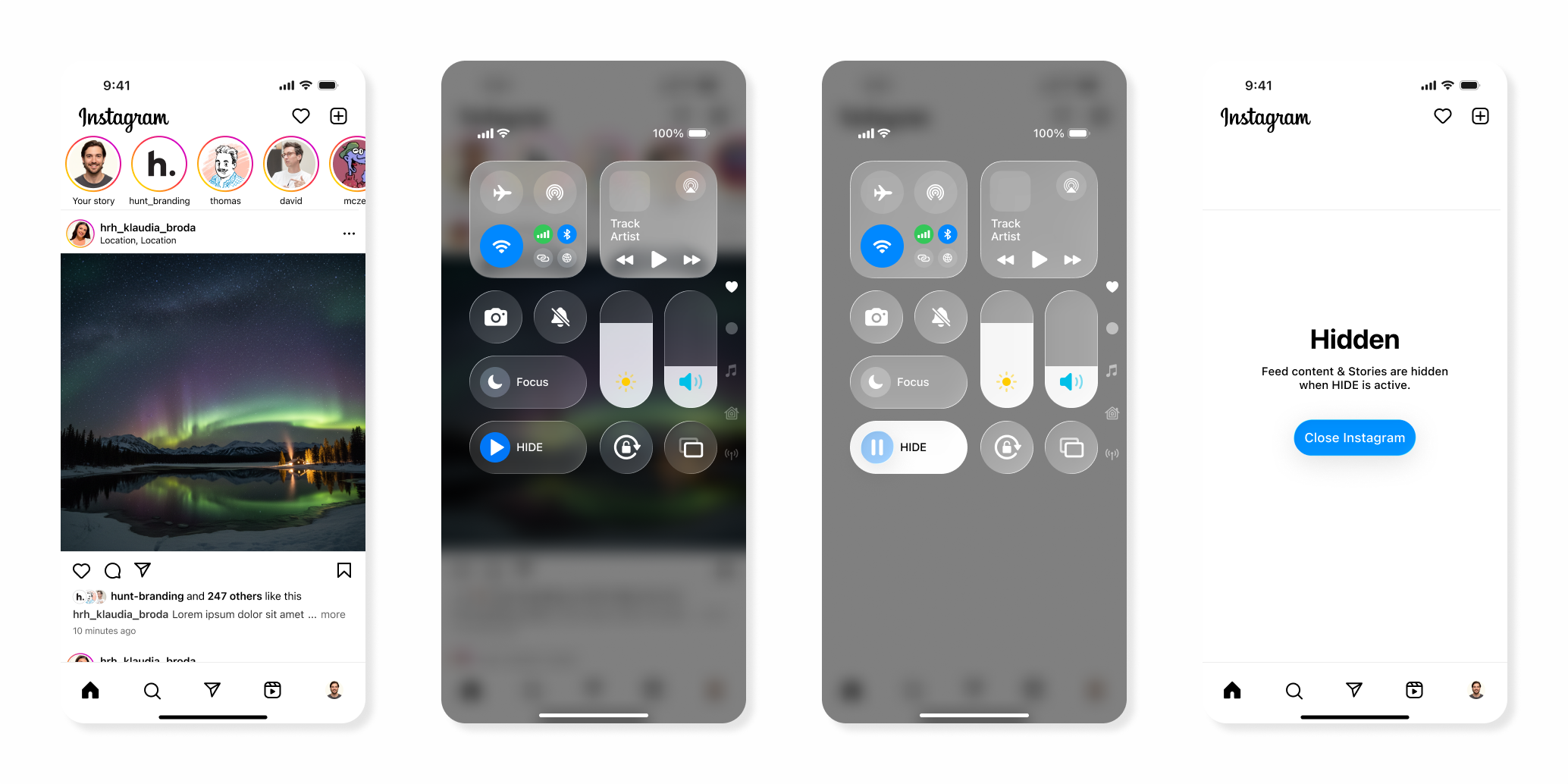
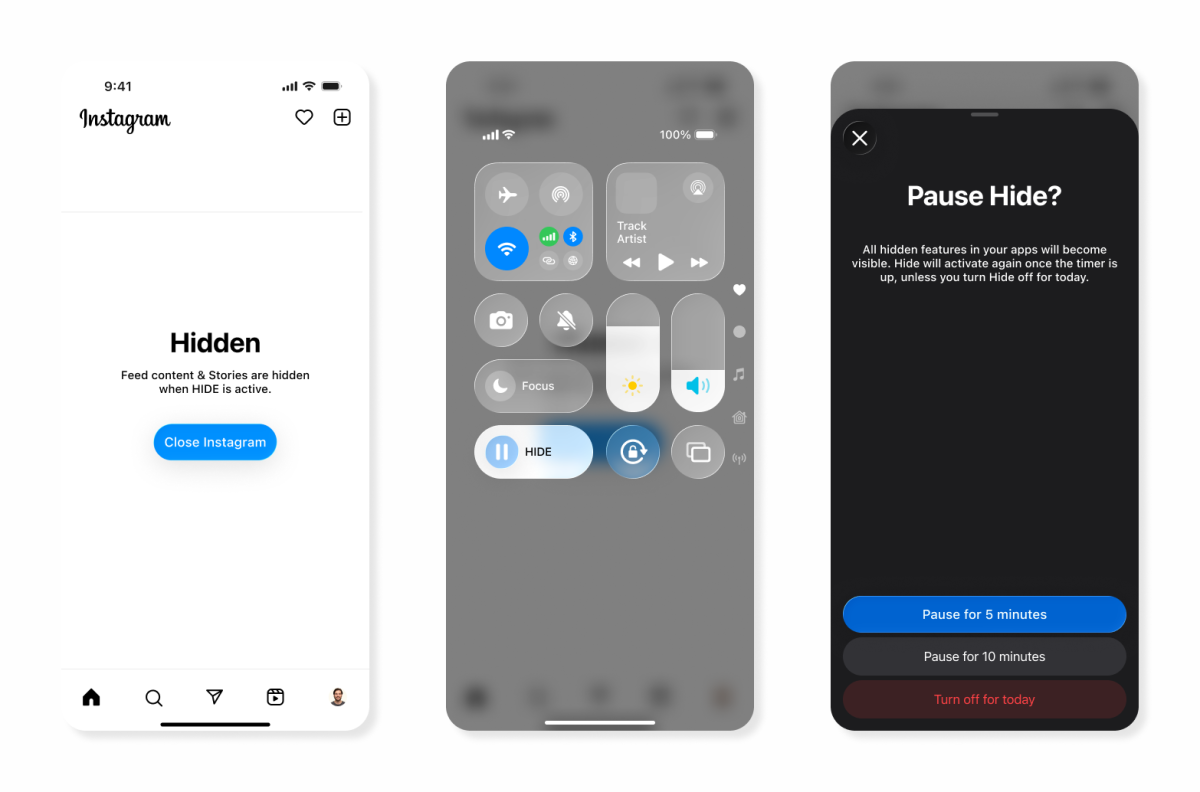
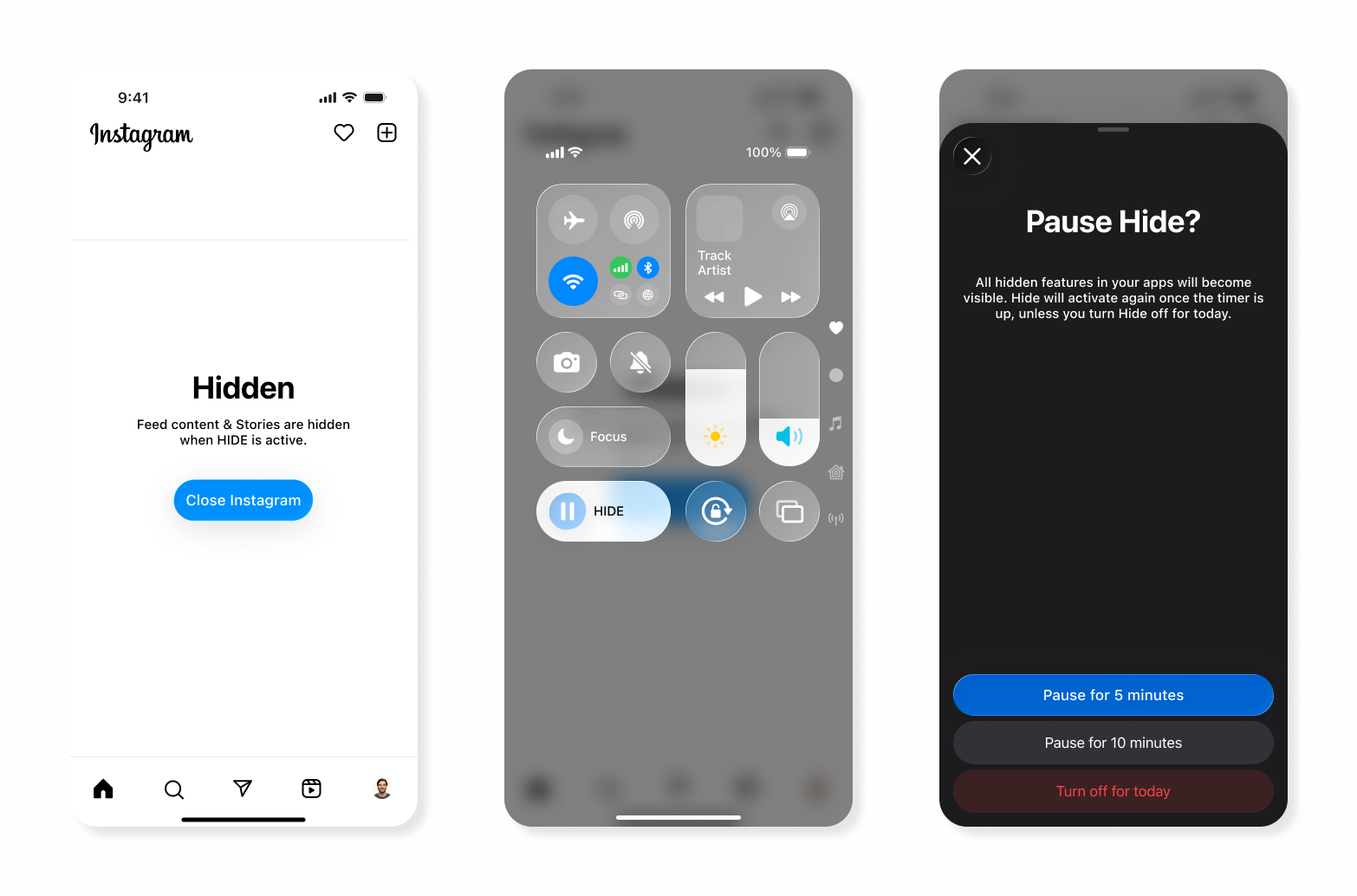
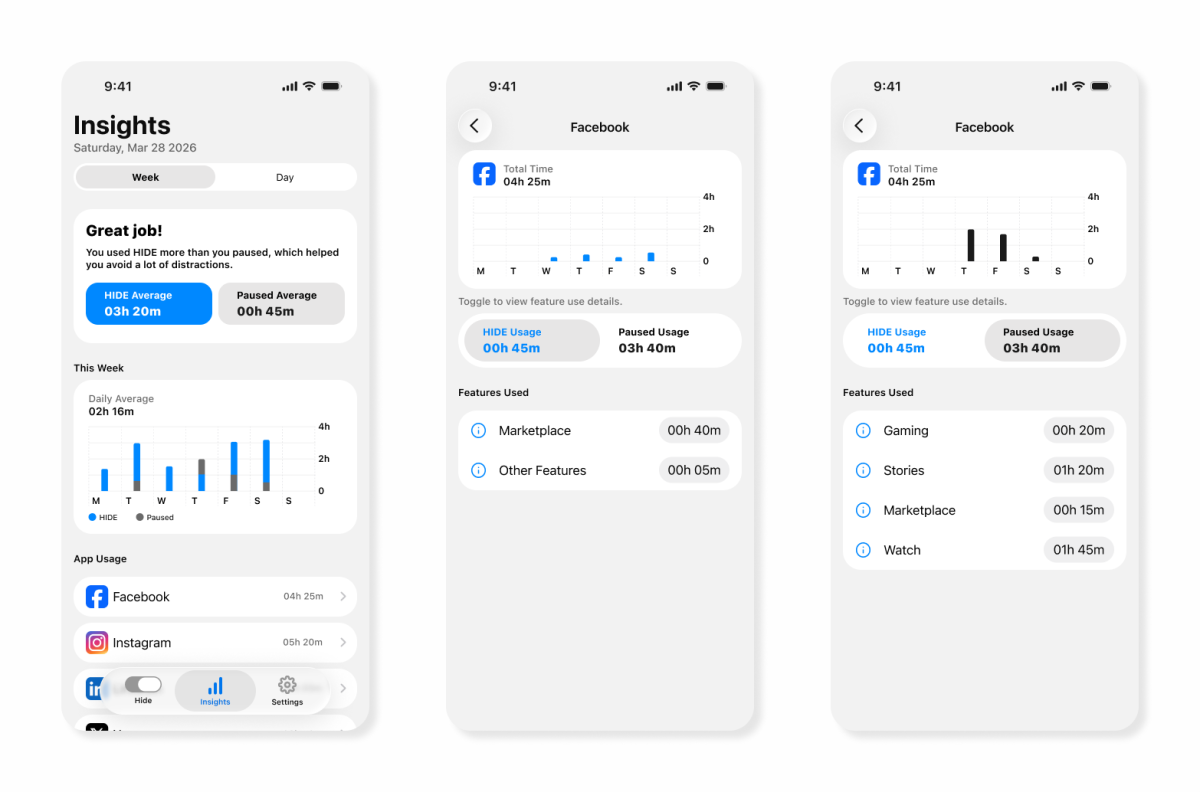
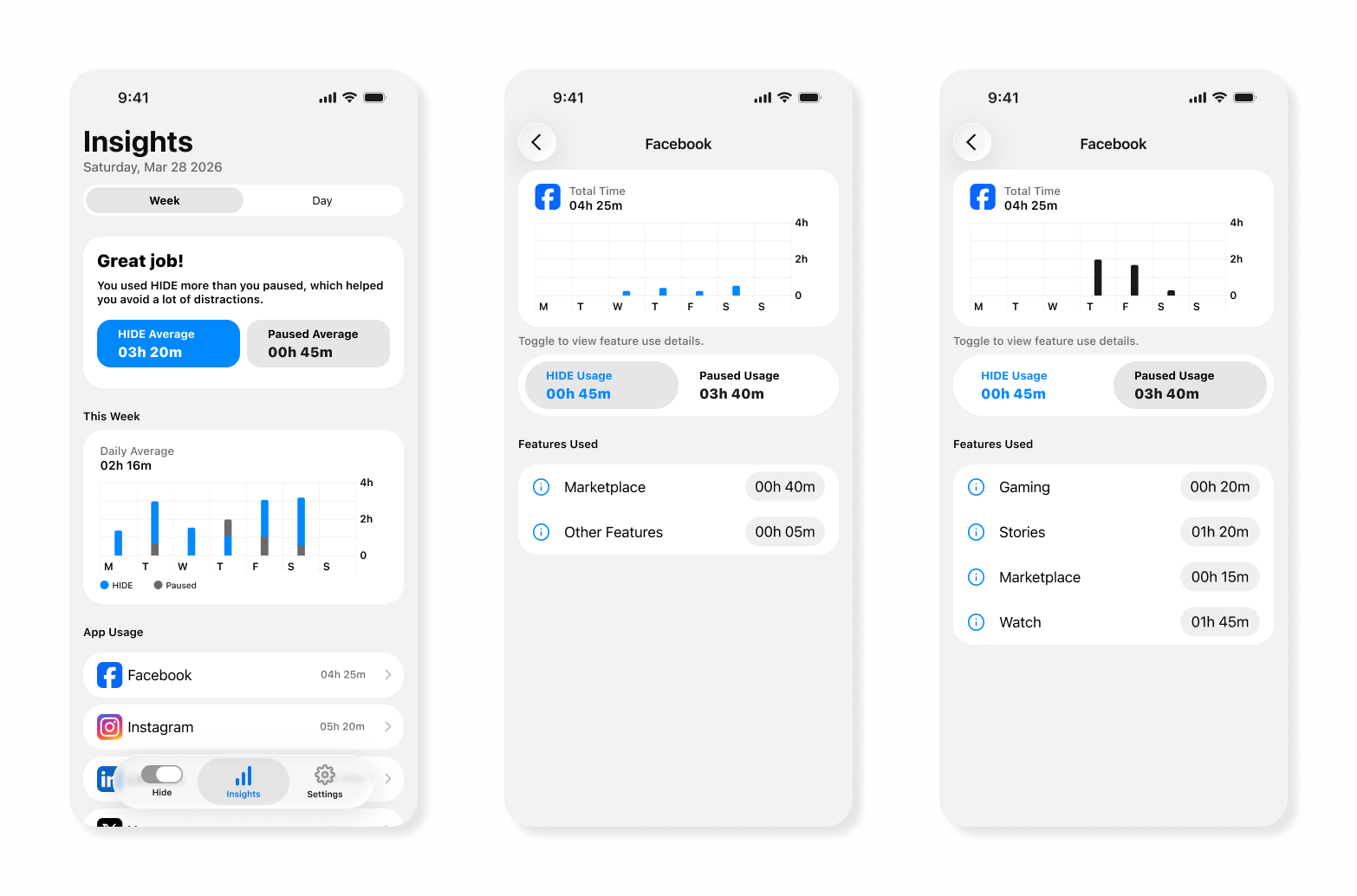
The objective of this project was to explore whether a feature-level approach to digital self-control could support healthier and more intentional smartphone use while avoiding the limitations of restrictive app-blocking tools. Rather than preventing access to entire apps, HIDE was designed to let users hide specific distracting features, such as feeds, reels, stories, and recommendations, while keeping access to more purposeful functions like messaging and search.
The project also aimed to investigate whether adding feature-level usage metrics could improve factors linked to technology adoption, including perceived usability, behavioural intention, autonomy, and competence. Through this, the research examined whether reflective, feature-specific feedback could make a digital wellbeing tool feel more useful, supportive, and personally relevant.
The aim was to design an experience that felt familiar, intuitive, and non-judgemental and that was done by following interaction patterns inspired by Apple. Overall, the project aimed to communicate how digital self-control tools can move beyond screen-time totals and app limits towards more flexible, context-aware, and autonomy supportive experiences.
The final outcome of the project was HIDE, a feature-level digital self-control tool designed to help users manage problematic smartphone use without fully restricting access to apps. The project resulted in two high-fidelity interactive prototypes: one focused purely on feature-level control, and the other included feature-level usage metrics which were designed to encourage reflection on smartphone habits.
The testing showed that both versions of HIDE achieved high perceived usability scores, suggesting that a feature-level approach can provide a usable and acceptable alternative to more restrictive digital wellbeing tools. The addition of feature-level metrics did not produce statistically significant improvements in usability, autonomy, competence, or behavioural intention, but participants generally responded positively to the concept and found the approach more balanced than full app blocking.
One of the key insights from the project was that users value maintaining access to meaningful app functions while reducing exposure to distracting content.
The project ultimately demonstrated the potential of feature-level digital self-control tools and highlighted opportunities for future exploration around reflective metrics, behavioural design, and healthier approaches to digital wellbeing.
This paper outlines the research activities performed to create and evaluate a prototype of a feature-level digital self-control tool (DSCT), HIDE, designed to reduce problematic smartphone use (PSU). PSU is the overuse of a smartphone, which can negatively impact the everyday functioning of the user. Research increasingly suggests that specific features in digital experiences can be the true drivers of PSU. Yet very few DSCTs that target such features have been tested. Furthermore, the impact of feature-level usage metrics on DSCT adoption predictors remains underexplored.
Two versions of HIDE were developed and tested, to investigate whether feature-level usage metrics have a positive impact on the perceived usability, psychological need satisfaction (autonomy and competence) and behavioural intention to use the prototype. These are known technology adoption predictors. An A/B test was conducted, where the independent variable was the presence of feature-level metrics.
Results showed no statistically significant differences between the two conditions, suggesting that feature-level usage metrics do not have a significant impact on the measured adoption predictors. The results suggest that metrics are a supportive feature and not critical to the overall user experience.
Klaudia is a User Experience Designer at Hewlett Packard Enterprise supporting its cloud services platform, GreenLake. Coming from an Industrial Design background, she was drawn to UX through her interest in human behaviour and how thoughtful design can create more intuitive and meaningful digital experiences. Her MSc research explored problematic smartphone use, inspired by her own experiences with focus and social media overuse. Outside of design, she enjoys art, interior design, travel, and music. Looking ahead, she hopes to continue working on large-scale digital products, whether within global technology companies or eventually through her own UX practice.