Liam Houlihan
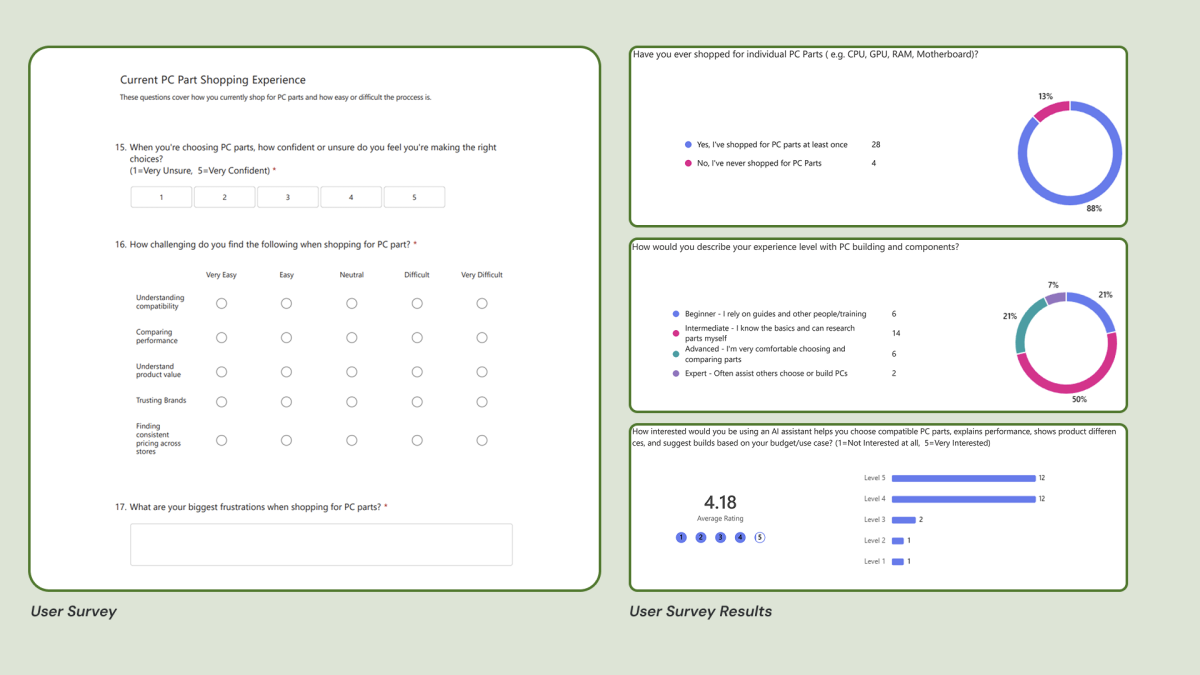
PC Part shopping requires shoppers to interpret larges amount of technical information. Users must component decisions involving compatibility, performance, product value and comparisons. Existing PC Builder tools provide assistance to users, but create a fragmented shopping experience. Research shows users can benefit from task matching information, comparison support, product transparency, and trustworthy explanations. Current industry tools partially provide product compatibility and comparison but leave all interpretation or any required knowledge for the user. AI recommendation systems present a possible solution to reduce this burden, by presenting understandable and trustworthy recommendation support.
Investigate whether AI assistance in PC part e-commerce can improve user usability and trust.
RQ1: In PC part e-commerce, is there a statistical difference in participant Usability ratings between an AI assistant (Compuchat) and an industry prompt-based AI tool under equivalent task conditions?
RQ2: In PC part e-commerce, is there a statistical difference in participant trust ratings between an AI assistant (Compuchat) and an industry prompt-based AI tool under equivalent task conditions?
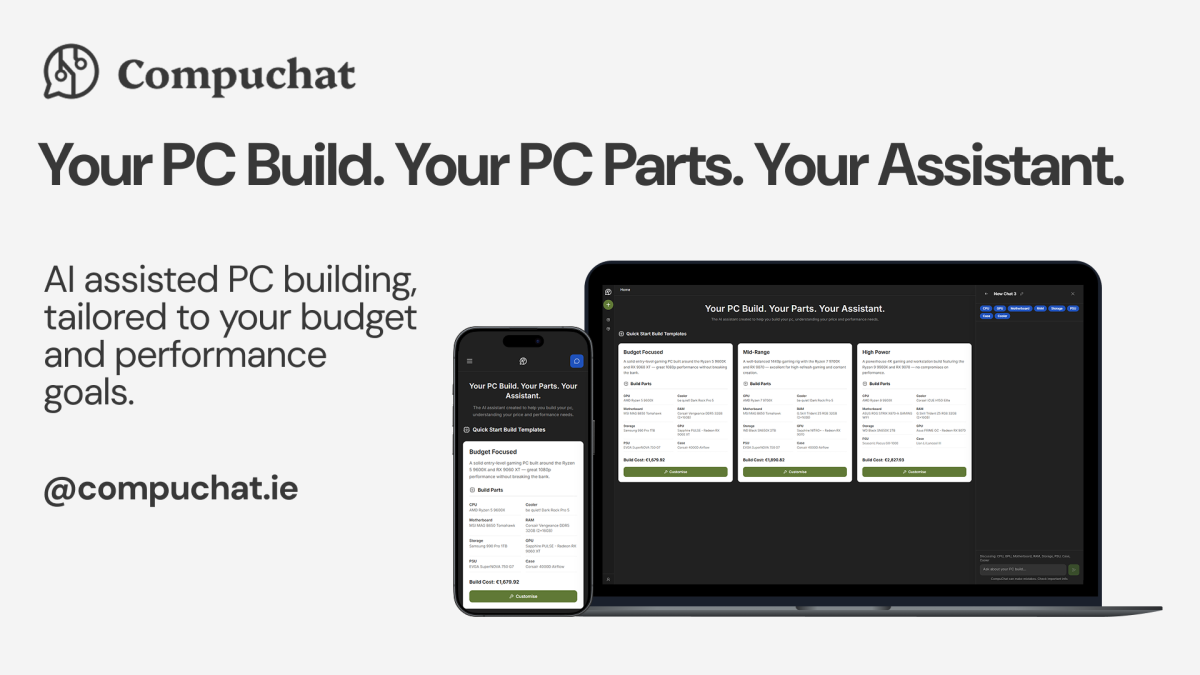
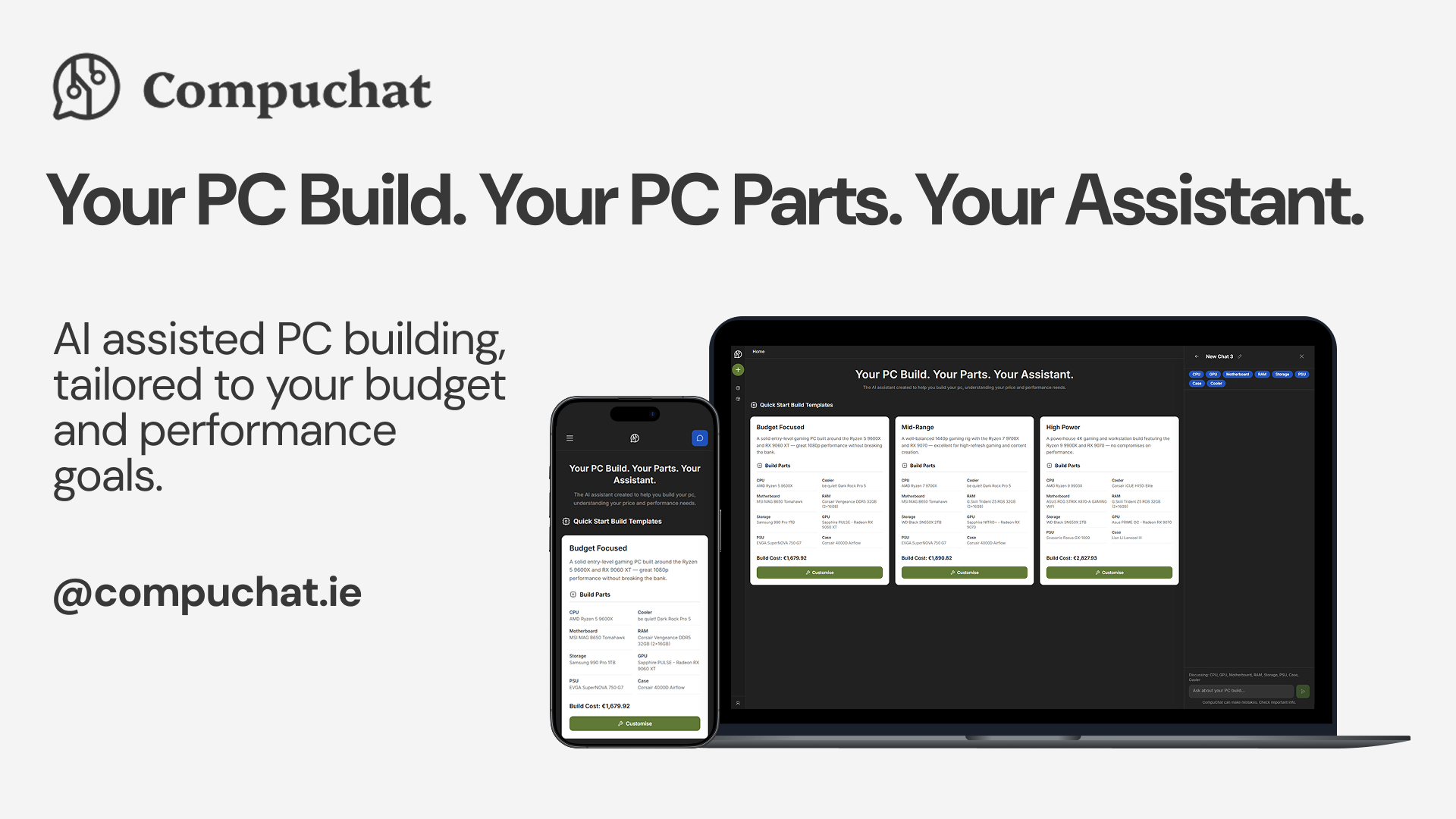
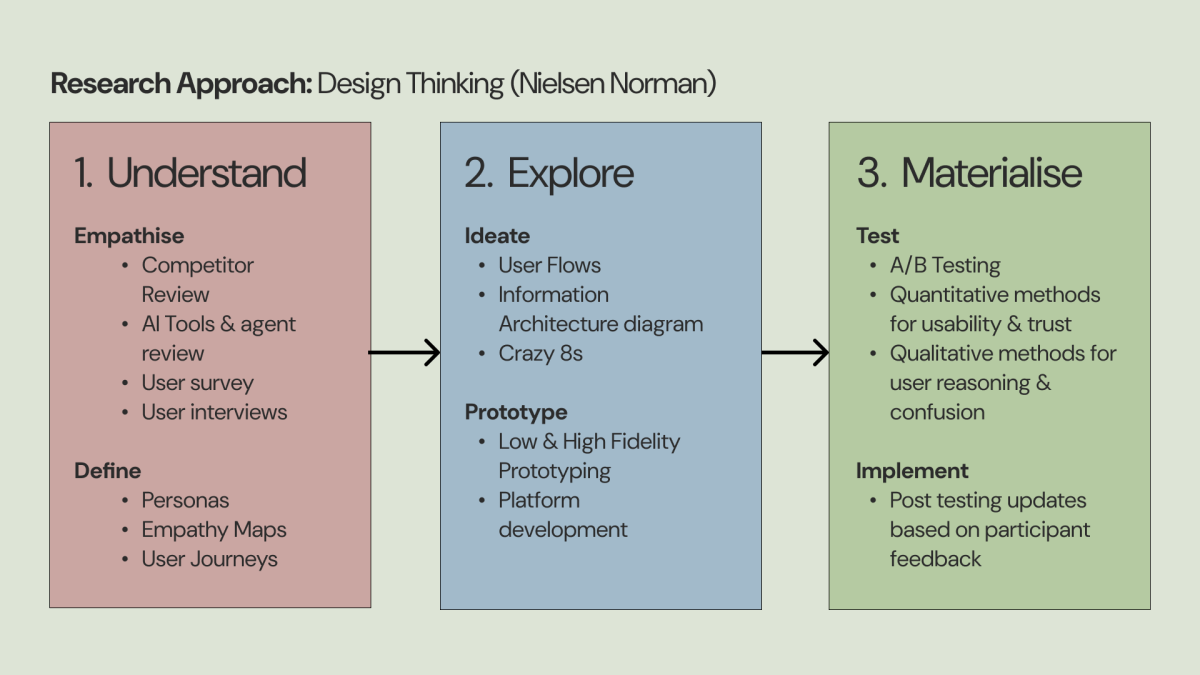
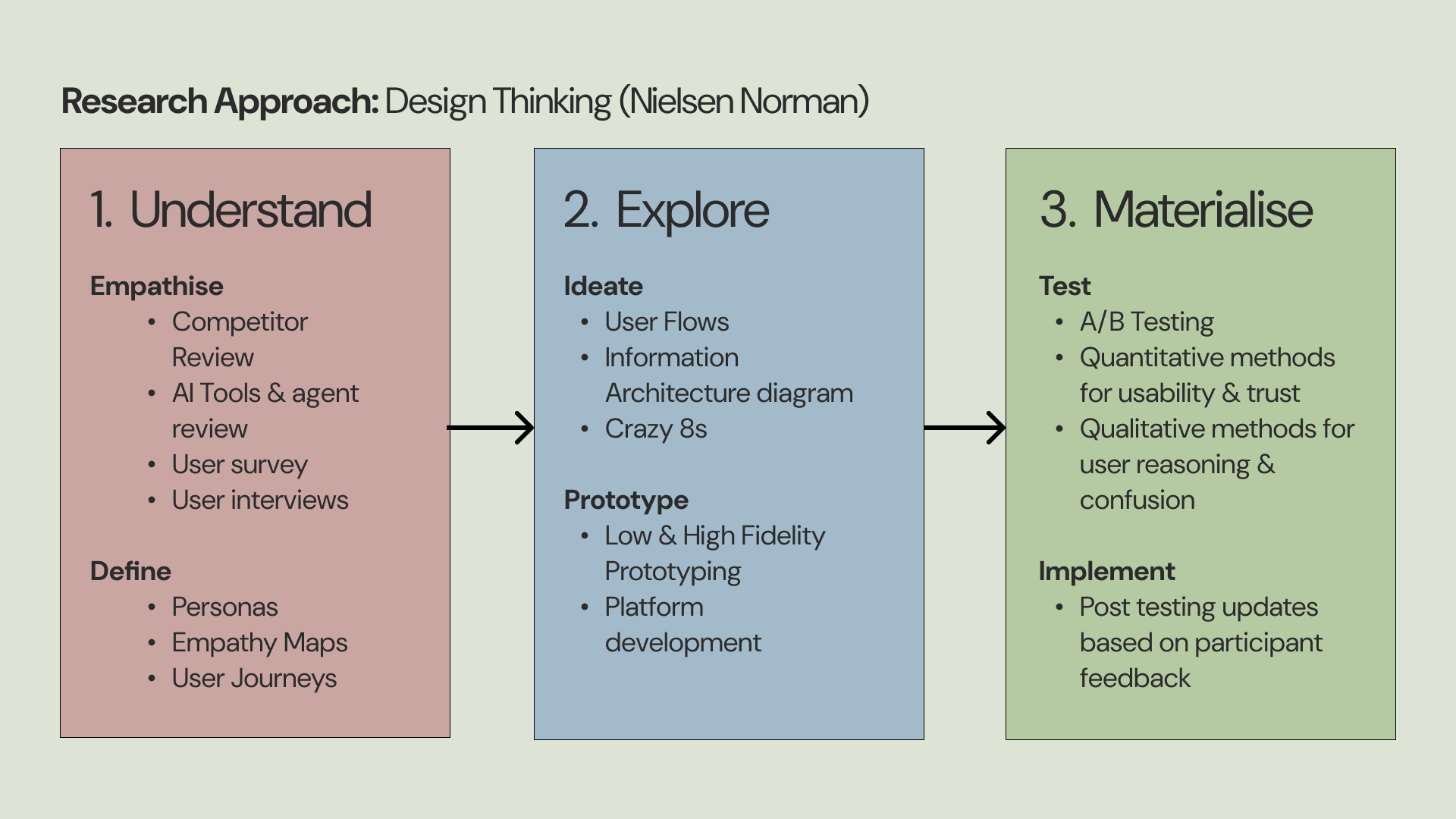
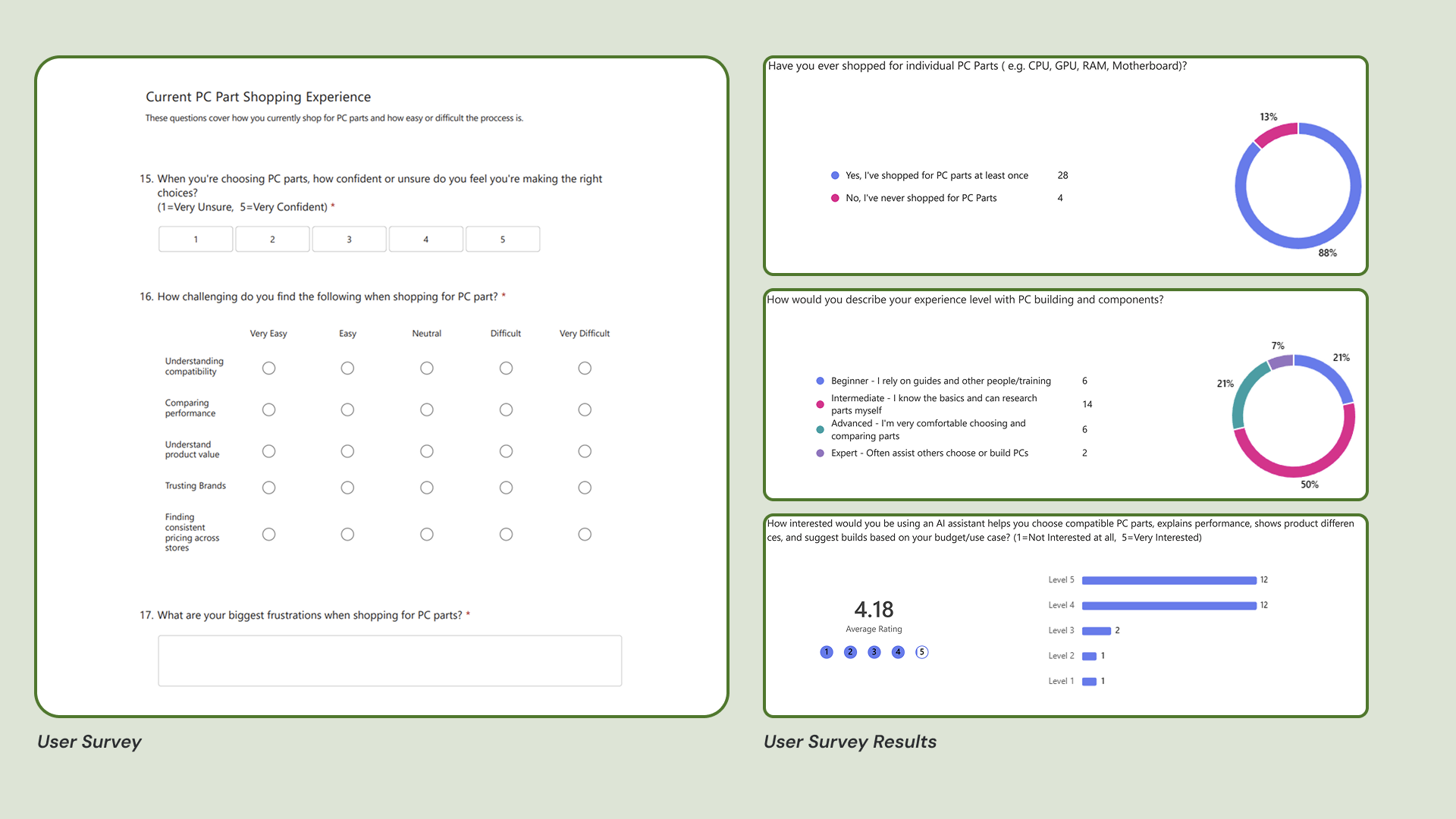
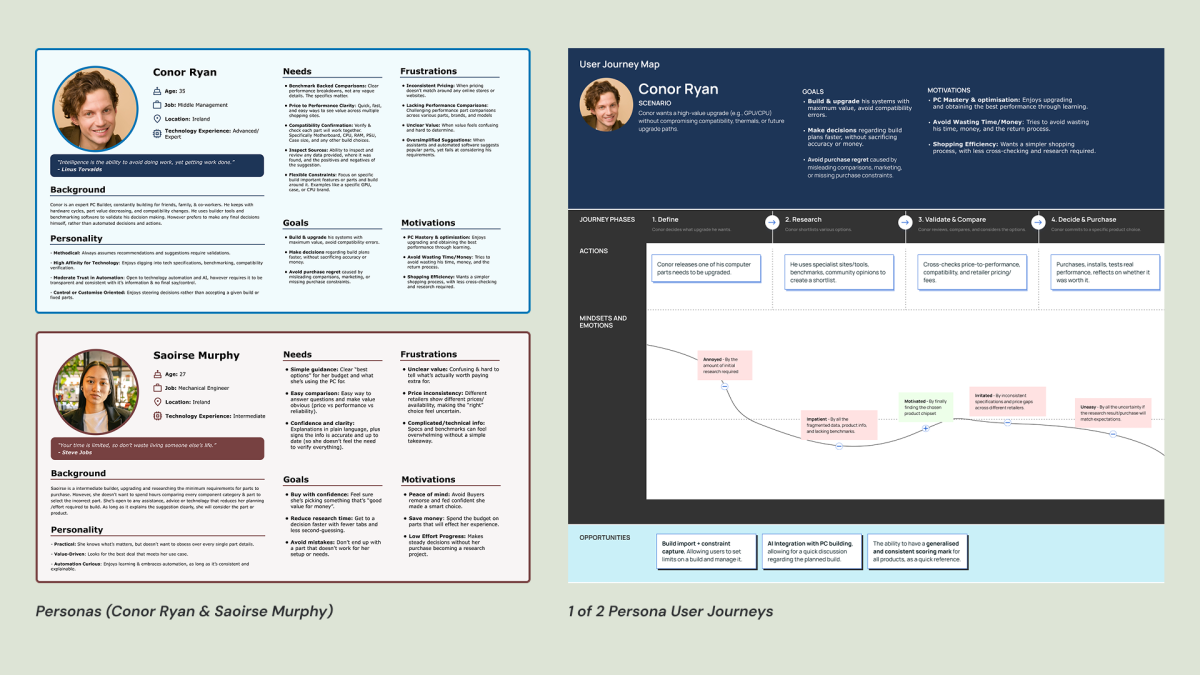
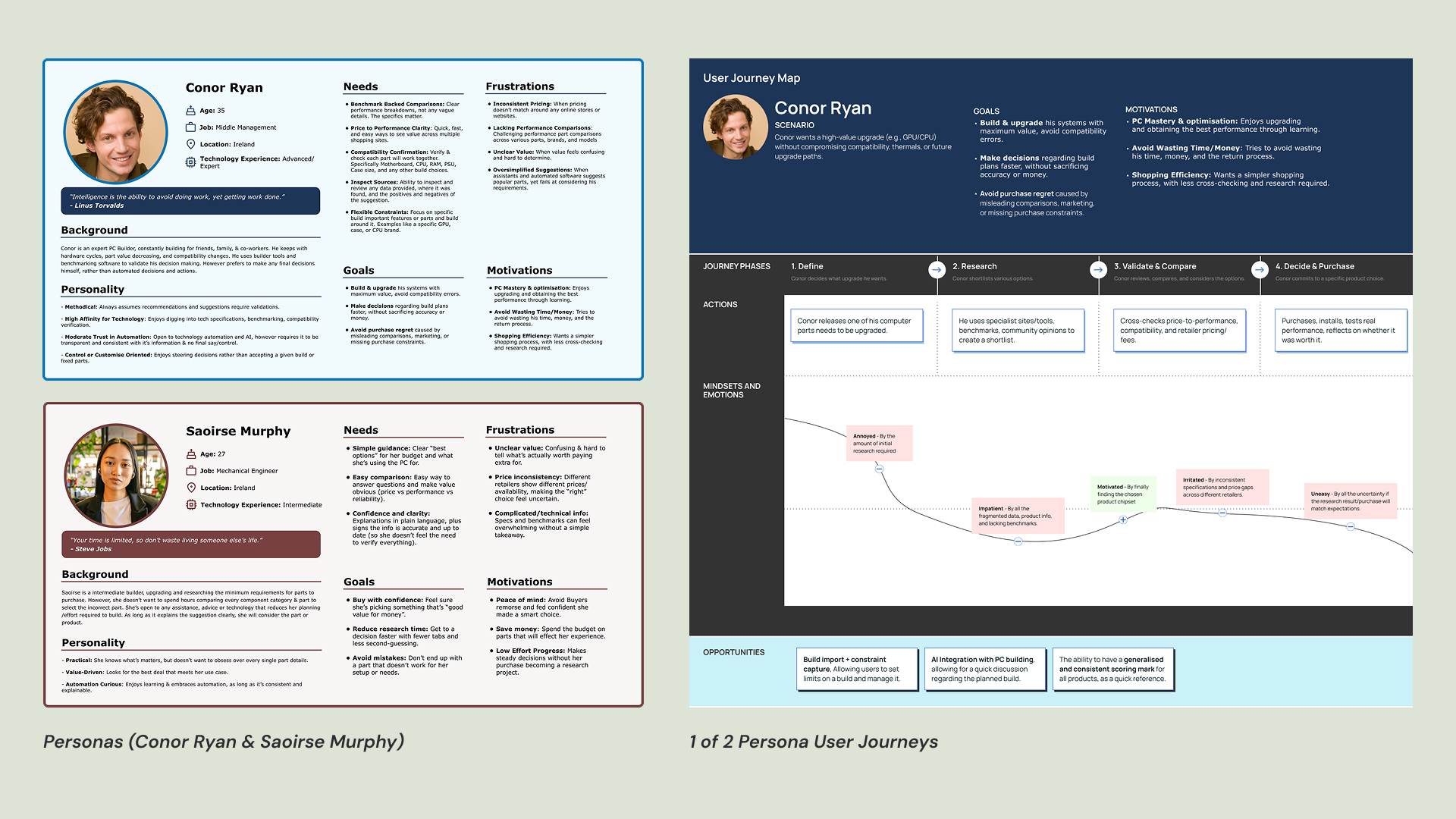
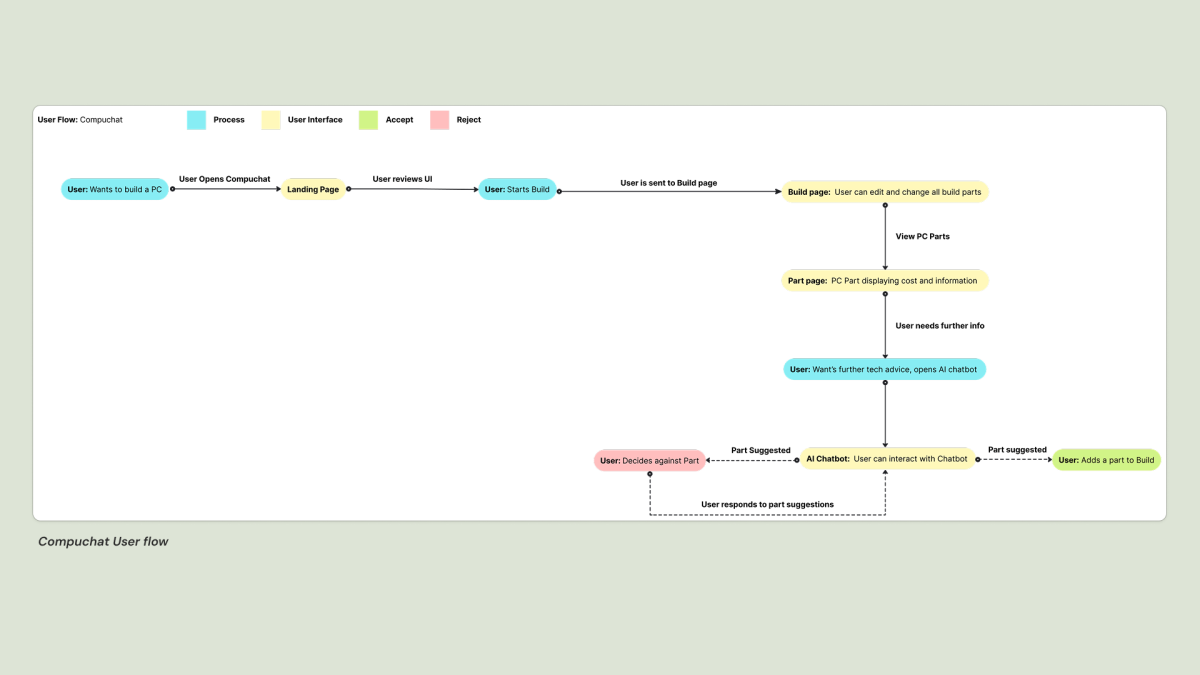
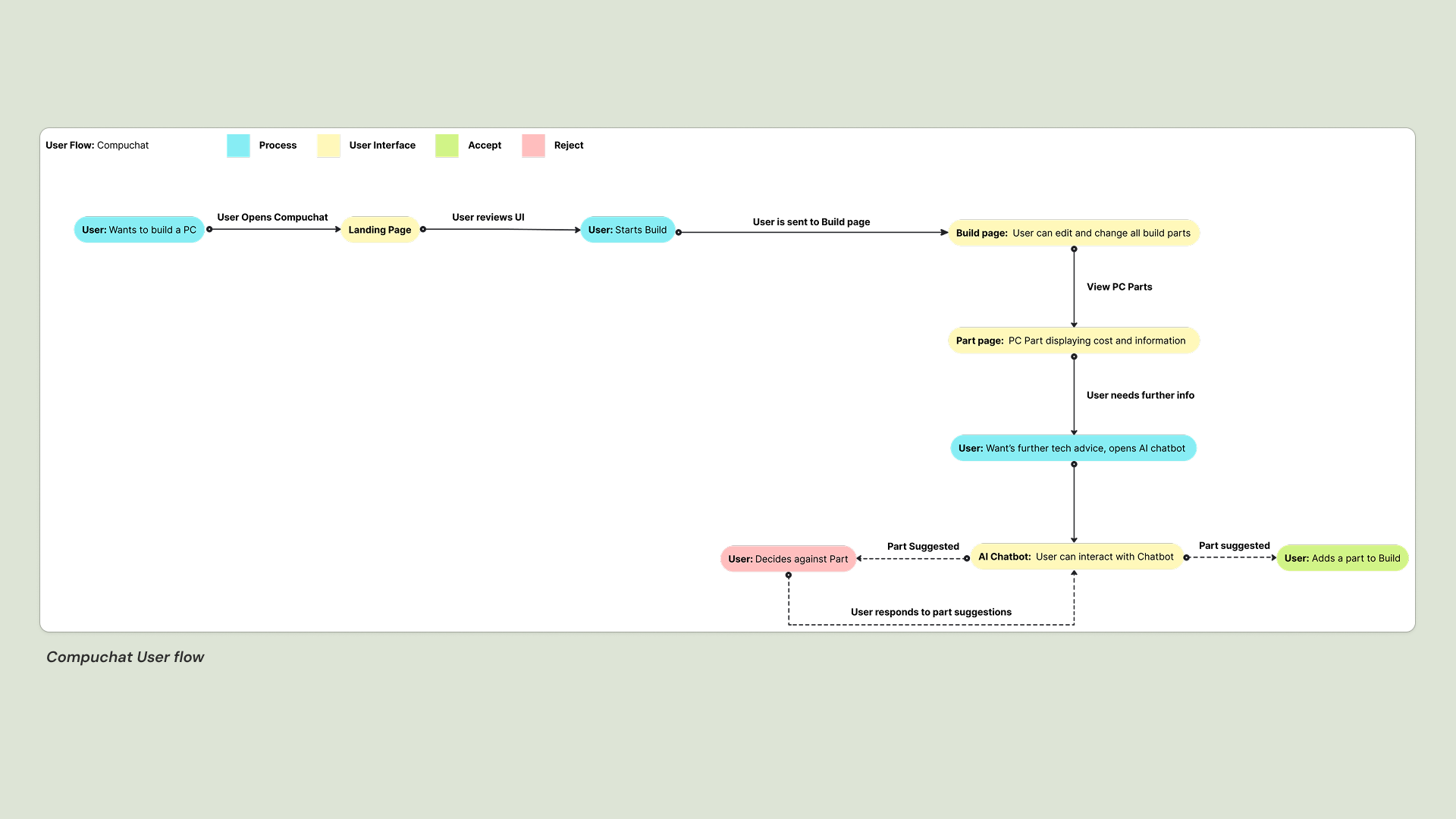
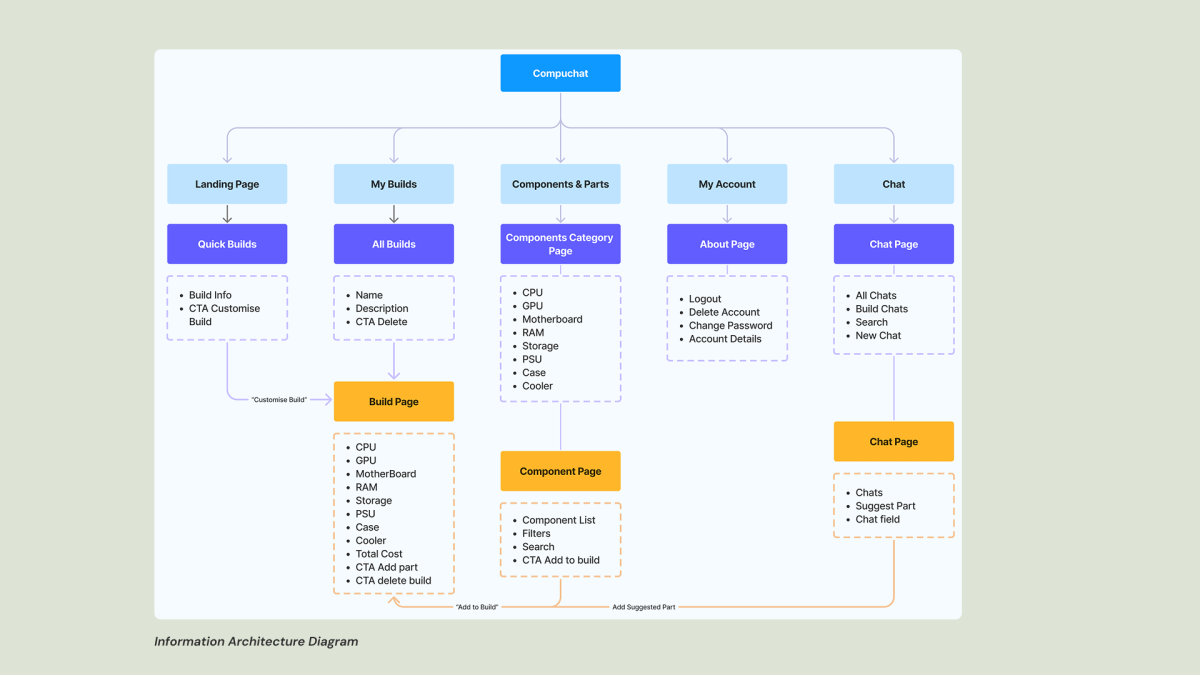
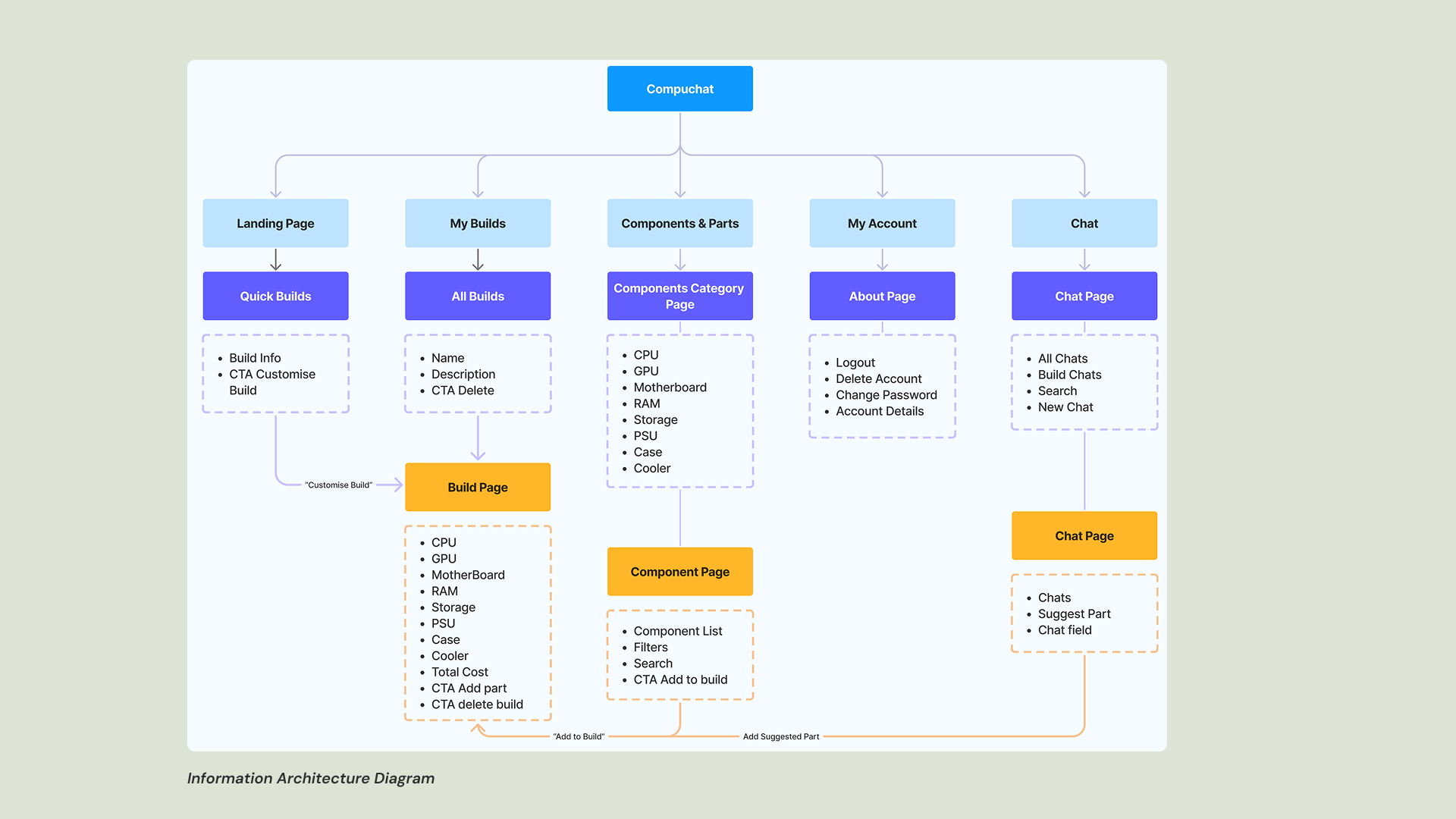
In response to the defined research problem, Compuchat was developed as an PC building AI assisted web application that combined component browsing, PC build planning, AI assistant functionality, price tracking, and component recommendations. The project followed a modified design thinking process, with phases for Understand, Explore, and Materialise. Exploratory research identified user struggles, requiring the need for stronger product comparison support, clear product explanations, product compatibility guidance and complete user control. These research findings were translated into personas, user journey and empathy maps. The created persona artefacts directly influenced the creation of Compuchat’s information architecture and iterative prototype design before being developed into a functional web application.
The unmoderated A/B usability testing produced higher System Usability and Trust in automation scores for Compuchat than for Newegg AI PC builder under matched task conditions. These findings were further supported by qualitative data showing participants valued AI assistance to reduce user effort, clarify user decision making, and increase component understanding without any loss of user control. When considering both quantitative/qualitative, the obtained research suggested that AI assistance can provide value in PC part e-commerce when embedded as a tool within transparent/streamlined platforms instead of simply a prompt based tool.
This study examined whether artificial intelligence assistants can improve usability and user trust within the personal computer (PC) part e-commerce industry. The research study was focused on the role of AI assistance in supporting the intricacies of PC component shopping, which requires users to interpret component compatibility, performance, and overall product value across various fragmented online platforms. As part of this study, Compuchat was developed as an AI assisted web application combining component browsing, PC build planning, price tracking and component recommendation support. The project followed a design thinking process that included exploratory research, iterative prototyping, and an evaluation of the deployed web application. Compuchat was comparatively tested against Newegg AI PC Builder, using a between subjects testing design with 31 participants in total. The evaluation used the System Usability Scale (SUS), a modified Trust in Automation Scale (TIA), and thematic analysis of participant feedback. Results indicated that Compuchat produced higher usability and trust scores than Newegg AI PC builder. Qualitative findings showed that participants valued AI assistant functionality, which resulted in reduced user effort, improved product comparisons, and increased user understanding, without reducing user control. Overall, the research findings suggest that AI assisted platforms such as Compuchat may offer value within the PC part e-commerce industry.
I am a UX Designer with experience in complex digital product design, accessibility, and enterprise platform design. I thrive on translating user research and product insight into intuitive, accessible, and effective digital experiences.
My thesis investigated the role of artificial intelligence in PC parts e-commerce, exploring how AI-assisted interfaces can support users with component compatibility, comparison, and purchasing confidence.