test

Gaba Potoczek

**What You May Find Searching for the Door**

Every day, we leave pieces of ourselves on fabric: dressing, touching others, laying down to bed. We imprint a regardless record of our lives on it in a form that is nearly impossible to read. **What You May Find Searching for the Door** aims to spotlight this dynamic by turning those previously unreadable imprints into clear lines and words. With the use of poetry, relief printing and a selection of other mediums, this project examines how commonplace items may document the struggles we’d otherwise consider internal. At the same time, it serves as a record of its own. Bodies and minute scenes accompany lonesome questions. The pieces answer: here is a record of your worries. They’re not the first of their kind.
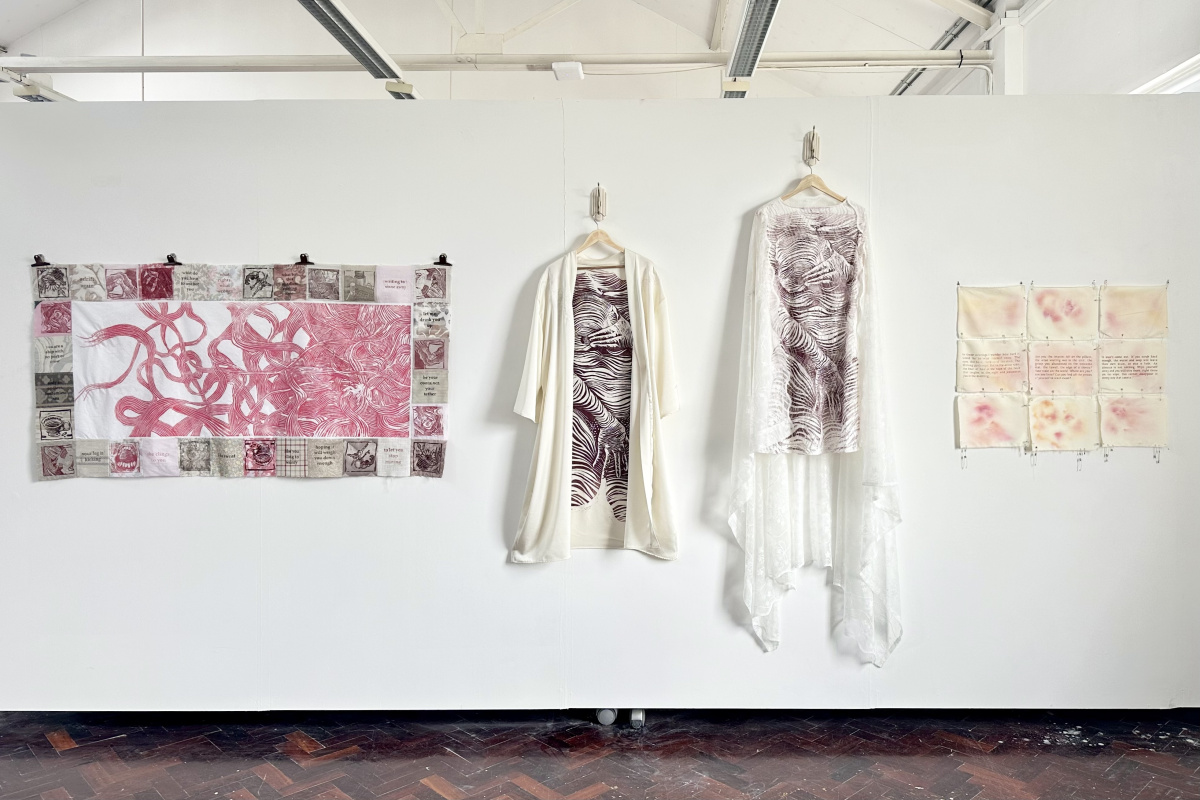
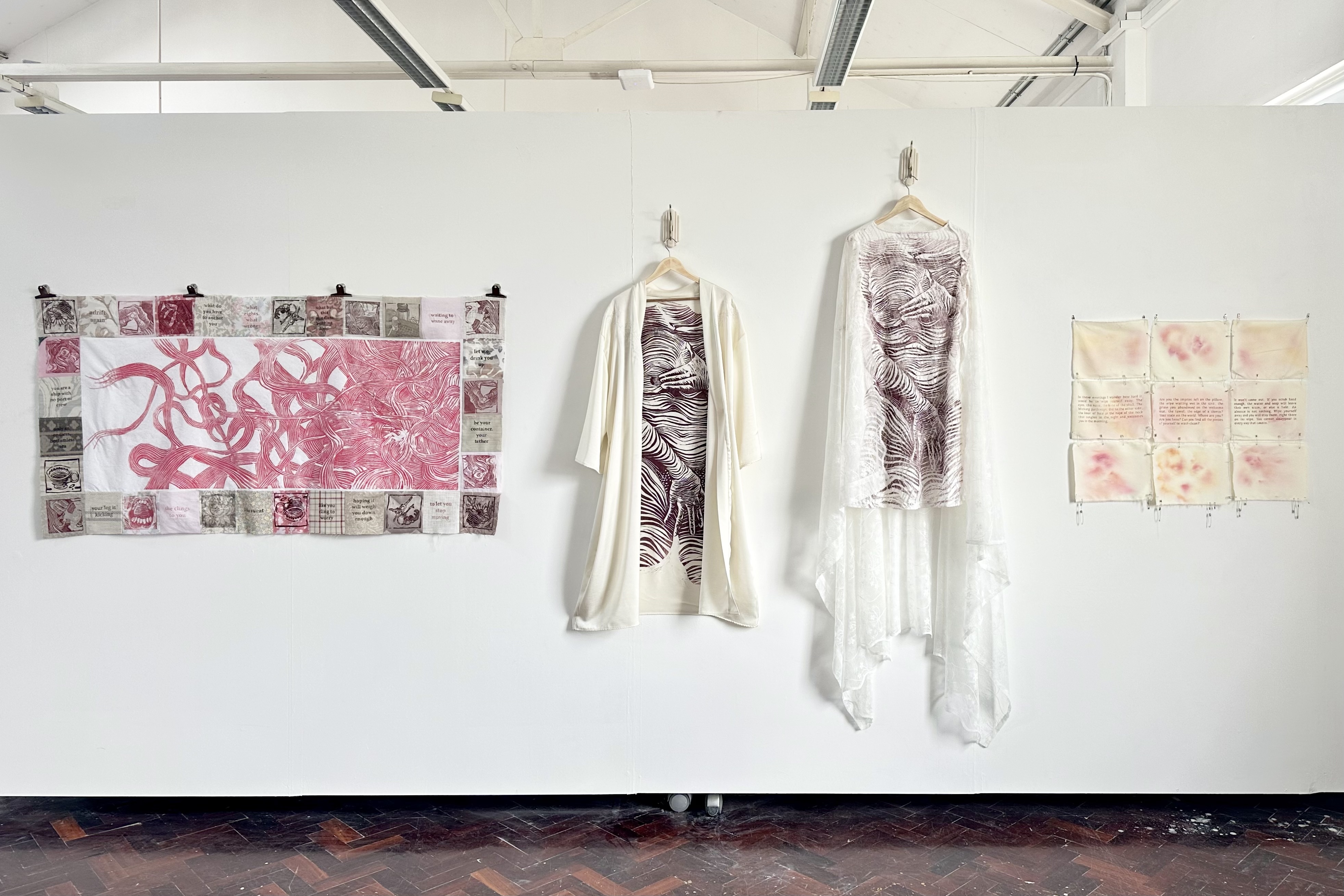
A wide view of the wall. From right to left, there is a colourful tapestry piece with prints on it, a light robe with a woman’s body printed on it, a textured white dress with the same print and hanging lace, then yellowed pieces of cloth with pink images and text connected by safety pins in a grid.
Installation view of Gaba Potoczek, **What You May Find Searching for the Door**, 2026.
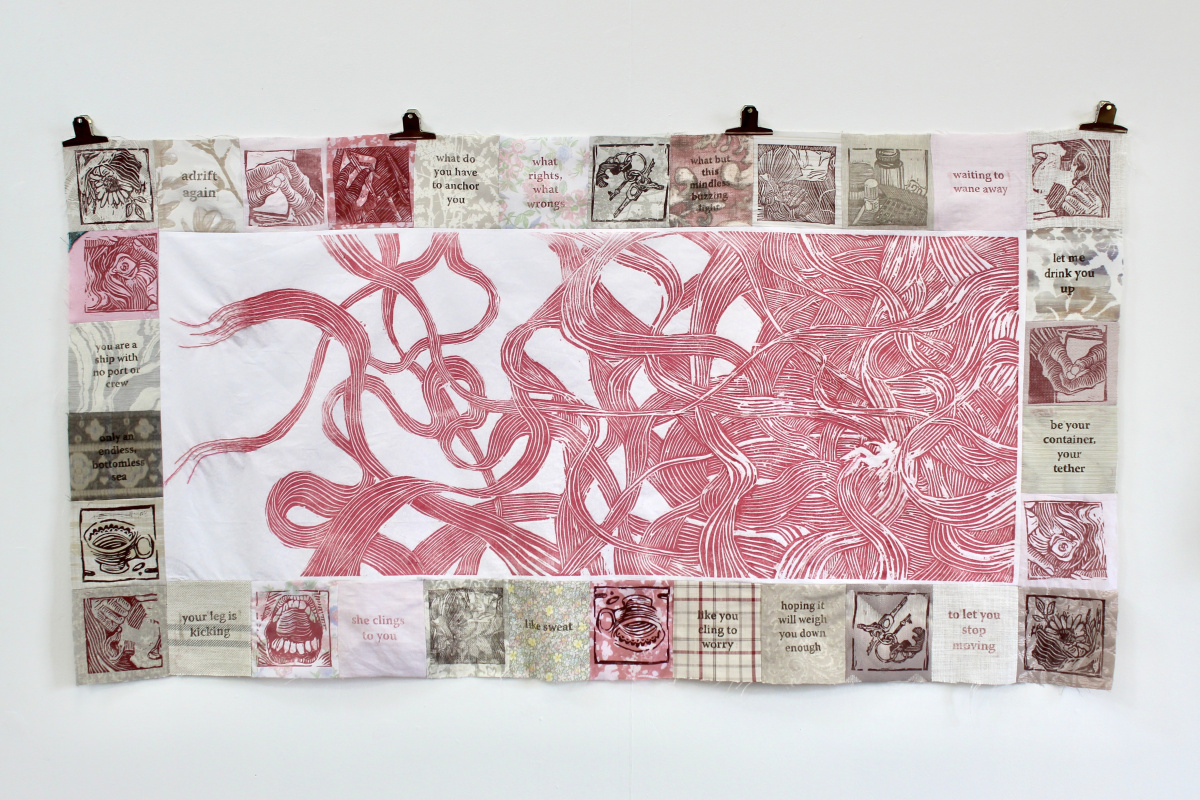
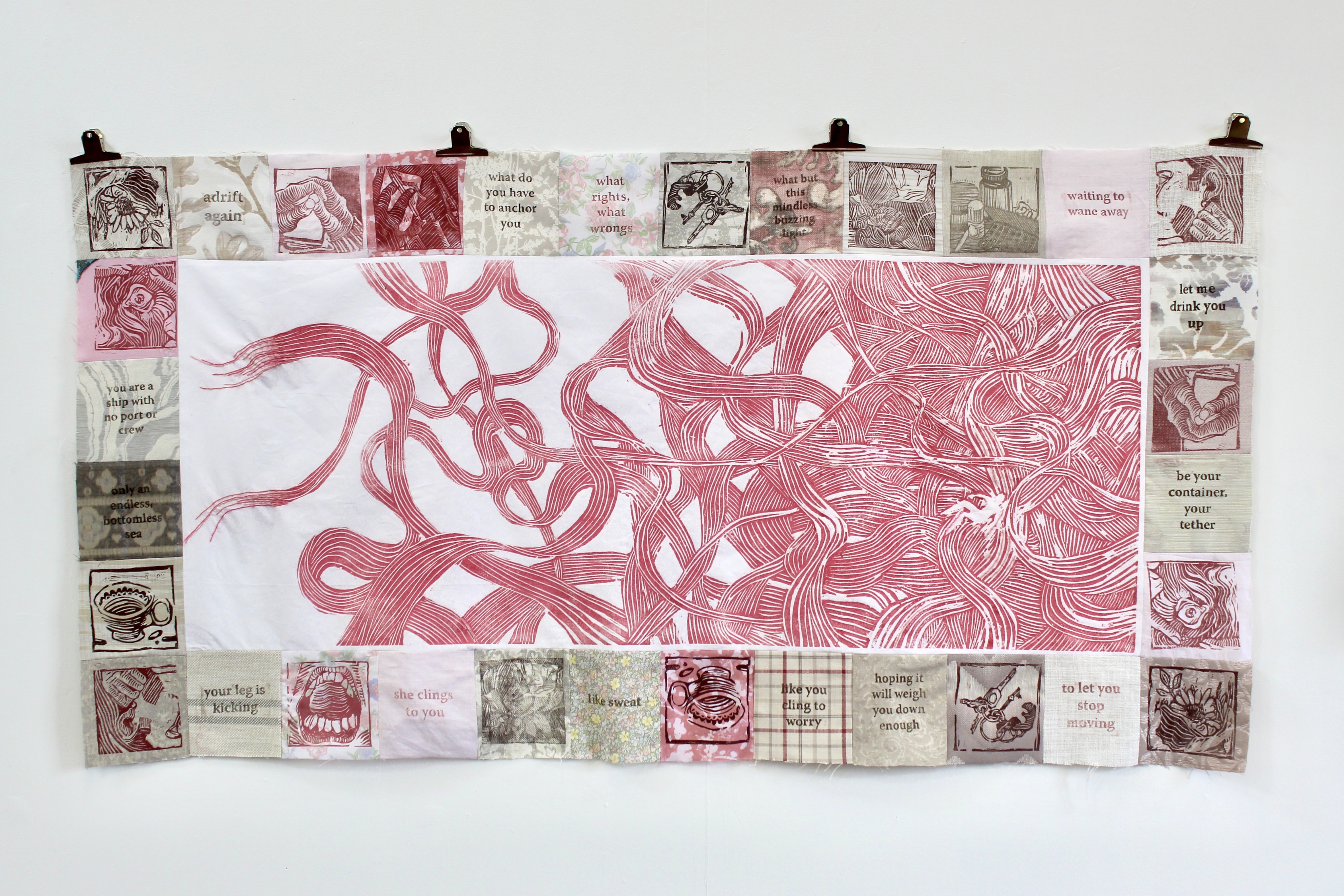
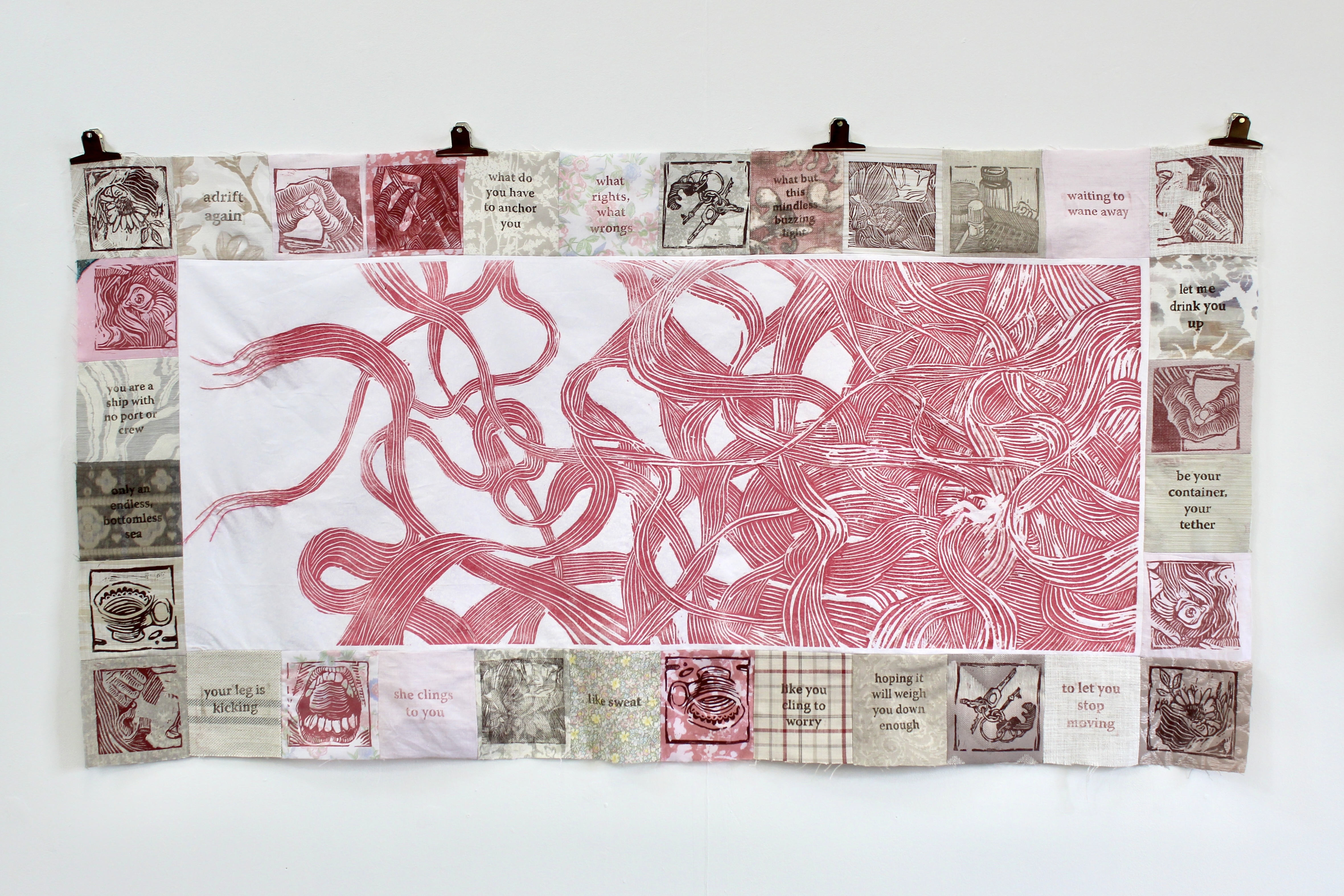
A rectangular tapestry piece. In the centre, there is a long print of pink overlapping lines surrounding a small negative space figure. Around that, there is a border of small squares of fabric stitched together. Each has a print or a small section of text on it.
Gaba Potoczek, **A Quilt Kept Under the Bed**, 2026. Woodcut and linocut print with embroidery on fabric, 165 x 85 cm.
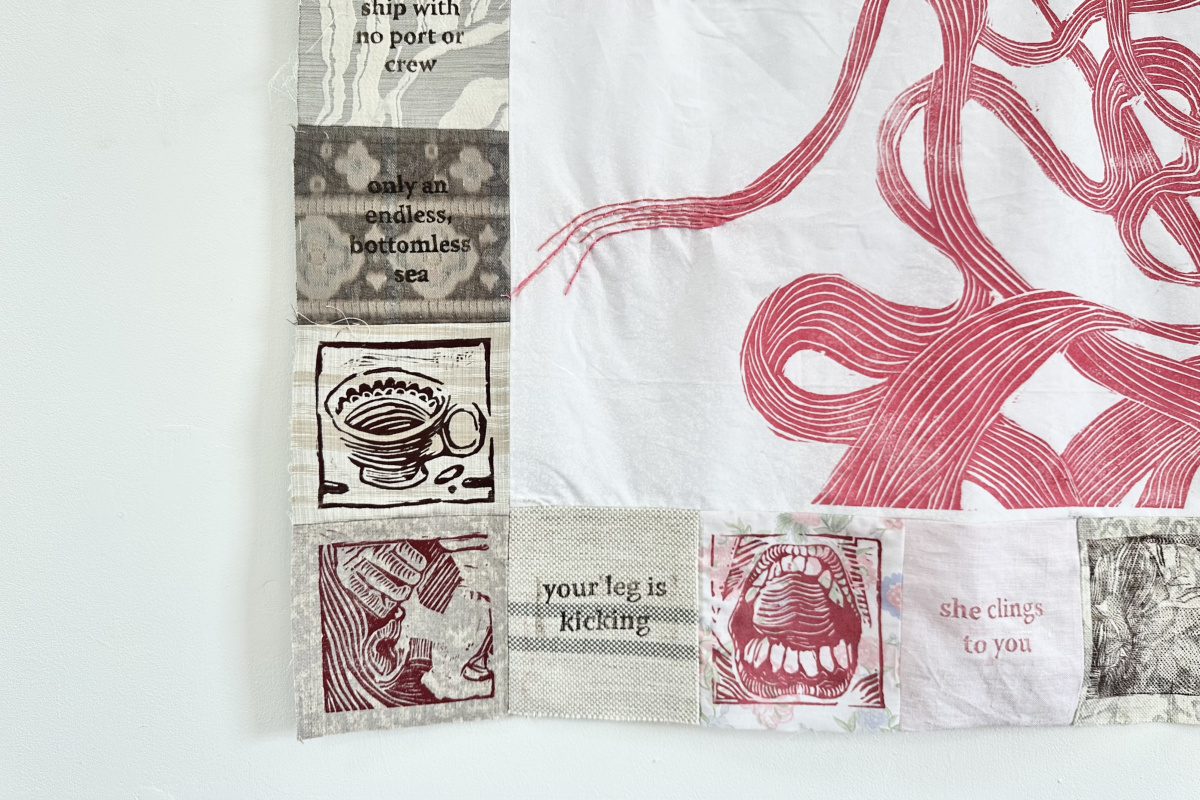
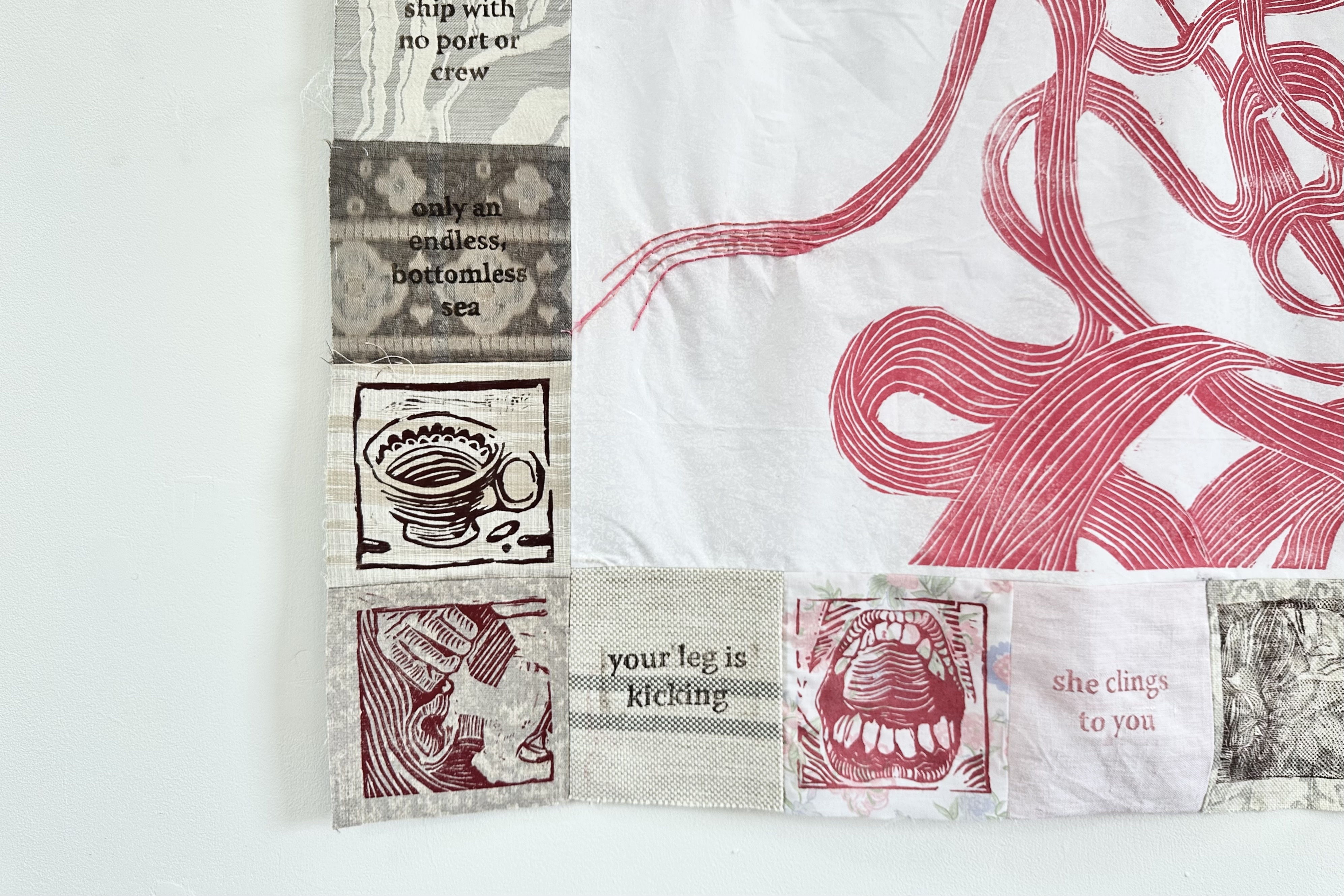
A closeup of the quilt. There is embroidery visible continuing off of the pink lines in the centre, and a border of scrap fabrics. A print of a cup, a face and a mouth, with text in the squares between and around them.
Gaba Potoczek, **A Quilt Kept Under the Bed**, 2026. Woodcut and linocut print with embroidery on fabric, 165 x 85 cm. Detail.
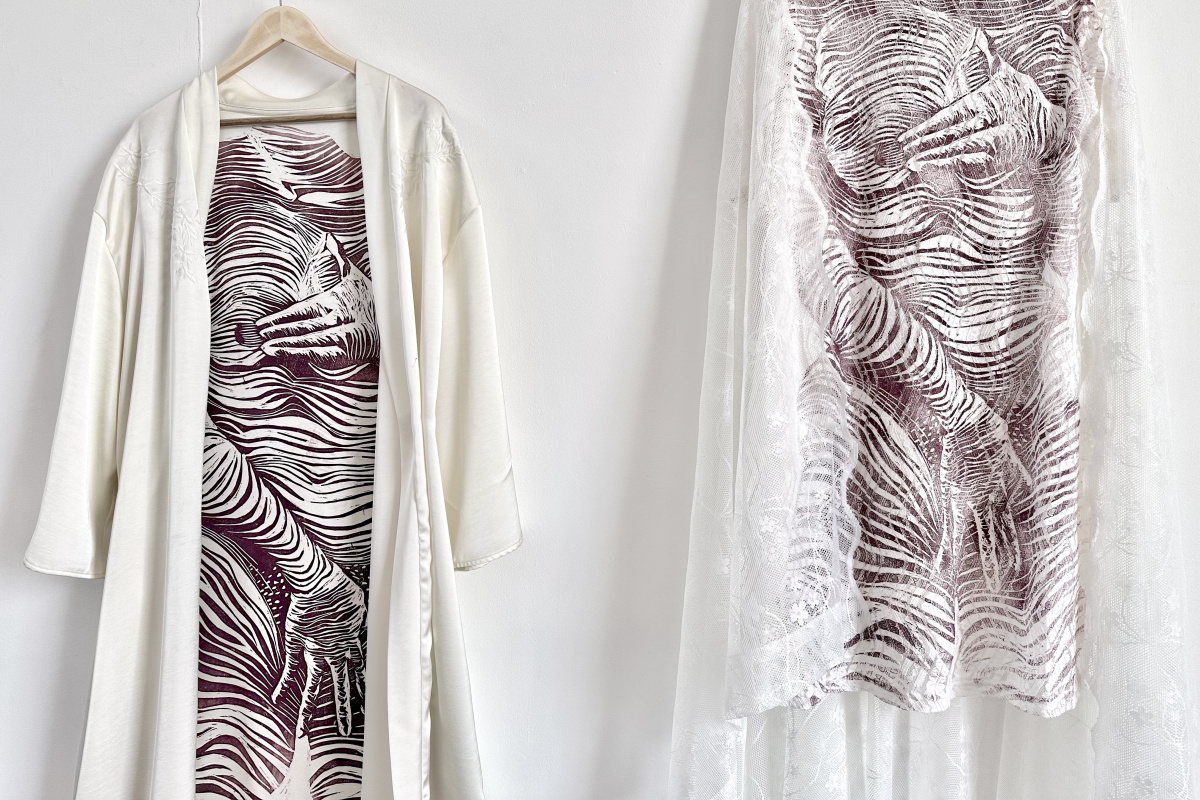
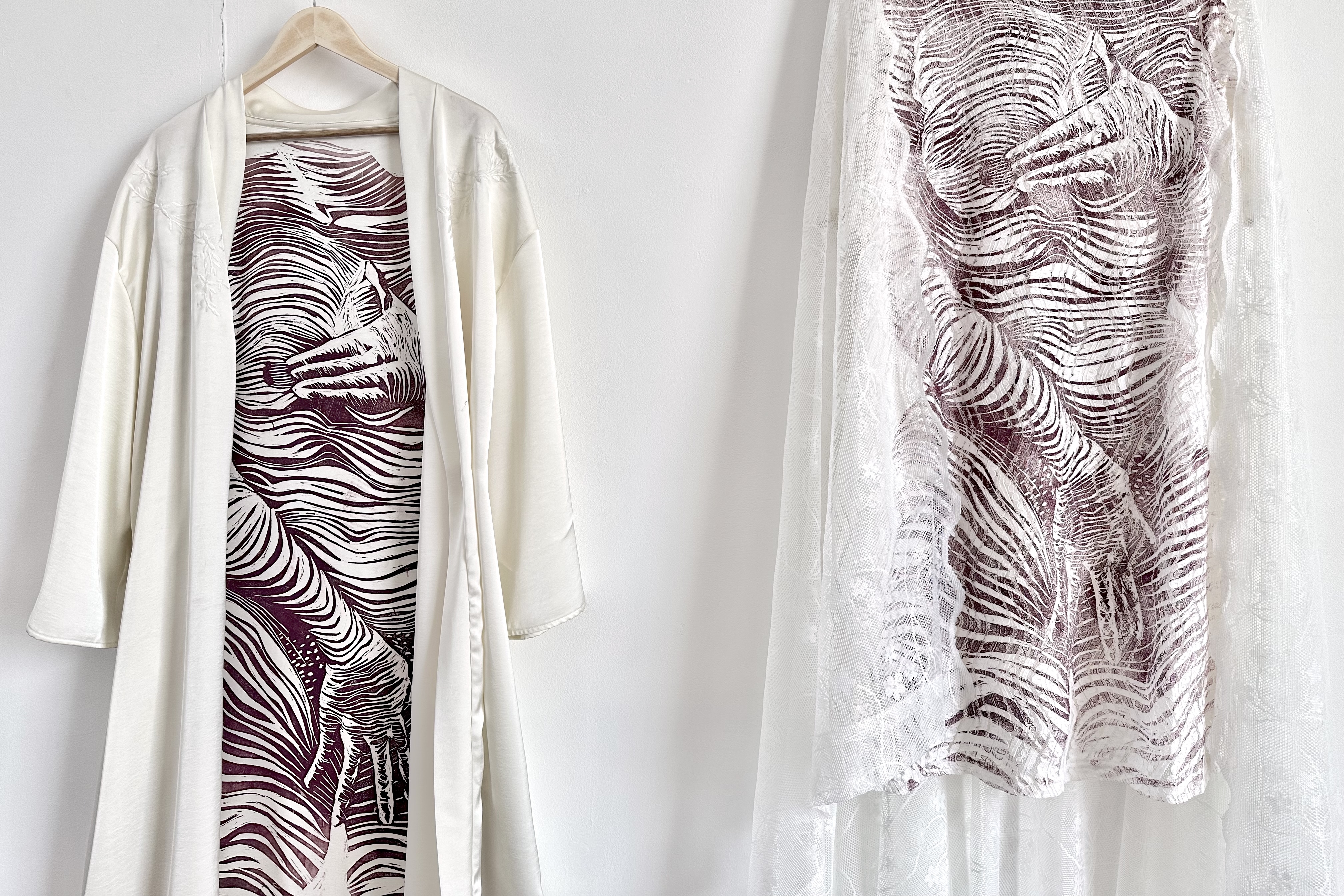
A closeup photo of two pieces of clothing hanging from the wall. Both have the same print of a woman’s body done with striped line. She is covering herself with both hands. The piece on the left is a yellowish robe, the one on the right a lacy white dress with more lace hanging from it.
Installation view, left to right: Gaba Potoczek, **A Robe to Sleep In**, 2026. Woodcut print on found robe, 70 x 145 cm. Gaba Potoczek, **Perchance to Dream**, 2026. Woodcut print on found dress with lace, 65 x 200 cm.
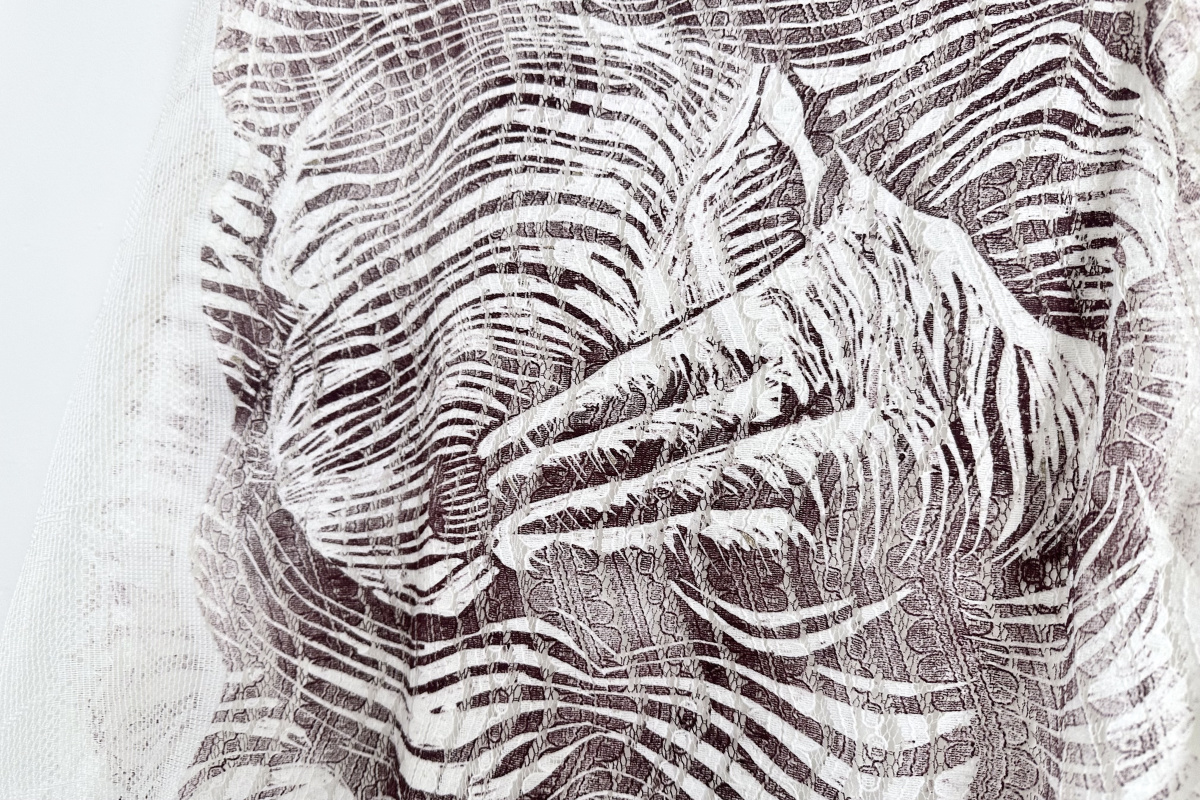
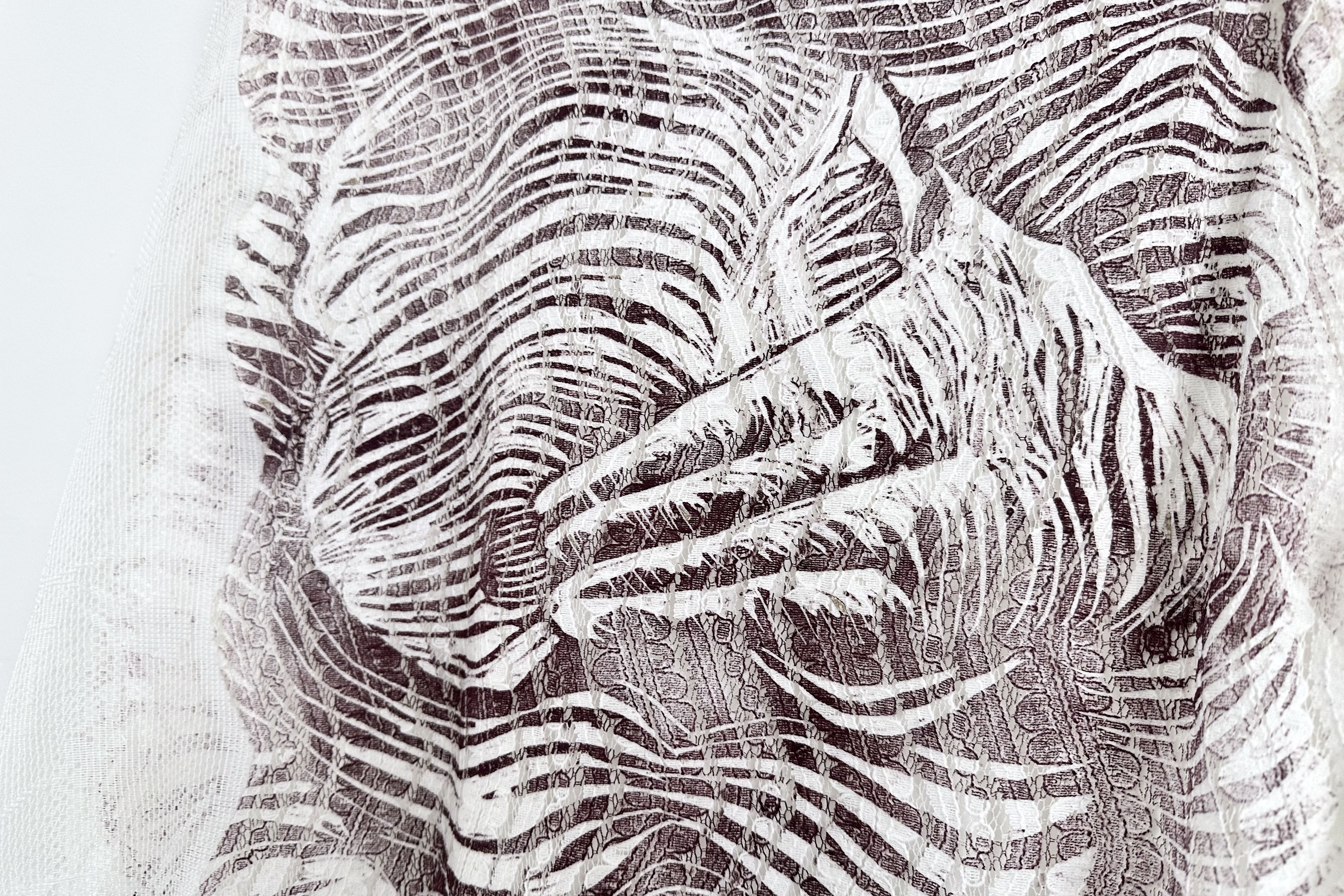
A closeup of a print on a lace dress. A hand is depicted covering a woman's torso, with the lace underneath texturing the print.
Gaba Potoczek, **Perchance to Dream**, 2026. Woodcut print on found dress with lace, 65 x 200 cm. Detail.
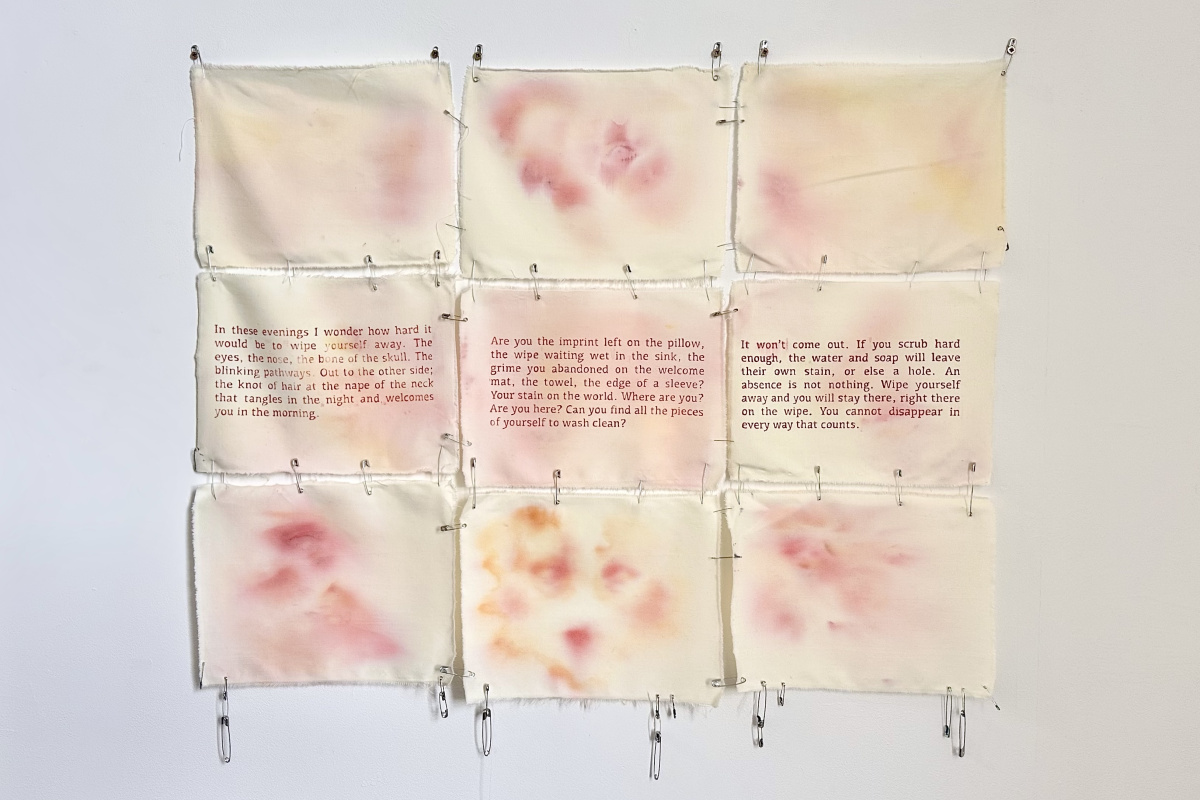
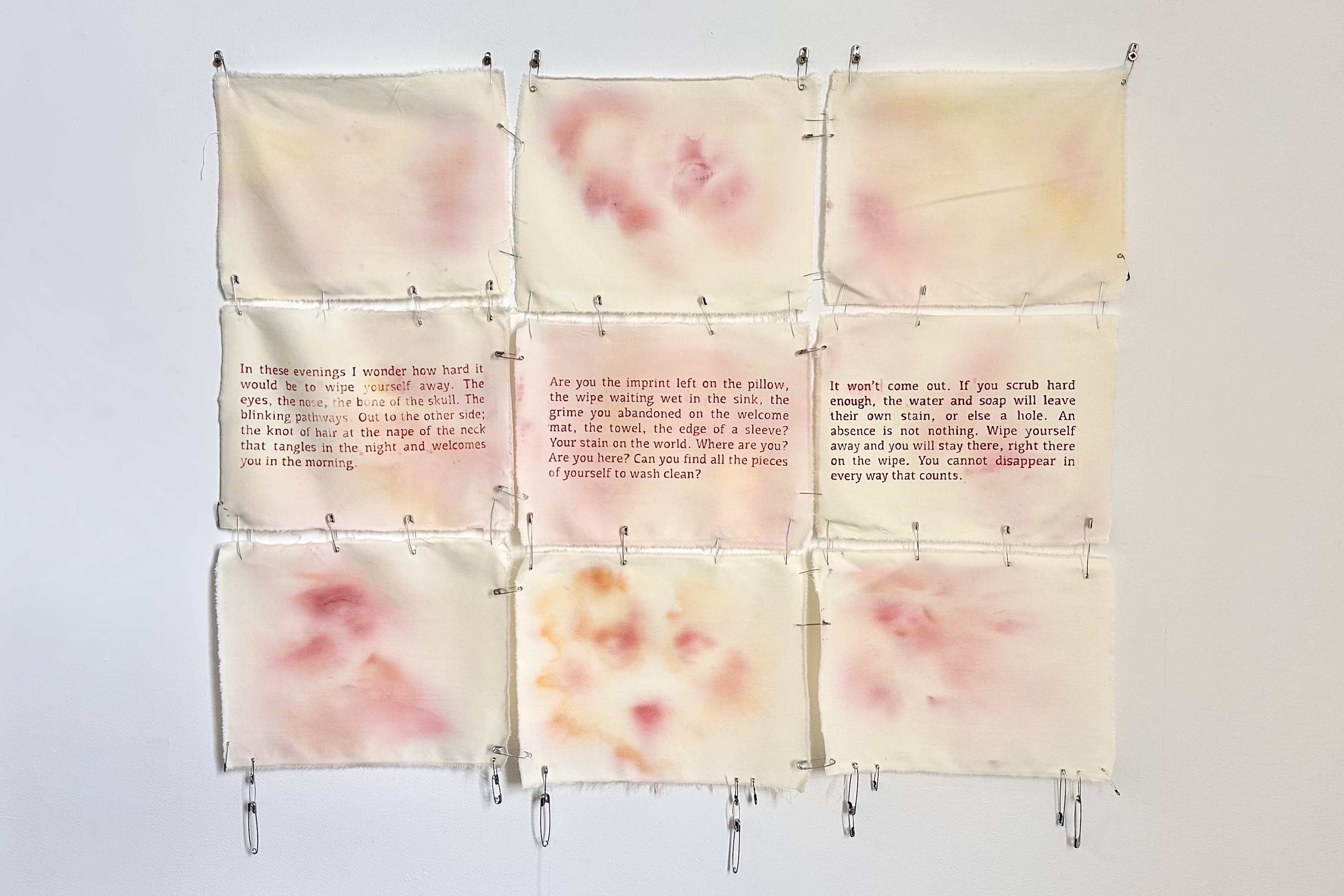
A 3x3 grid of yellowed rectangular pieces of cloth held together by safety pins. In the middle row, there’s printed text on each one, while in the other rows, there are pink and yellow watercolour splotches that resemble faces and eyes.
Gaba Potoczek, **My Makeup Wipes**, 2026. Watercolour and woodcut print on cloth, 82 x 70 cm.
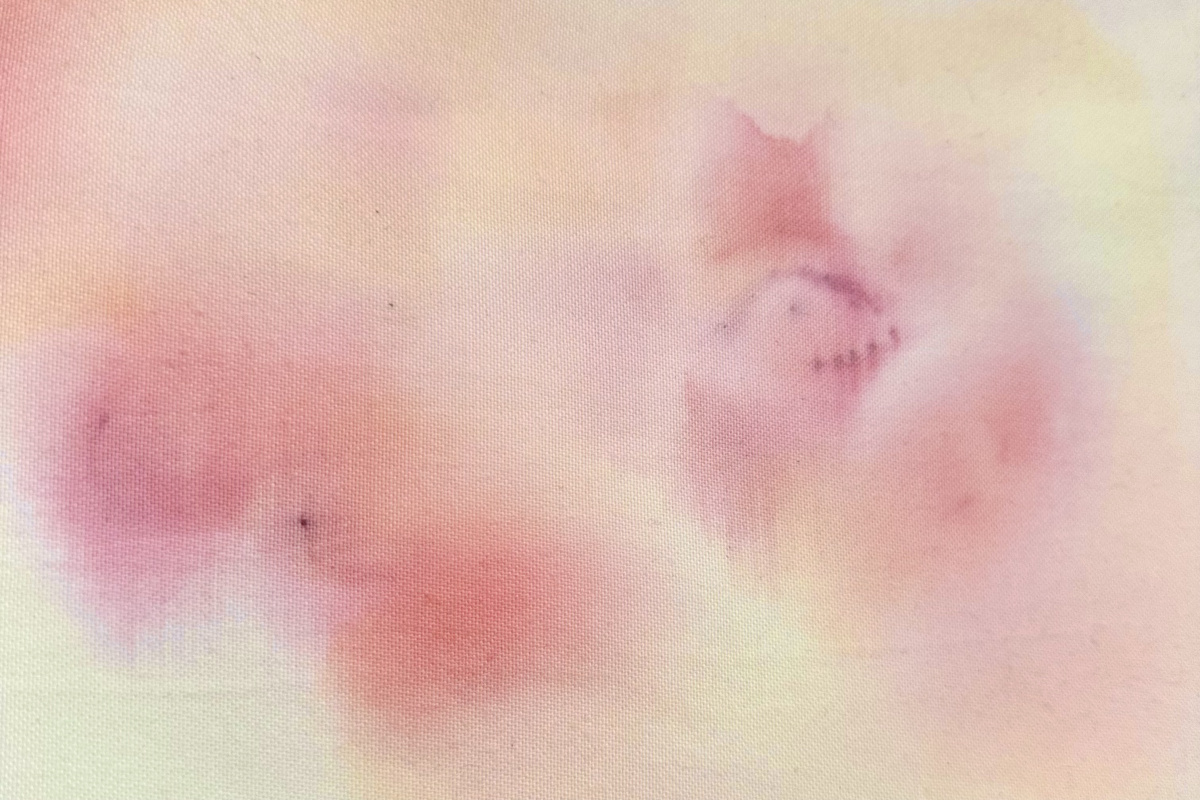
A closeup shot of a cloth material with watercolour pink stains on it. The shape of an eye and a cheek is suggested among the seeming stains.
Gaba Potoczek, **My Makeup Wipes**, 2026. Watercolour and woodcut print on cloth, 82 x 70 cm. Detail.
Thesis: Visual Art as a Means of Processing and Communicating the Trauma of War

The subject of art as a representative imprint of one’s struggles continues in Gaba's thesis. Through investigating the practices of two Polish artists who survived WWII, this thesis argues for visual art as a potential tool for dealing with the trauma of war. Psychological trauma is paradoxical, unspeakable and unmaking. By embracing the same unnerving preverbal structures that it assumes in the brain, visual art can help artists to deal with its effects. By externalising their experience, artists can both better understand it themselves, as well as communicate it to others through an affective experience that does not beget trauma's translation.

test
Gaba Potoczek
BA (Hons) Art

Gaba Potoczek is a visual artist from Warsaw, Poland. Her practice combines relief printing with textiles and poetry. By placing her writing and hand-carved imagery on familiar, domestic fabrics, she explores the subjects of identity, intimacy and the imprint we leave on the world around us. Potoczek has previously exhibited in **Down the road, around the corner**, Pallas Projects/Studios (2026), **Better than Ambrosia**, curated by Dylan Yearsley at the Orangery at Marlay Park (2025), and **The Place Project**, IMMA Studios (2023).
BA (Hons) Art