Princess Deans
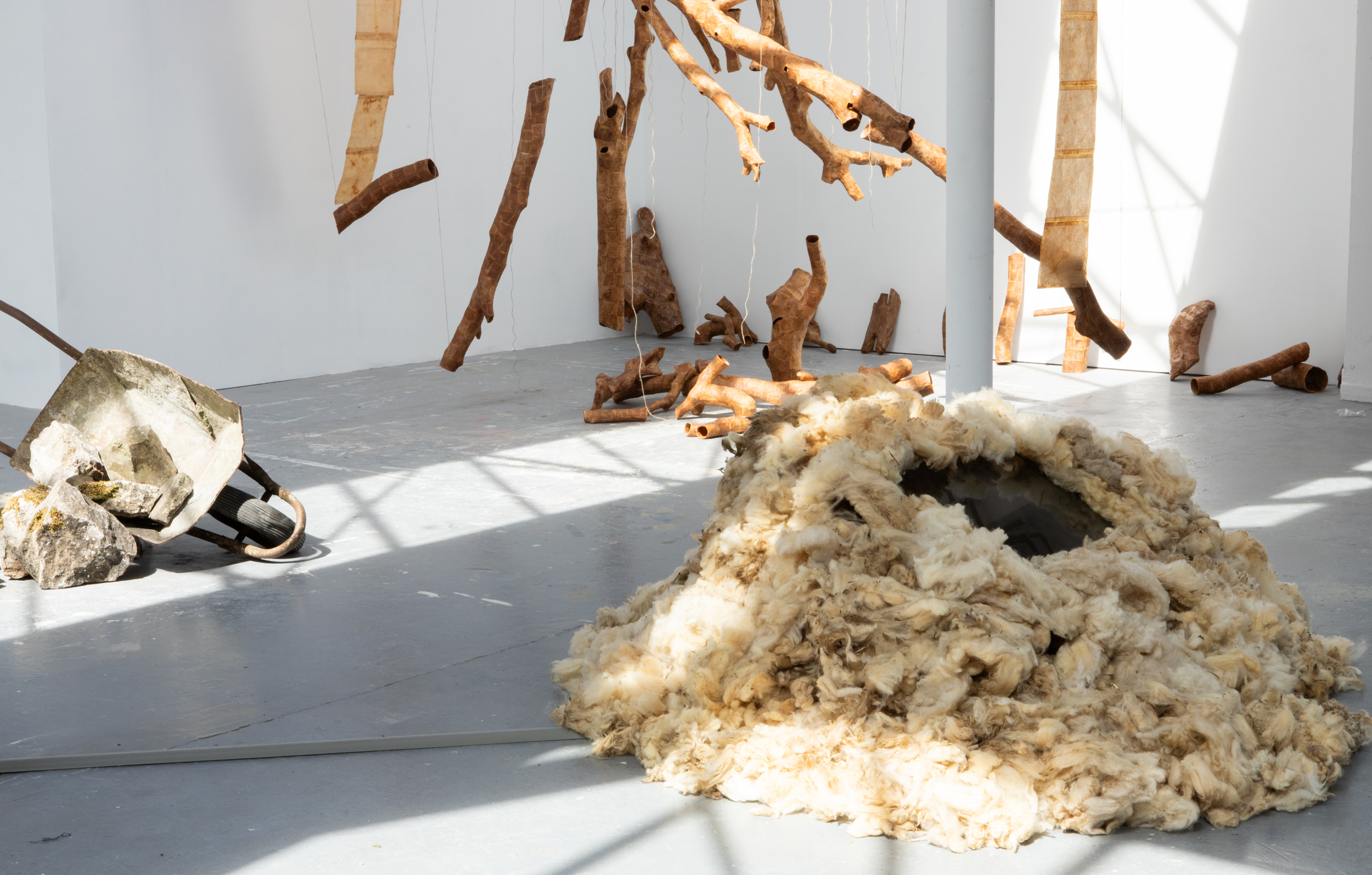
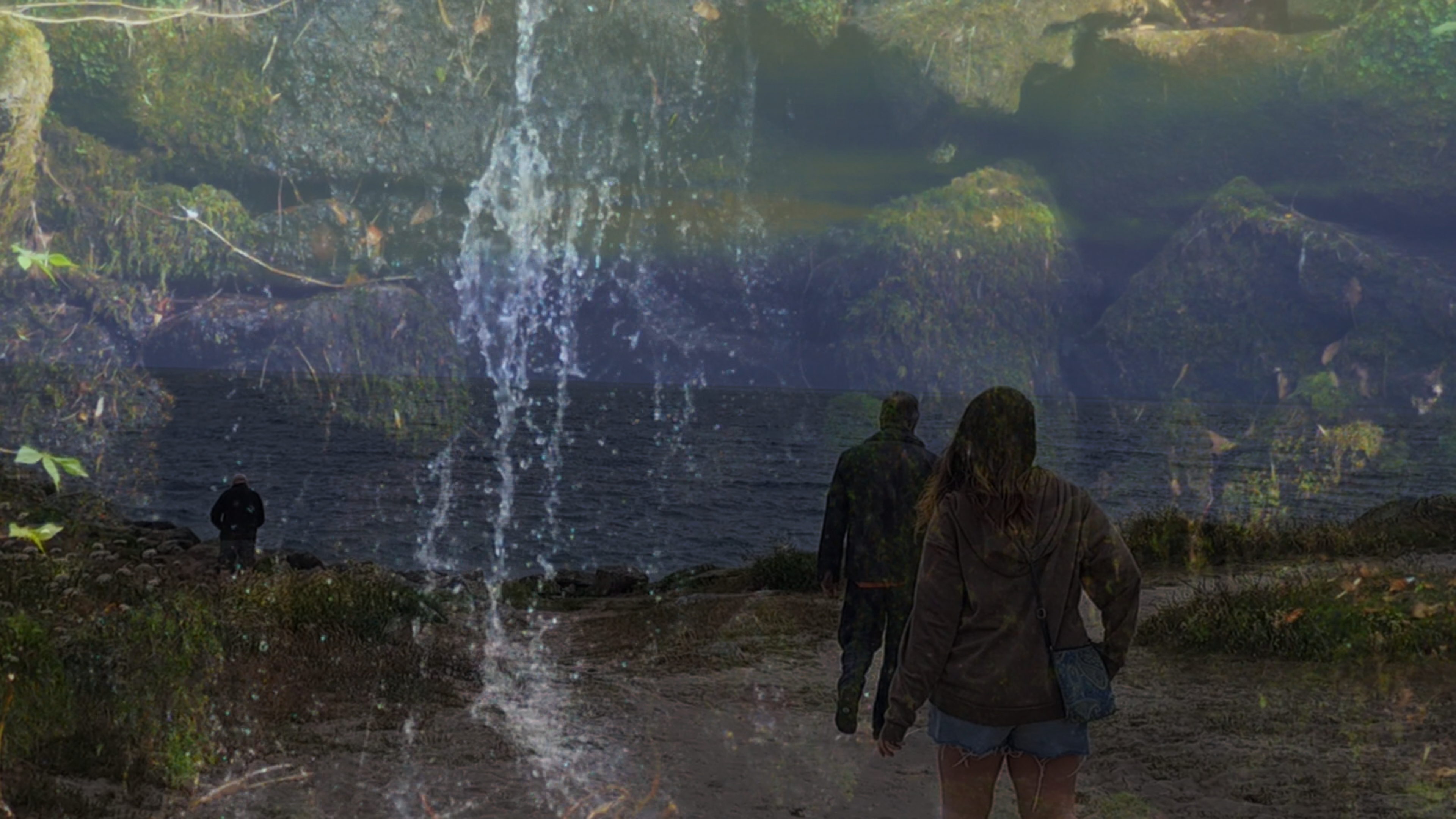
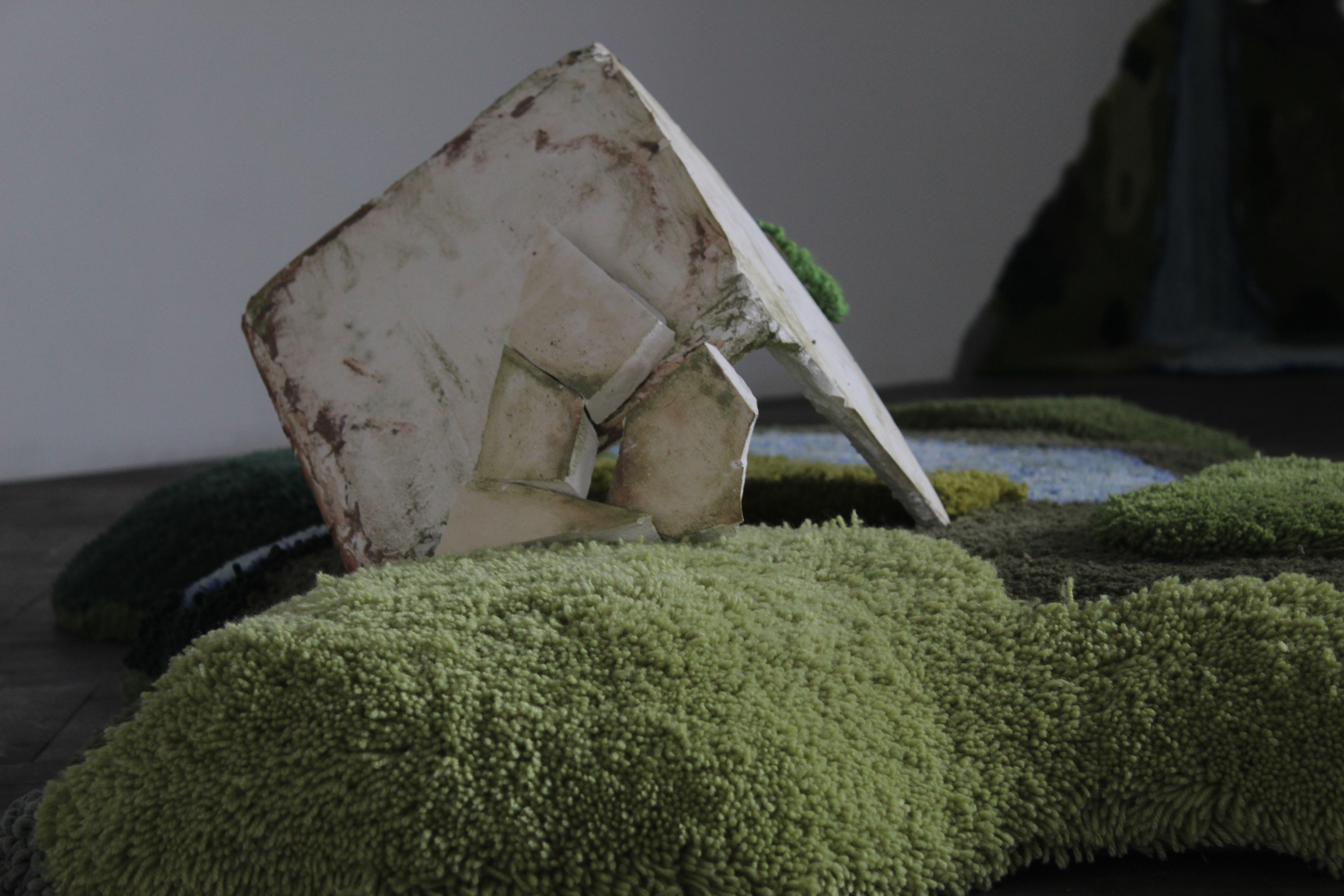
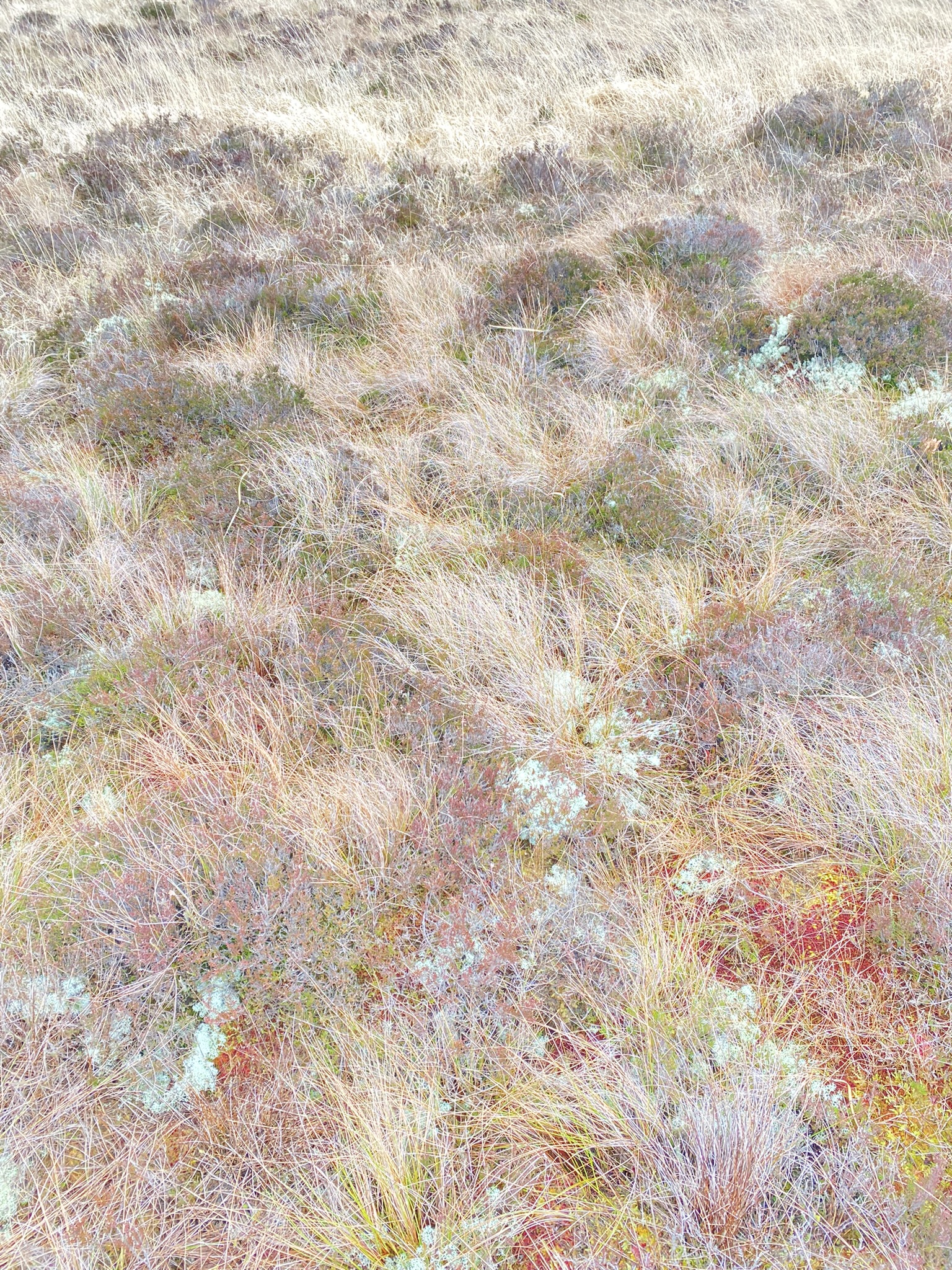
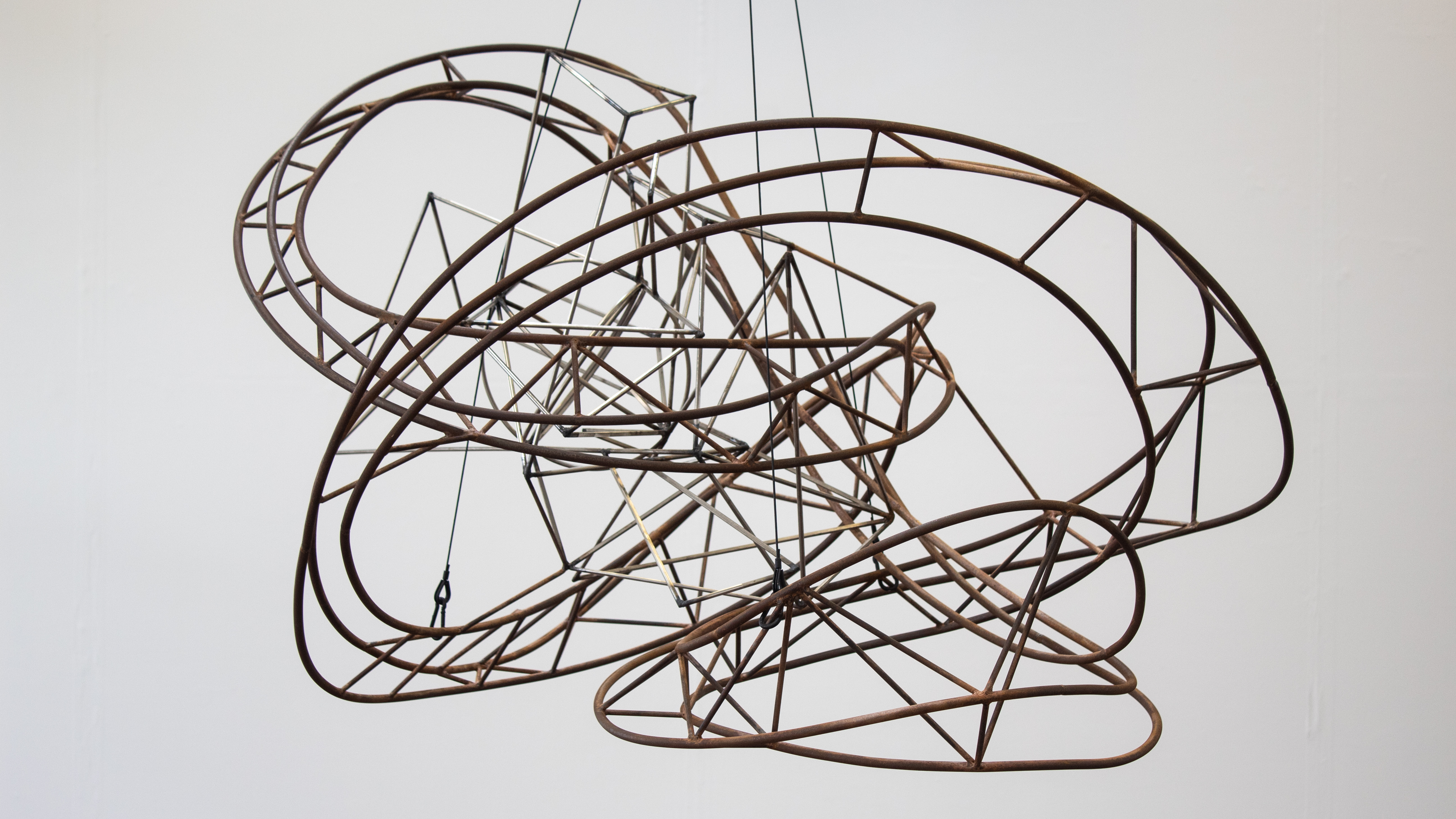
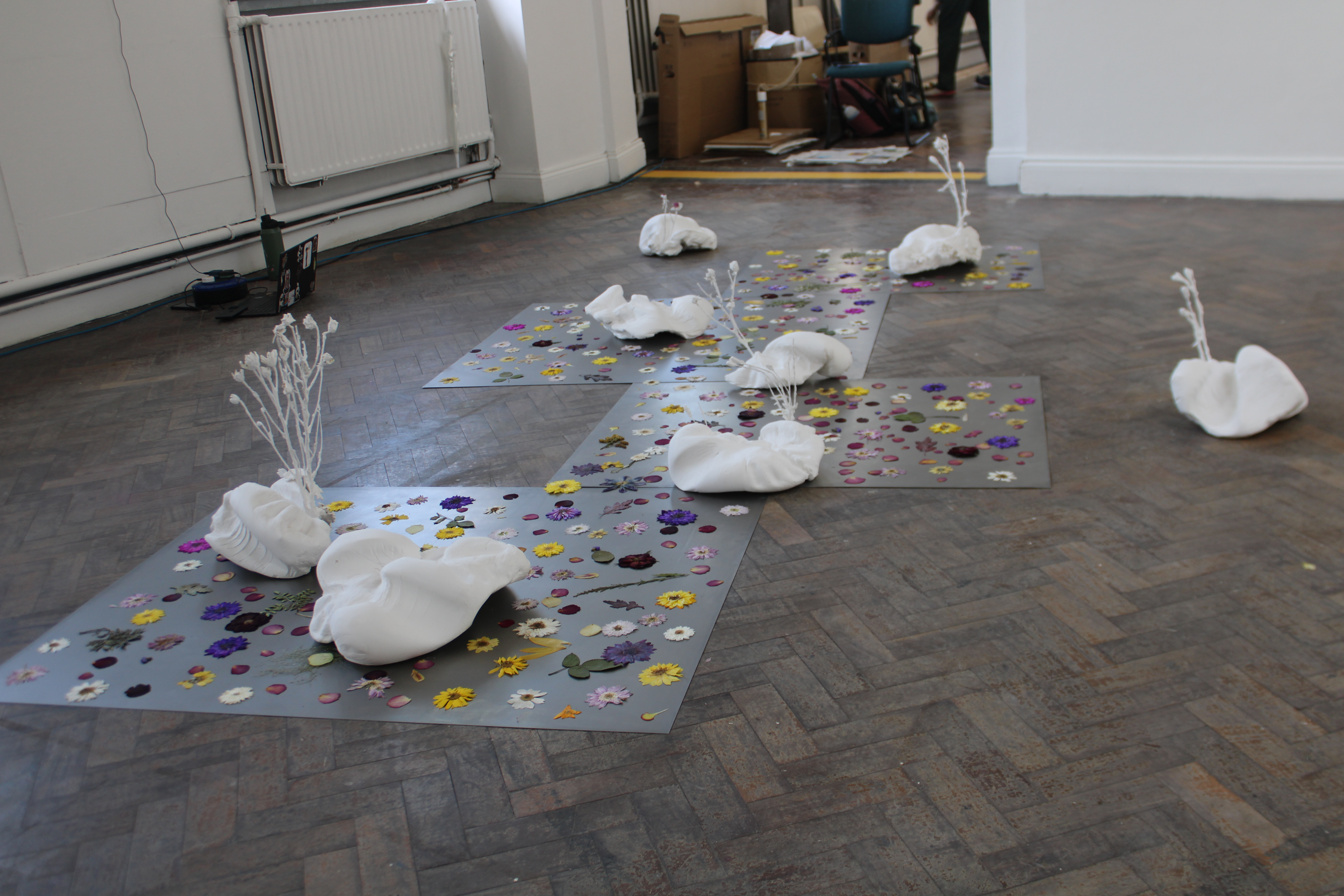
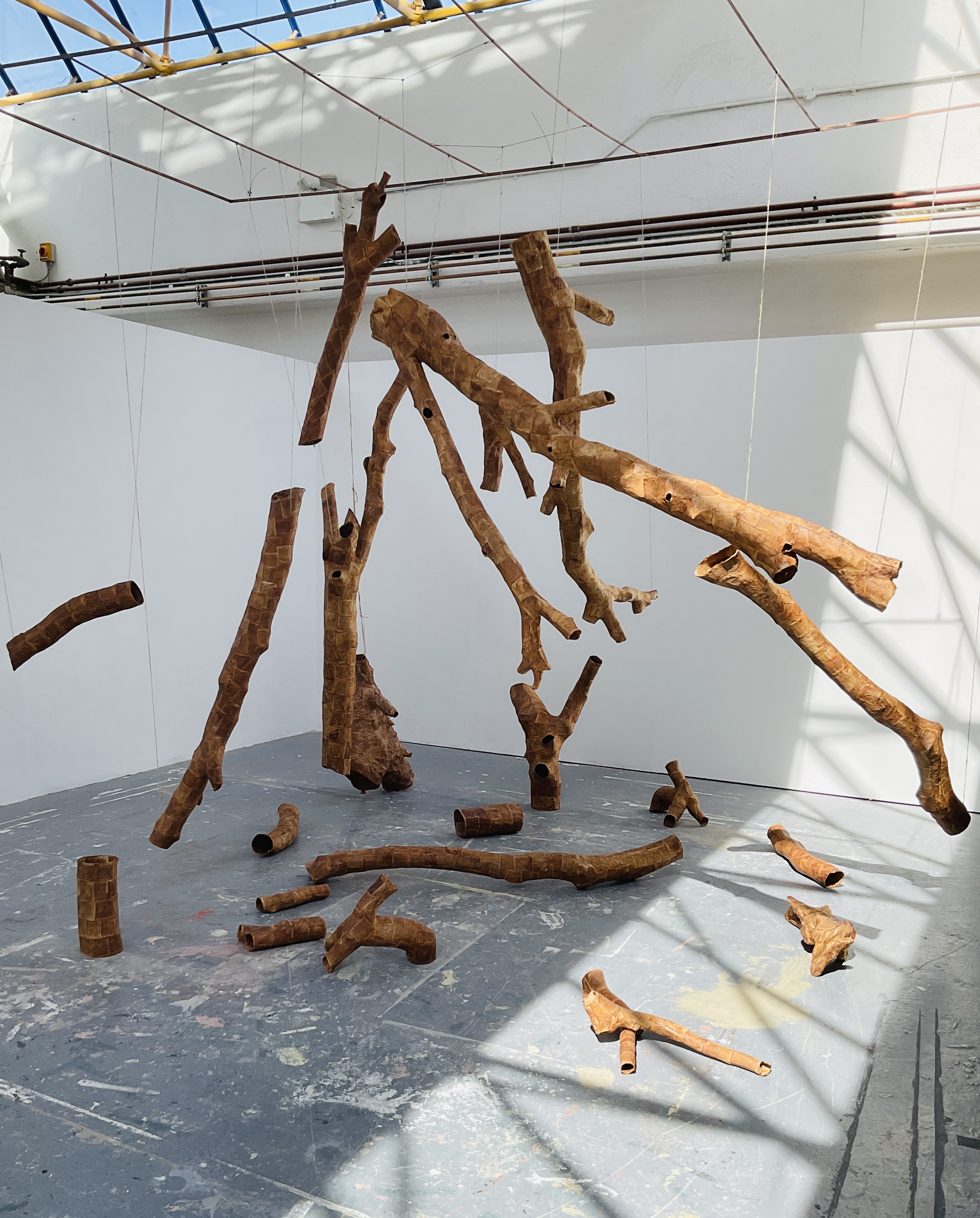
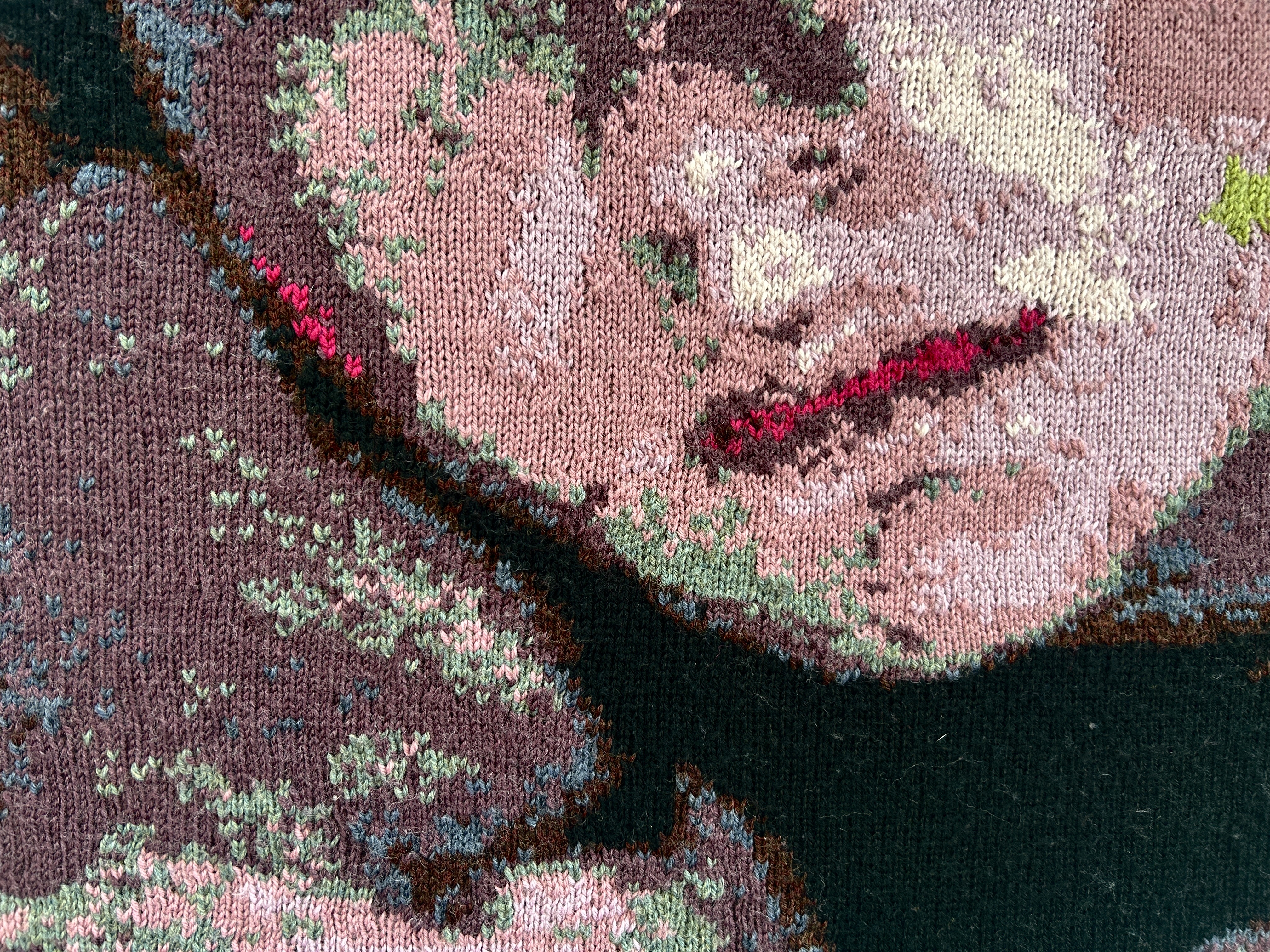
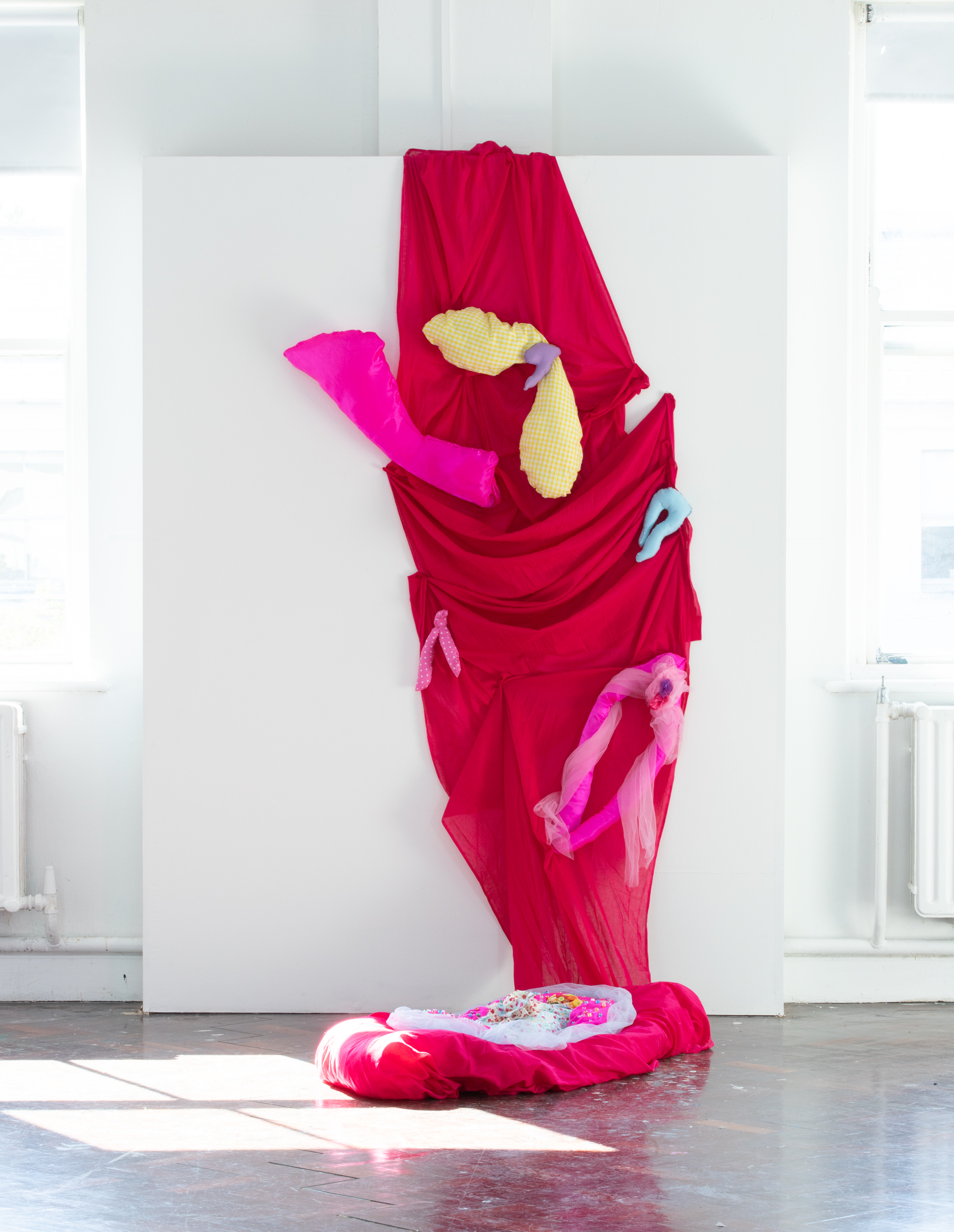
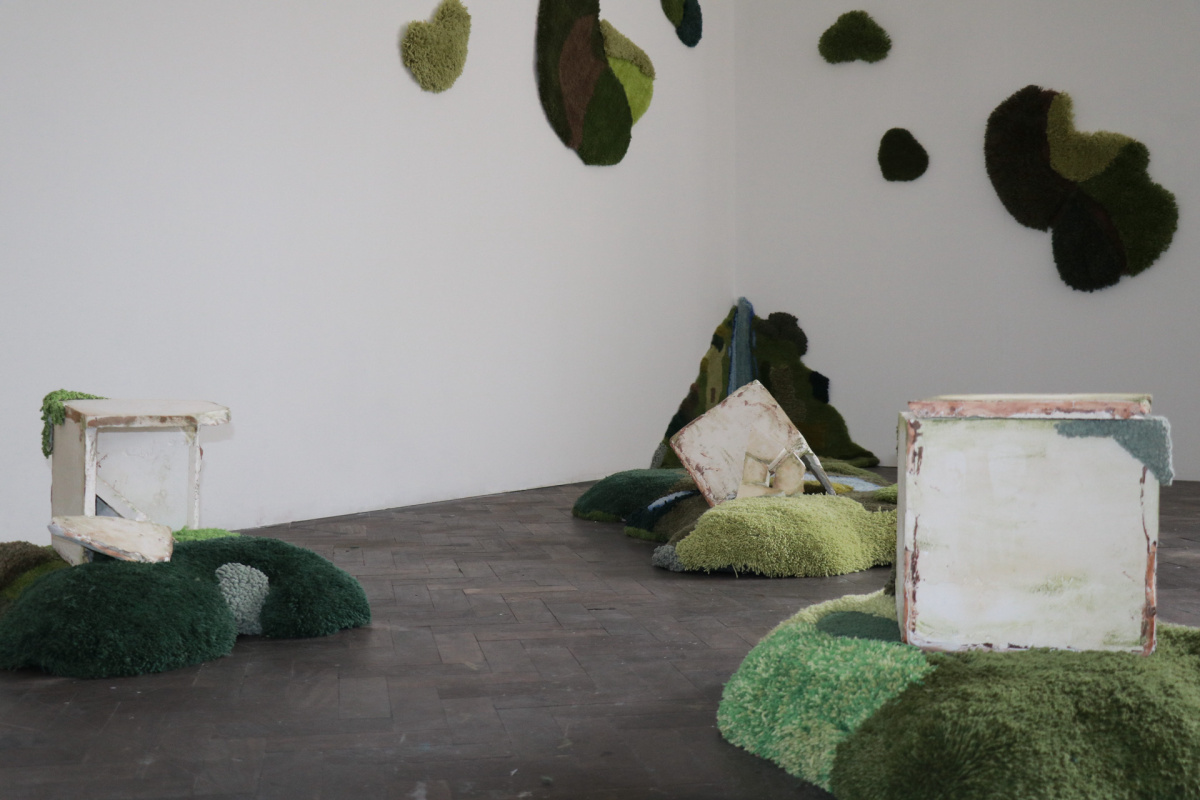
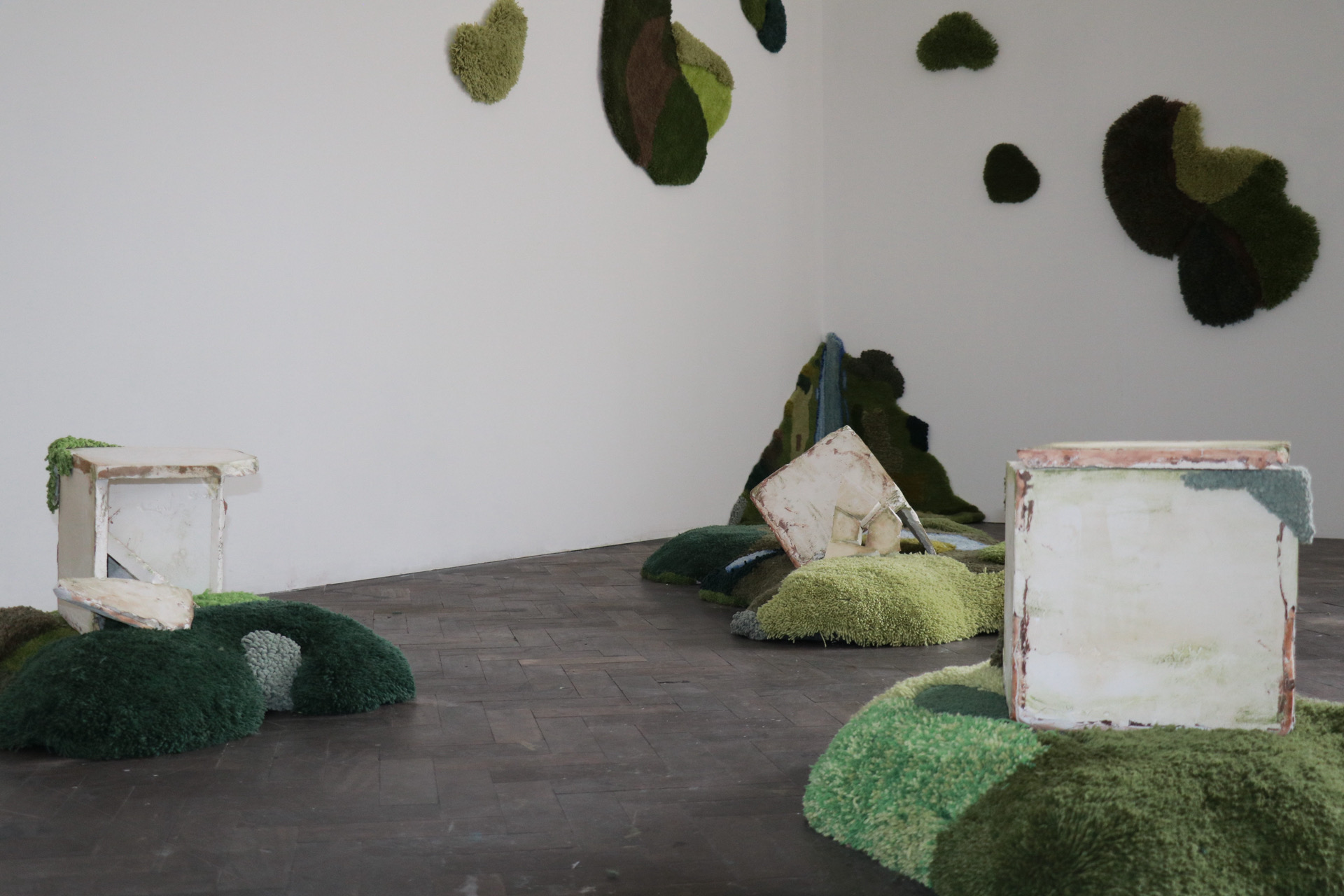
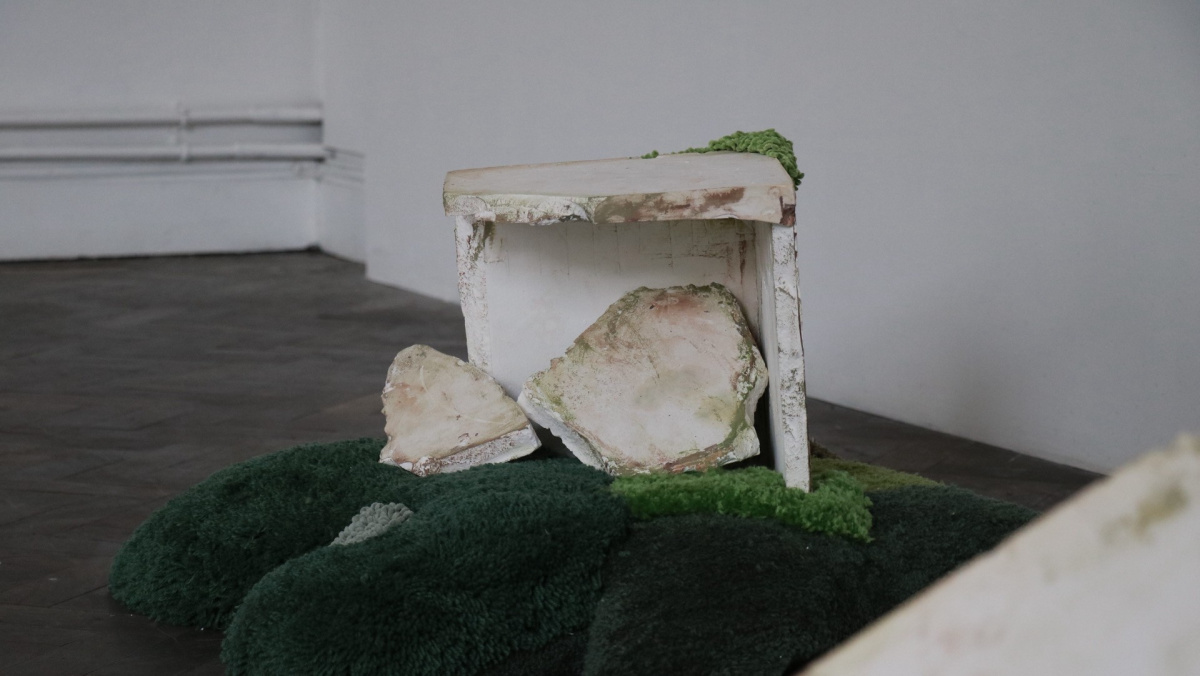
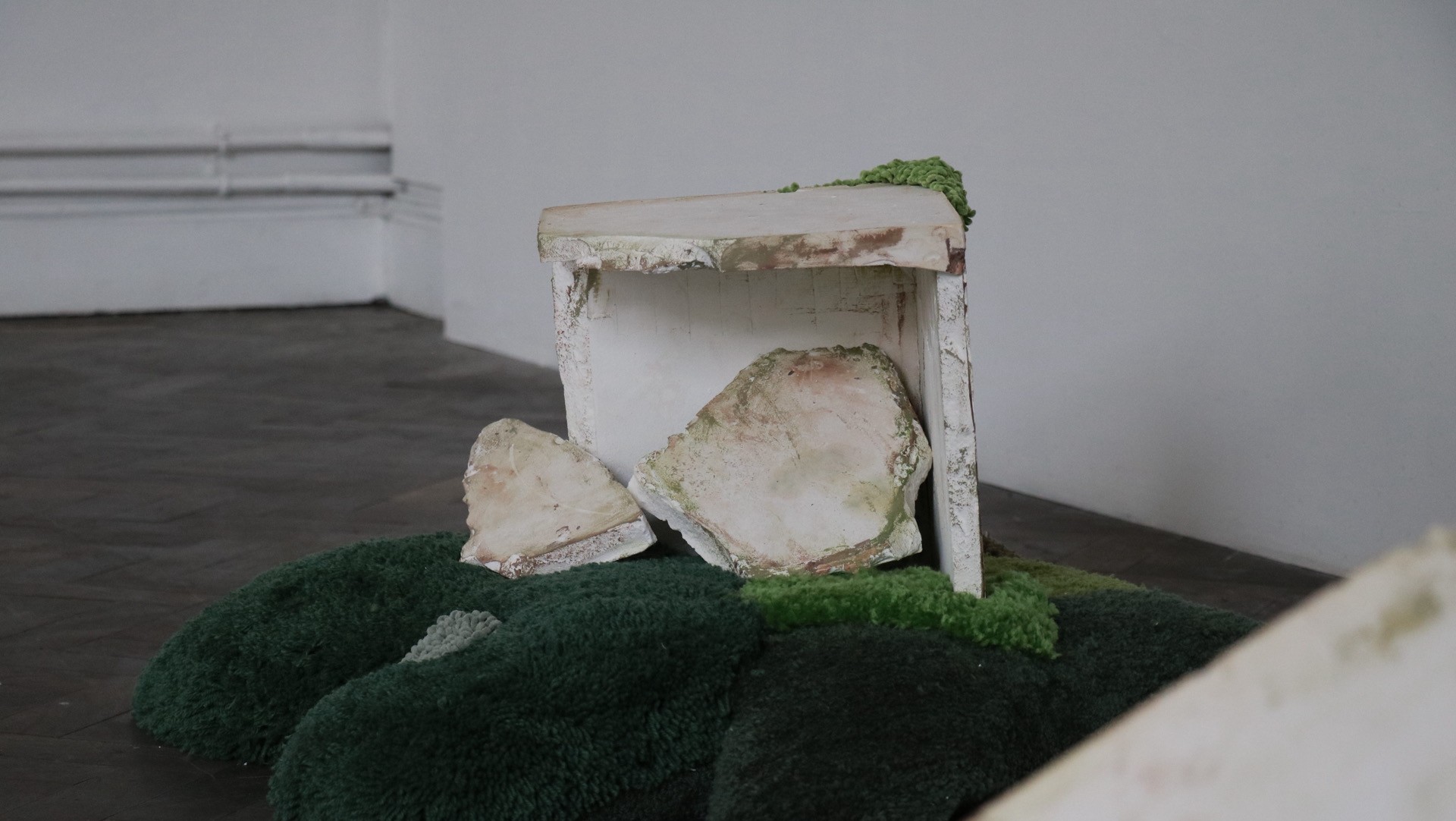
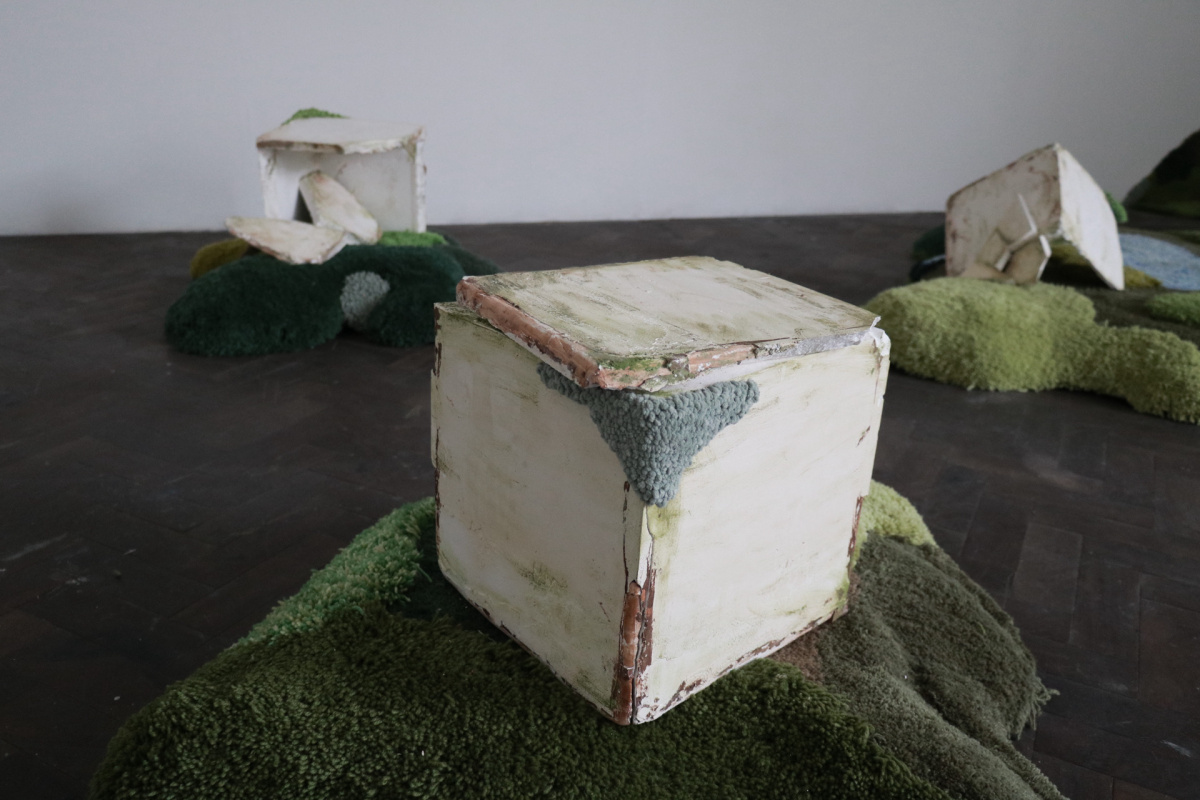
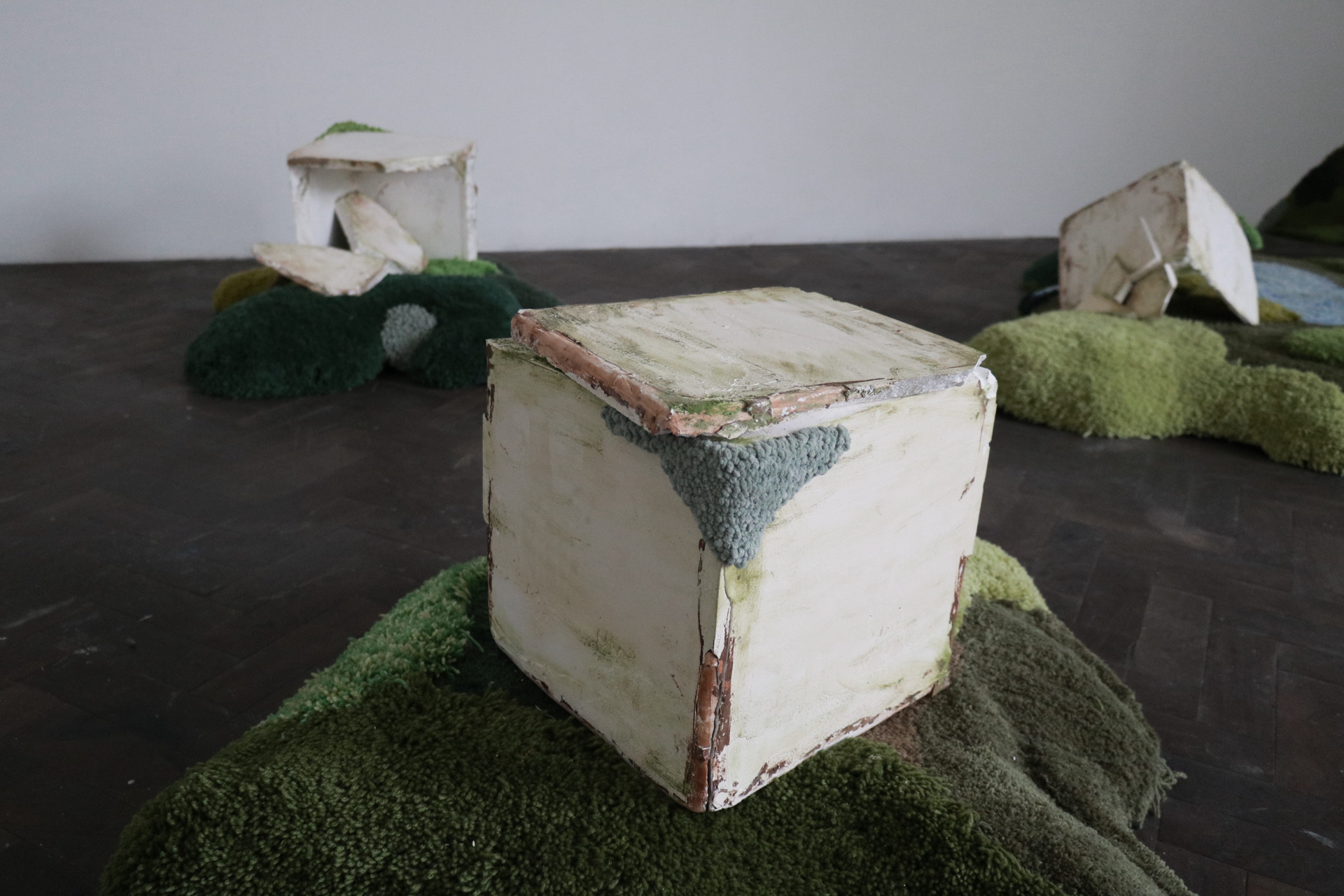
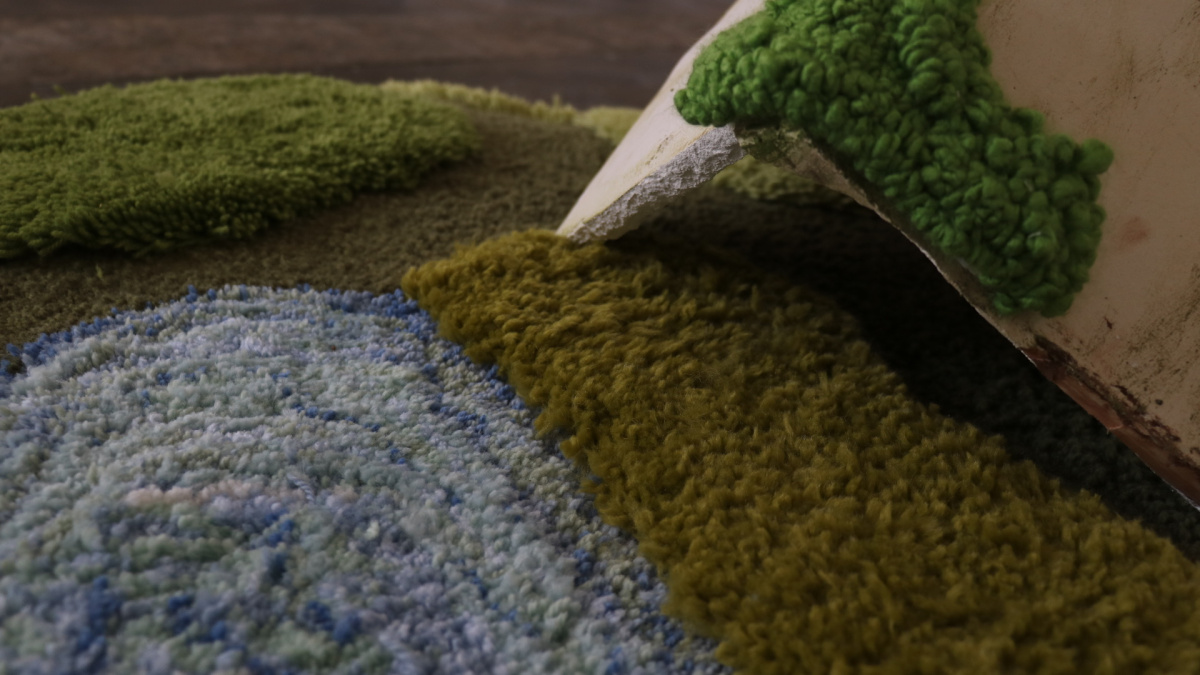
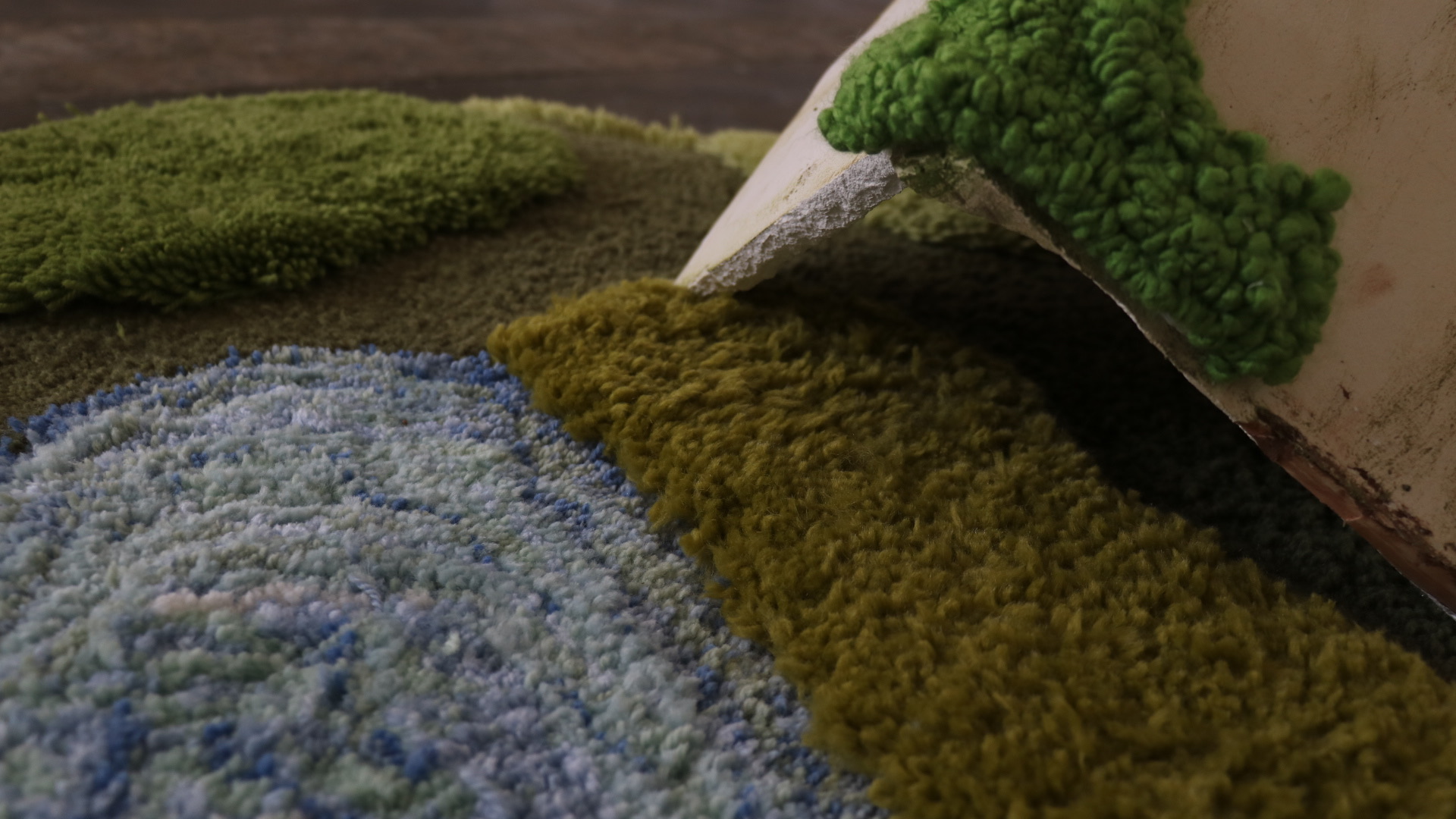
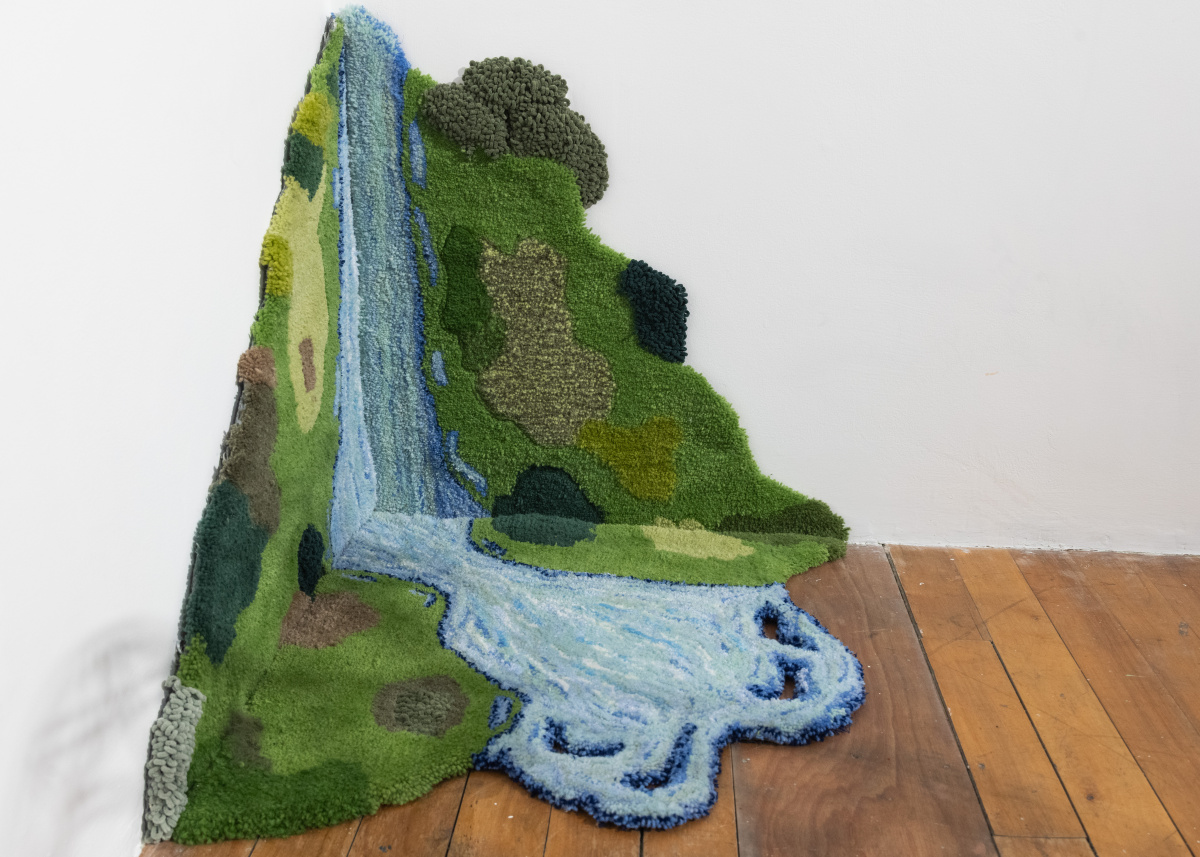
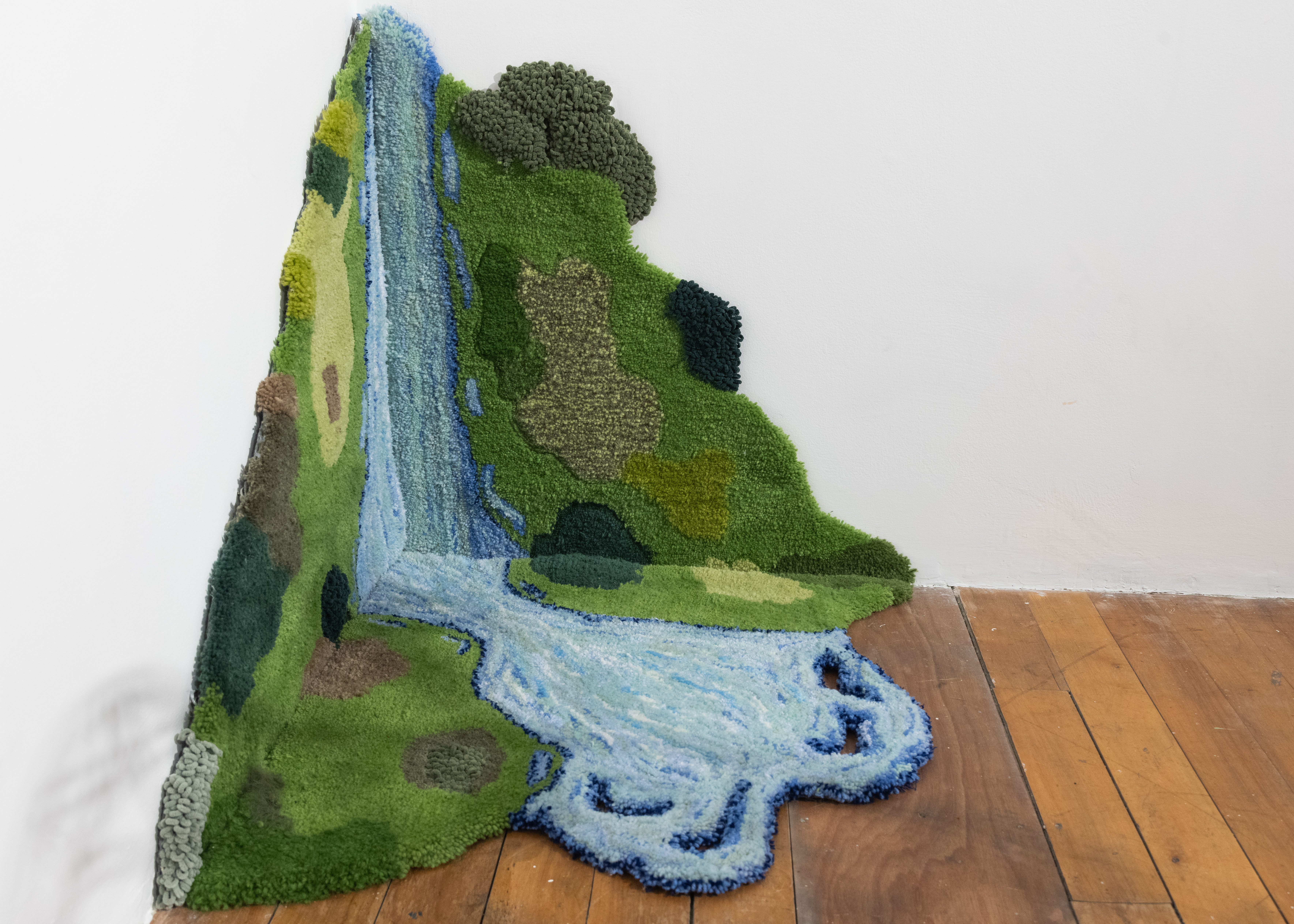
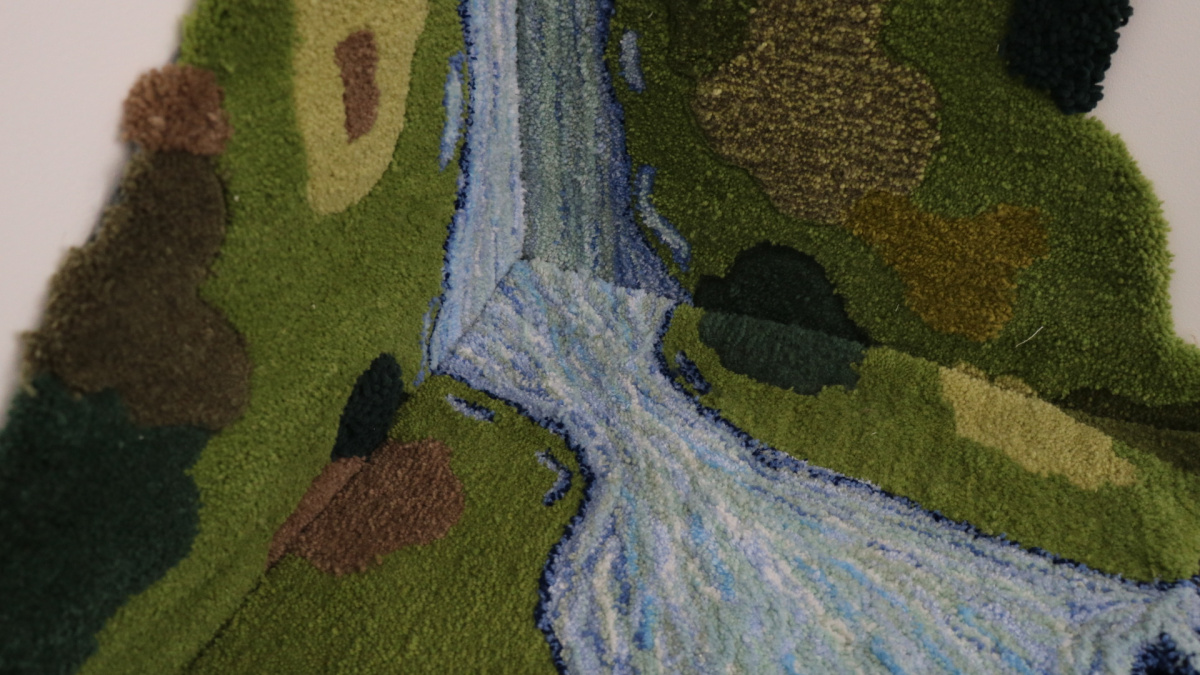
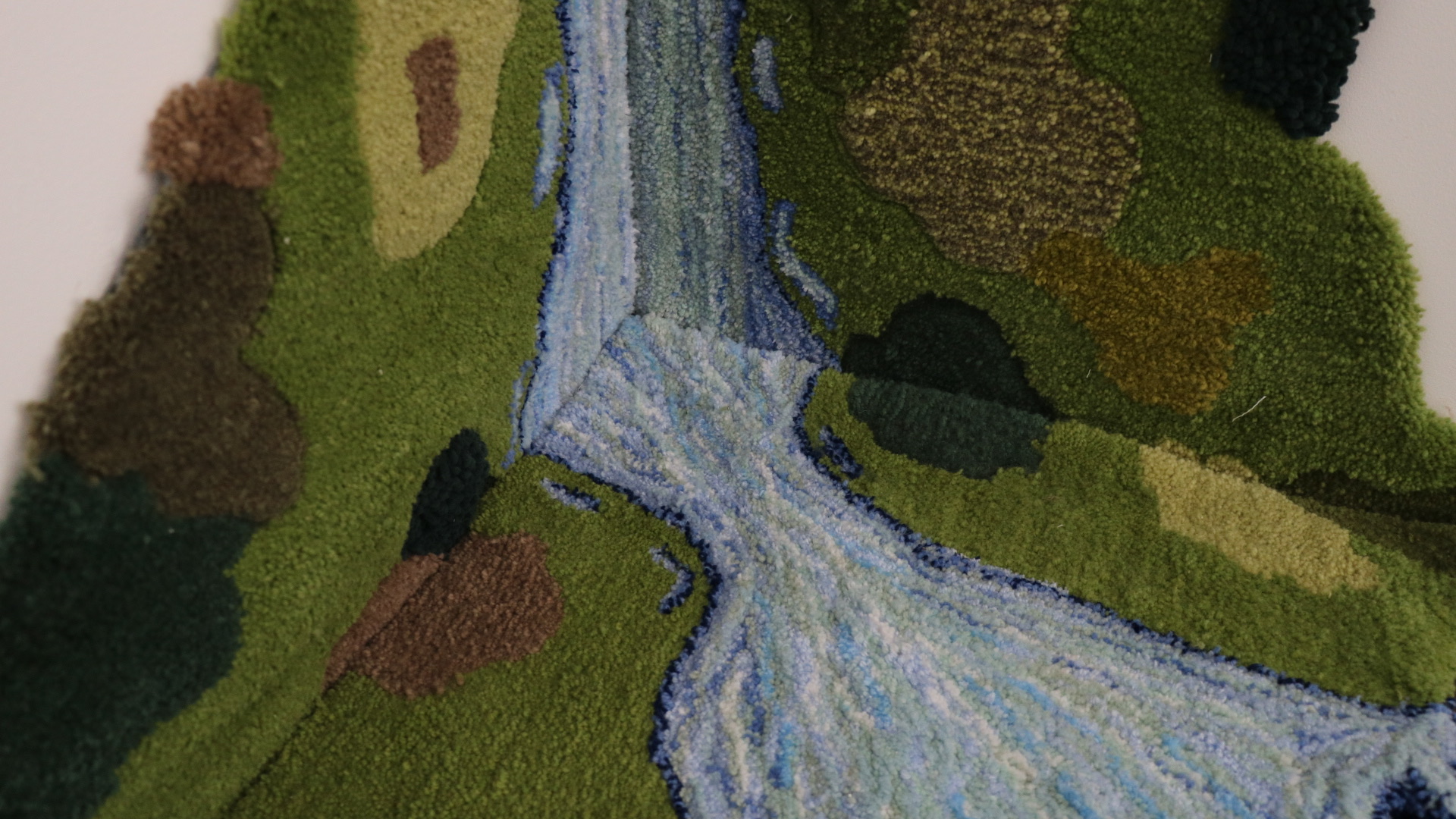
**return to soil/soft siege** is a textile-based installation. The work explores destruction as shaped by natural forces. By merging rug tufting with sculptural elements, the installation aims to evoke a sense of gradual animation, as though the forms are coming to life. Wool and natural yarns in varied shades of green are used to evoke moss, and grass-like foliage, suggesting organic growth without the inherent decay of living materials. Inspiration is drawn from everyday, overlooked moments—grass emerging through cracks in pavement, or ivy enveloping abandoned structures. It highlights how human intervention interrupts and reshapes the environment, emphasising the fragility of the natural world in the presence of constructed forms.
This thesis explores the historical and contemporary evolution of textile and fibre art from domestic craft to recognised artistic practice. It examines how fibre art challenges distinctions between art and craft while functioning as a site of identity, resistance, and cultural expression.
Drawing on feminist art history and theorists such as Rozsika Parker and Whitney Chadwick, the research explores how practices including embroidery, knitting, weaving, and rug-making became gendered throughout history and how women artists reclaimed these mediums as forms of political and creative agency.
Case studies including Sheila Hicks, and the Gee’s Bend quilters, demonstrate how fibre art engages with themes of labour, activism, and community. Ultimately, this thesis argues that textile and fibre art now occupy a significant position within contemporary art, foregrounding materiality, labour, and lived experience as powerful forms of cultural expression.
Princess Deans is Filipino-Irish textile sculptor based in Kildare. Their work explores natural disasters, decay, and nature, through installation. Their current practice explores the fragile dialogue between nature and human intervention. Using techniques such as rug tufting and punch needling, they manipulate wool and fibres into tactile landscapes that are both familiar and dystopian. Through the softness of the yarn, and the harshness of the aggregates and plaster, they capture moments of decay, abandonment, and regrowth within their mixture of textile and sculptural work. They have exhibited in the IADT student shows **Down the road, around the corner** (Pallas Projects/Studios, 2026) and **The Place Project** (IMMA Studios, 2023).