Bronagh O'Neill
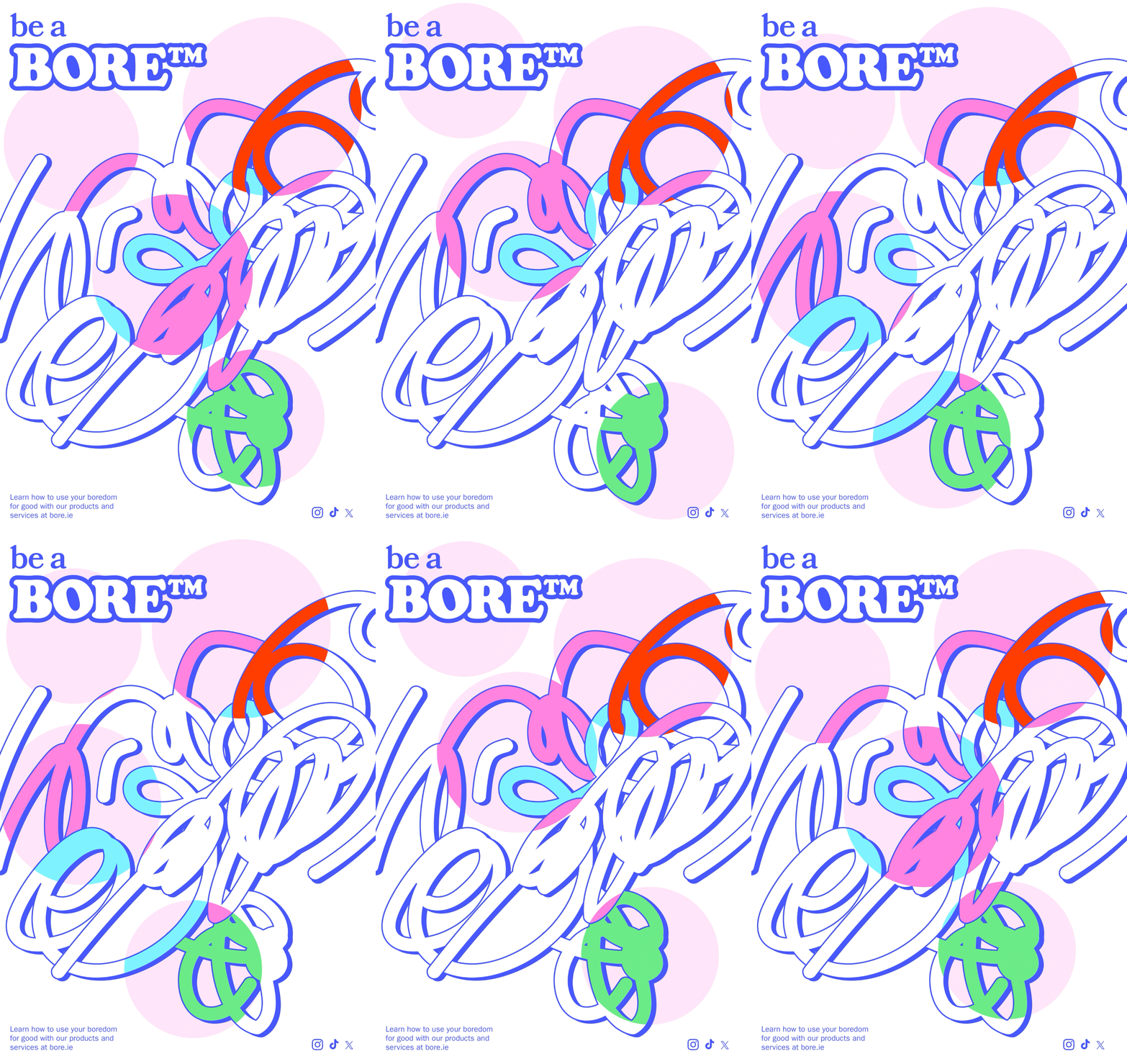
Boredom is something we have programmed out of our lives. We scroll on the bus, stream while we eat, and fill every quiet moment with some form of stimulation. In a culture built around constant content, boredom is treated as something to avoid. BORE™ aims to change that by reframing boredom as something valuable. Research shows that idle moments activate the brain’s 'Default Mode Network', linked to creativity, self-reflection, and problem solving. It’s why your best ideas often come in the shower or while daydreaming! BORE™ offers the goods and services that allow you to access this part of your brain, and learn to love being wonderfully bored.
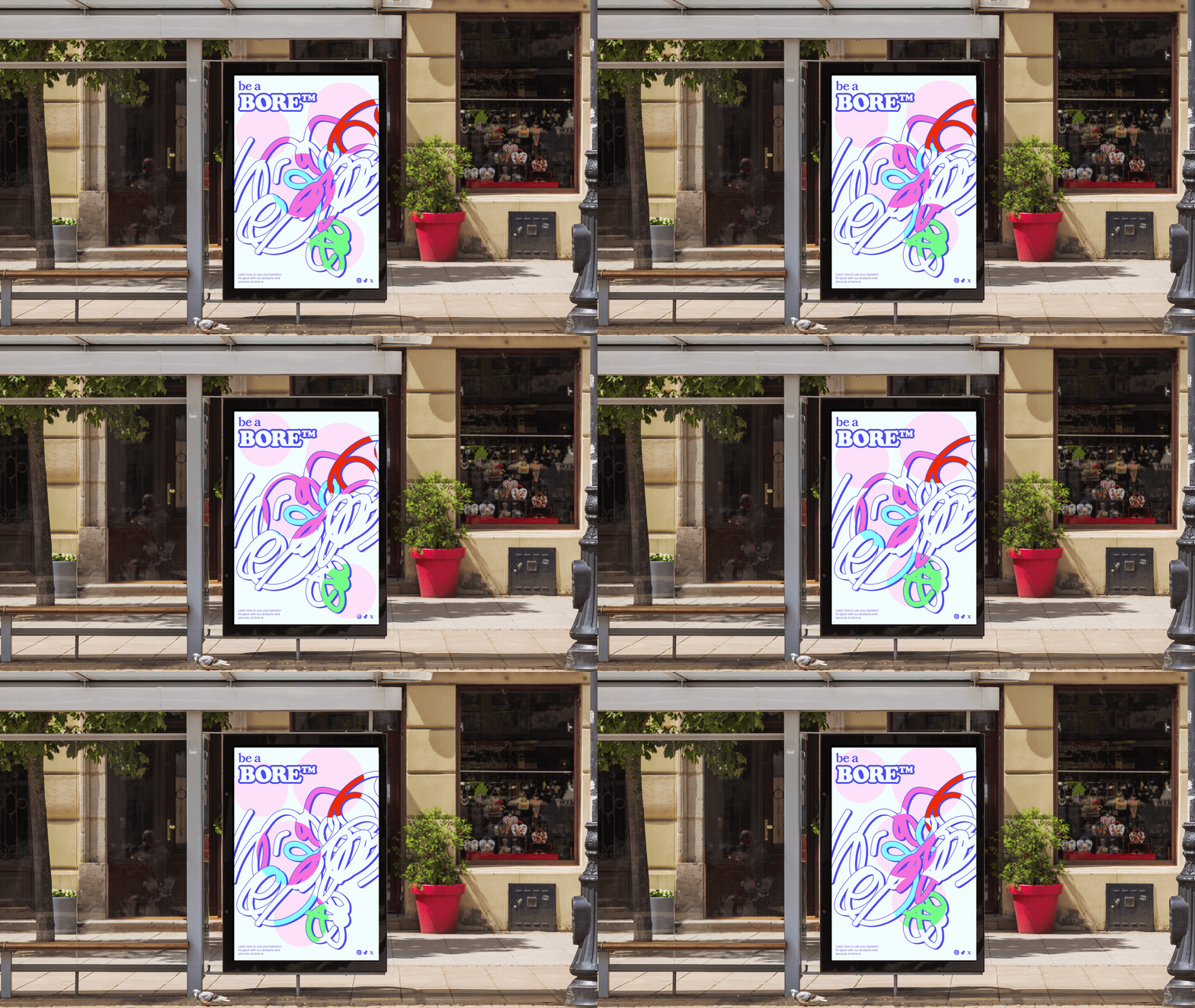
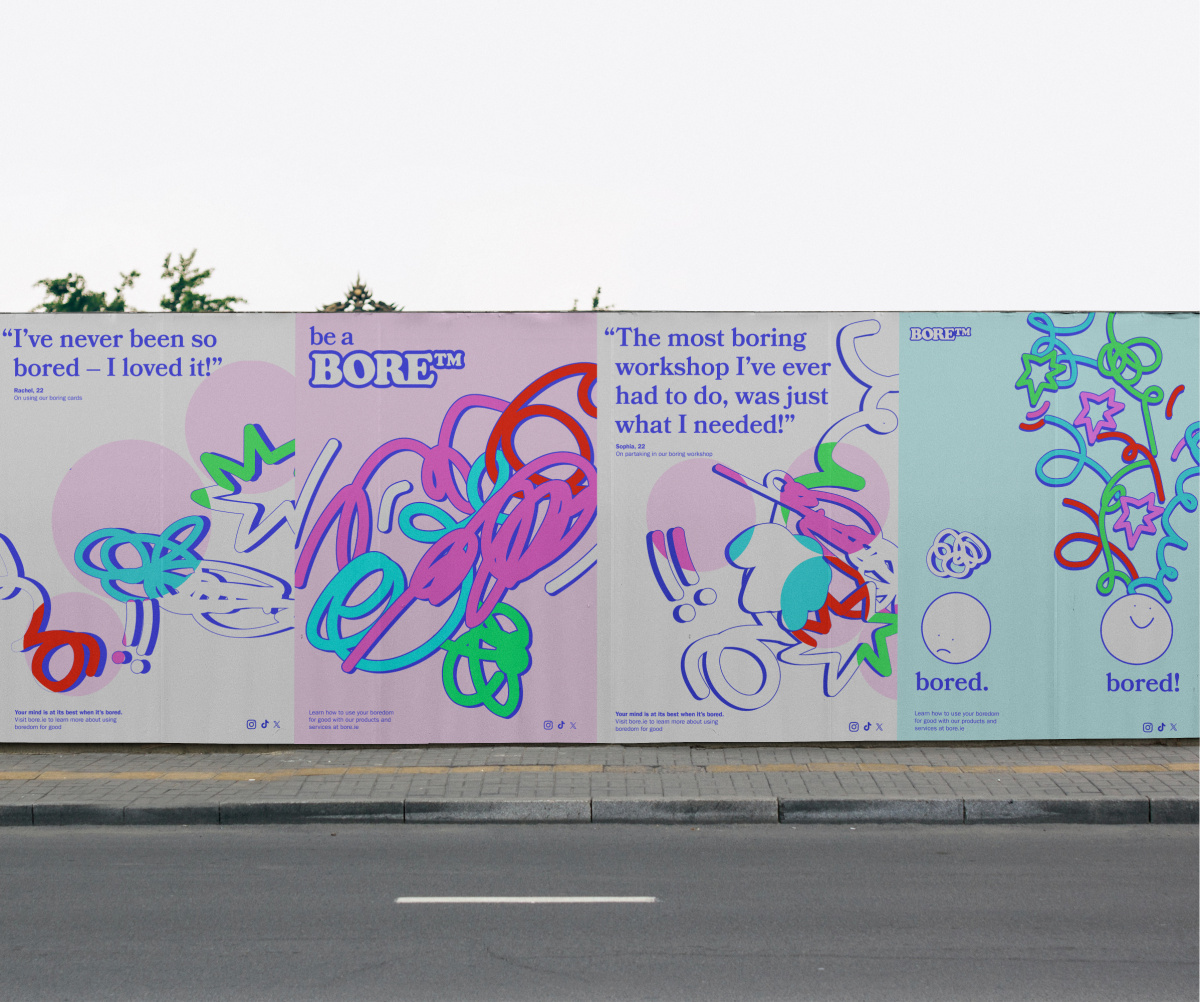
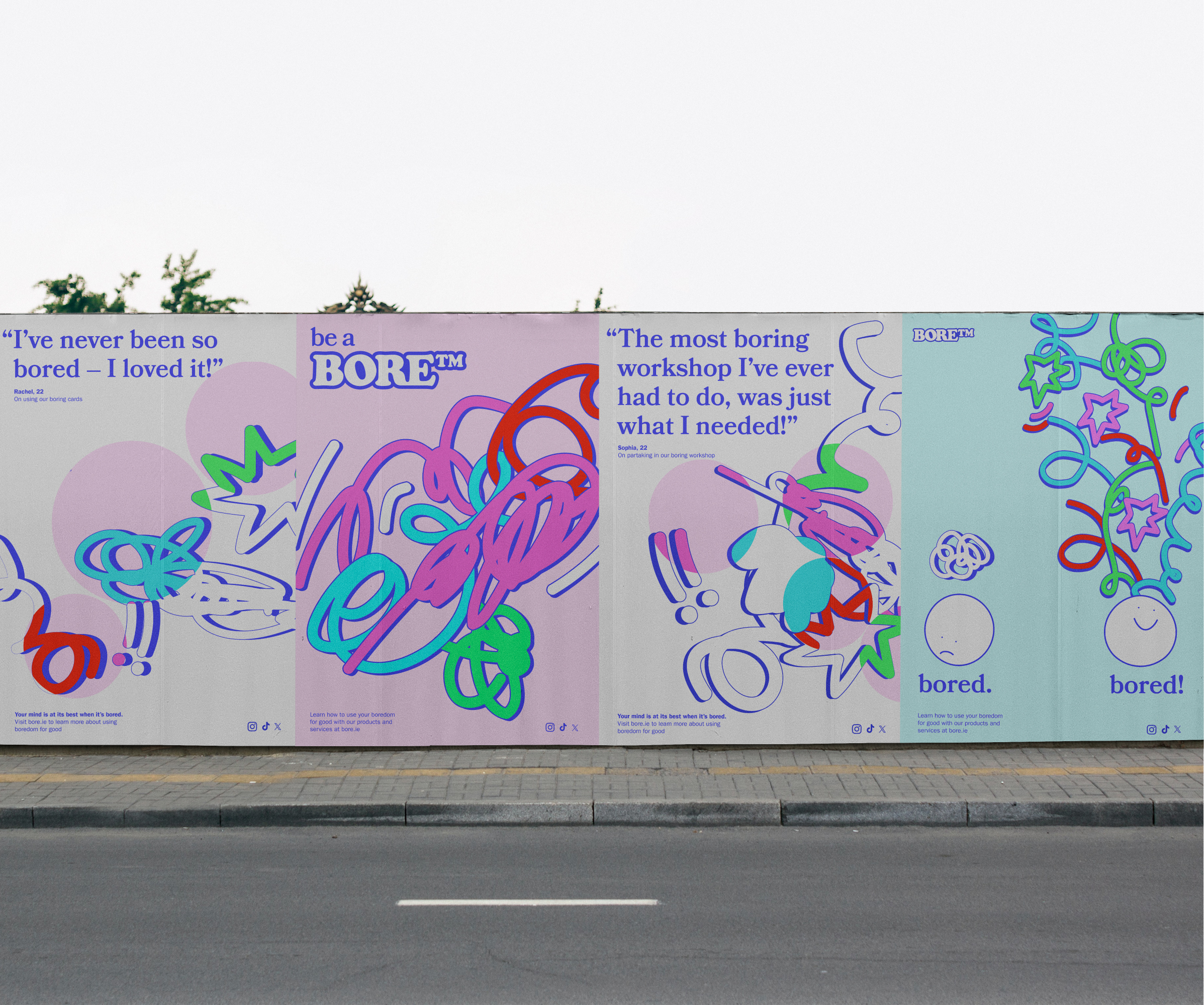
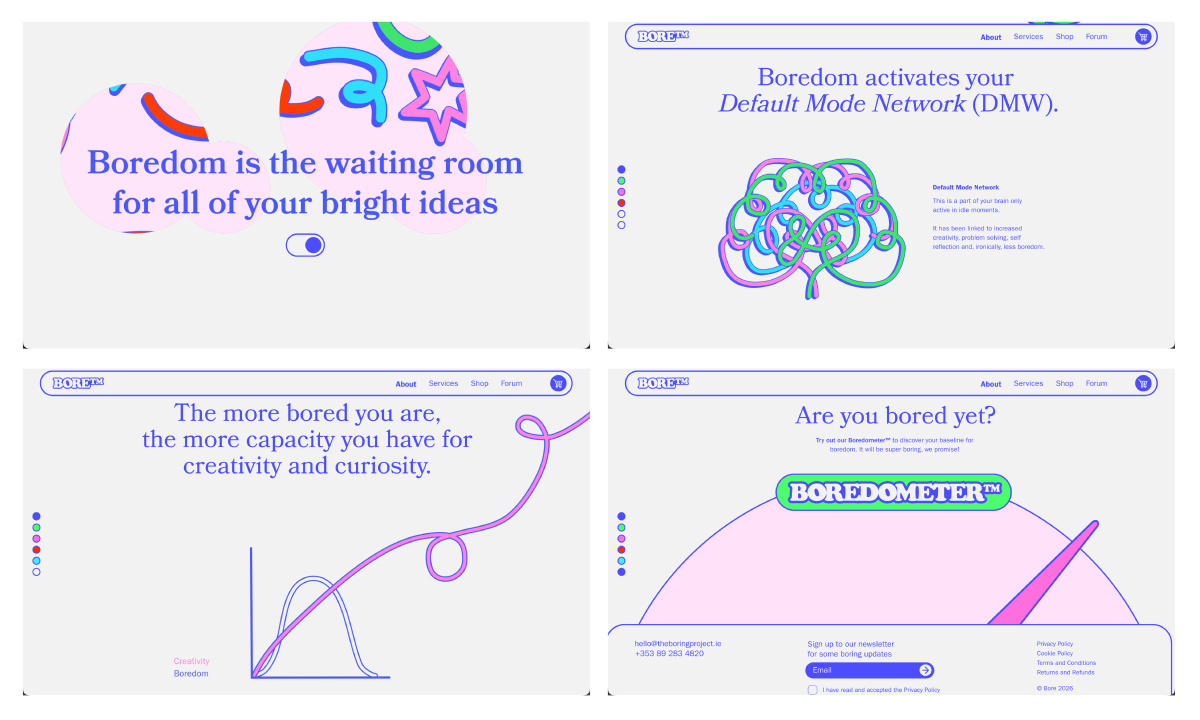
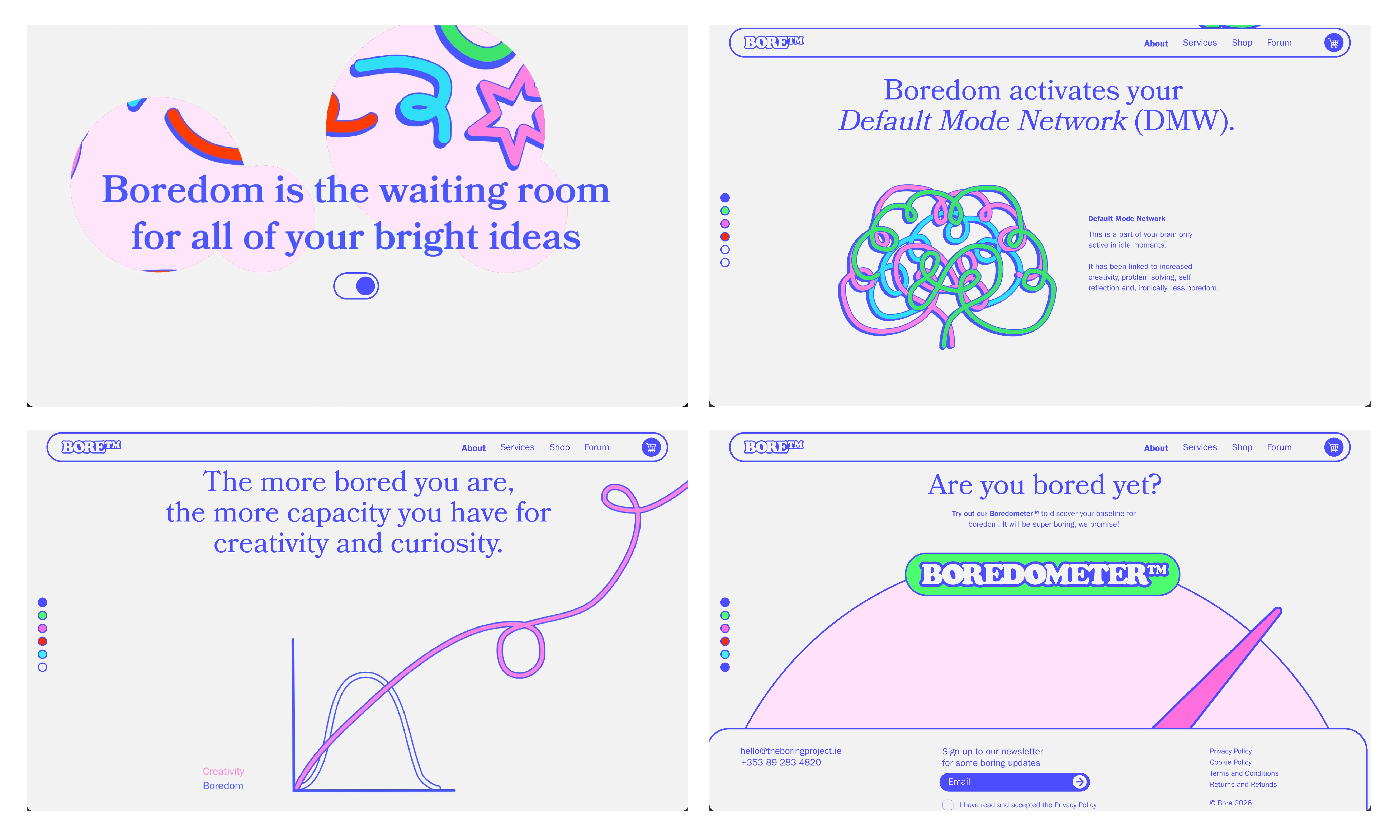
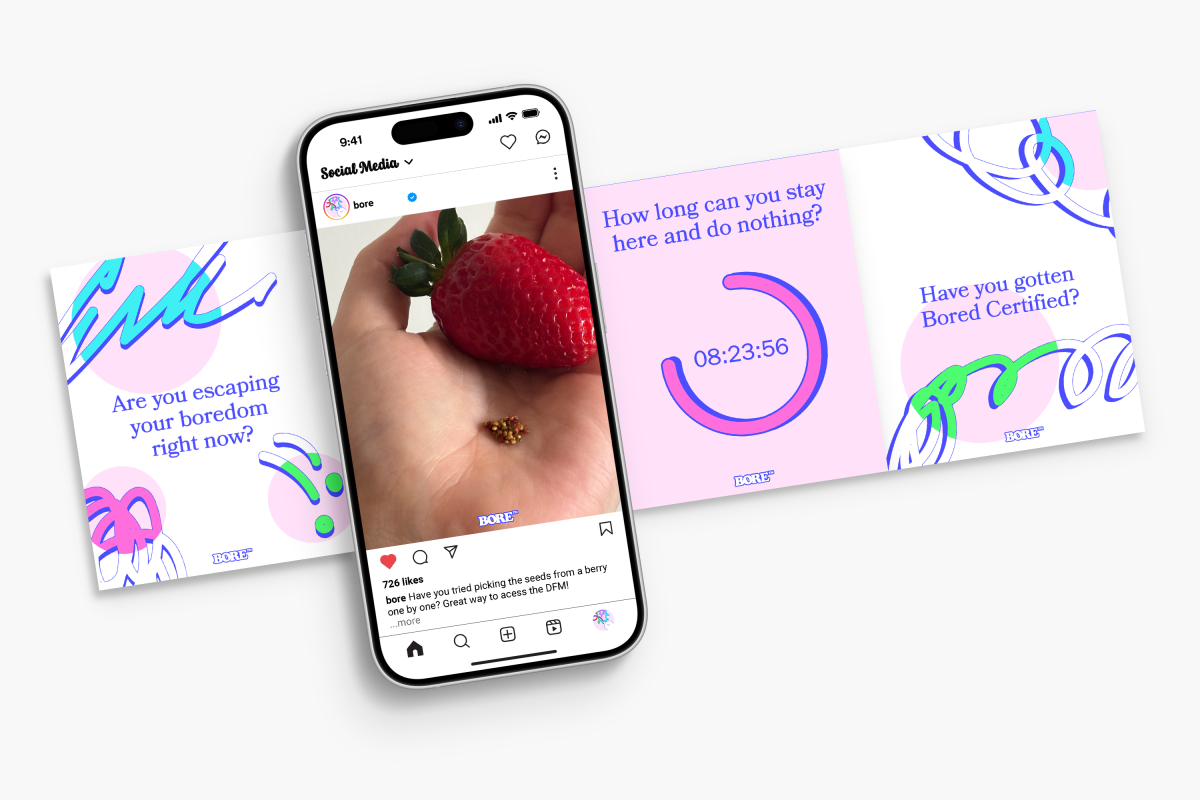
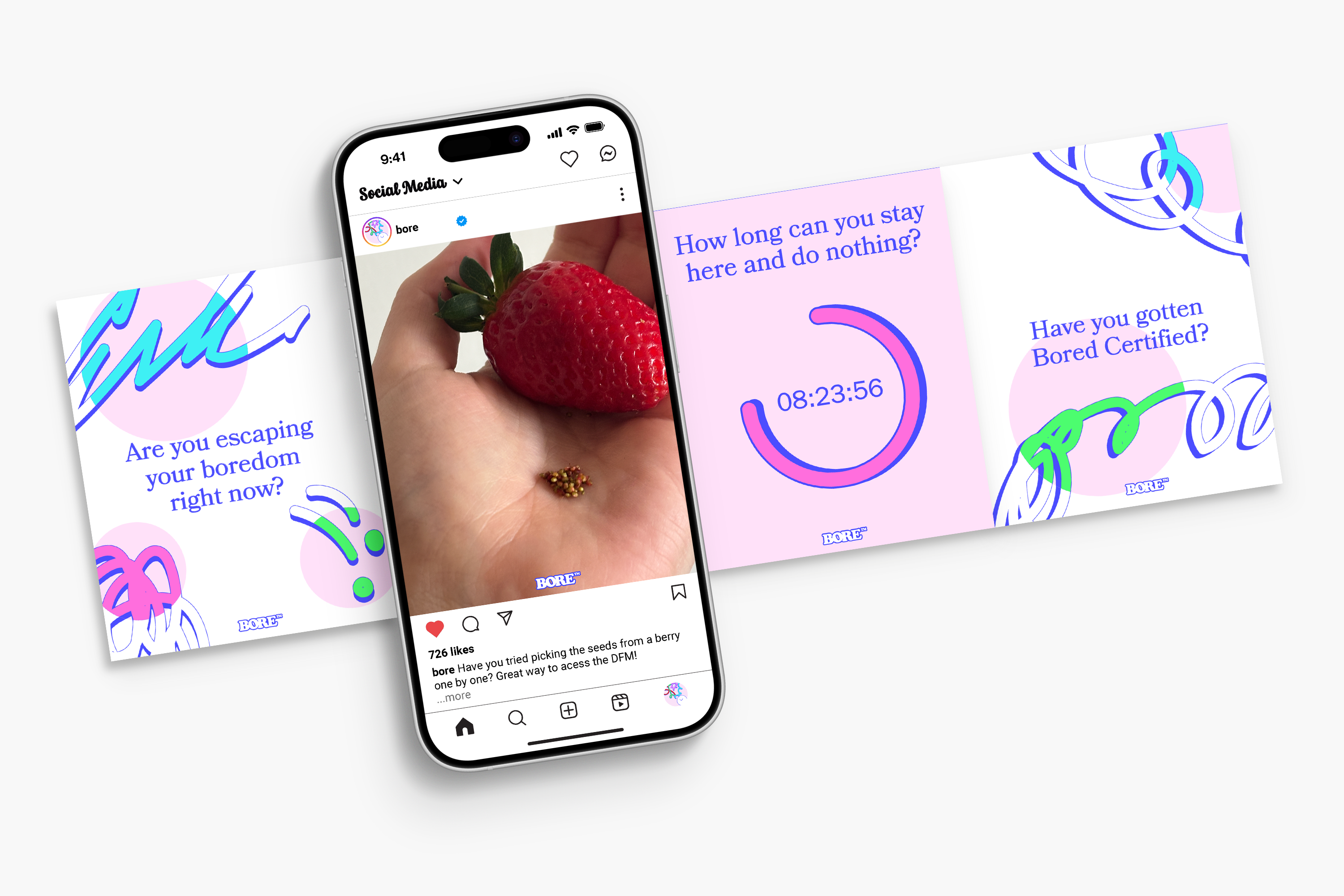
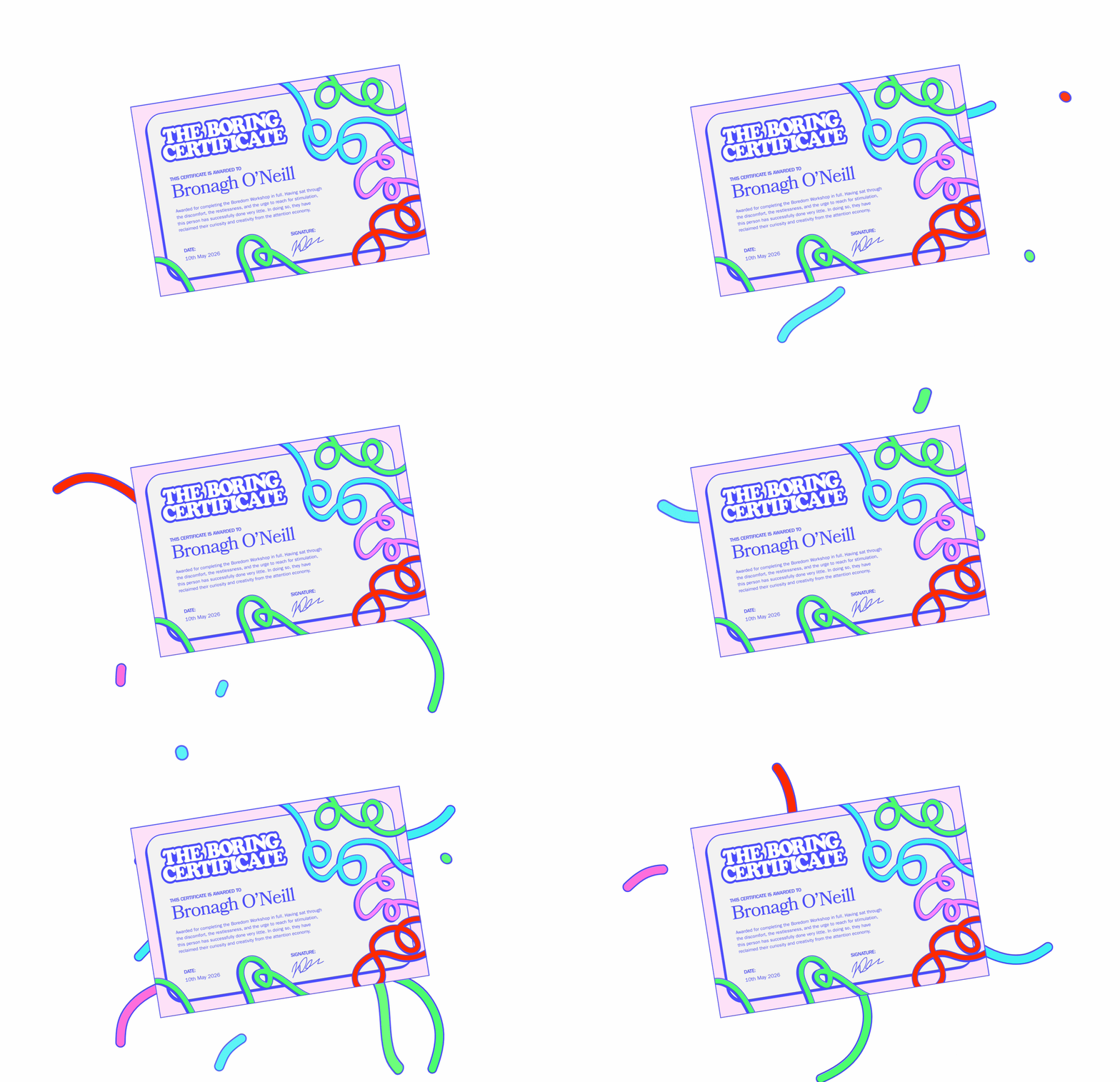
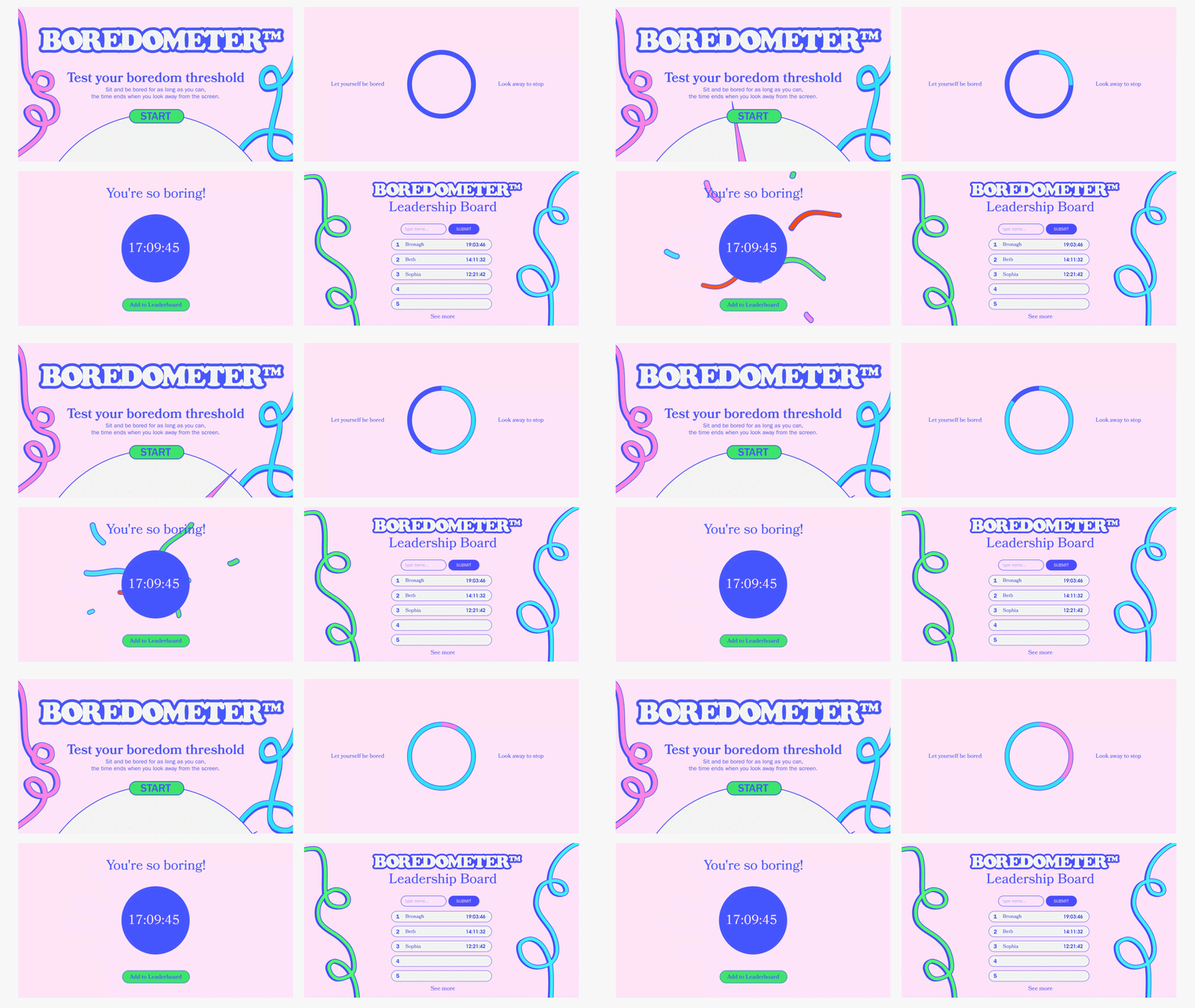
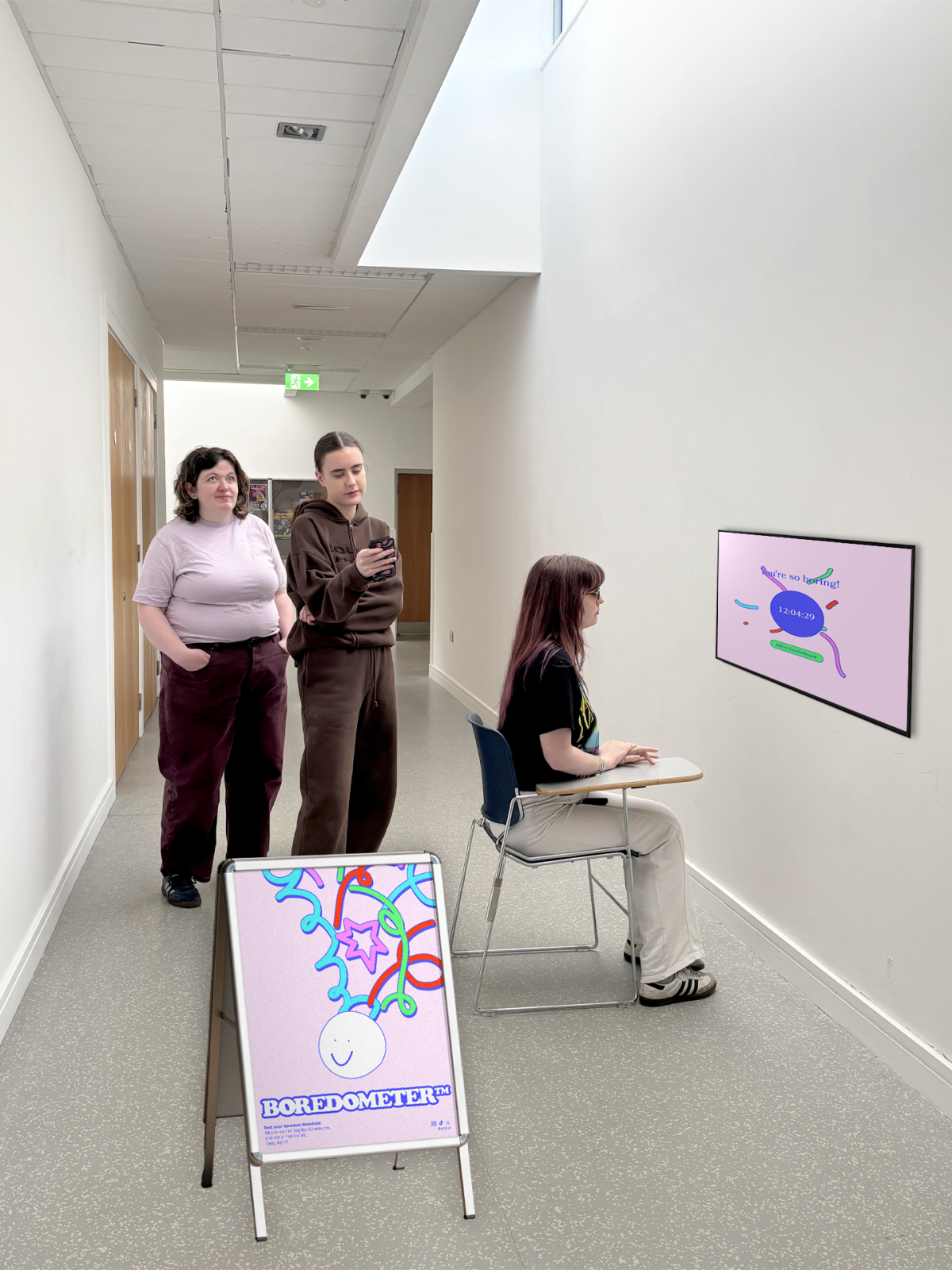
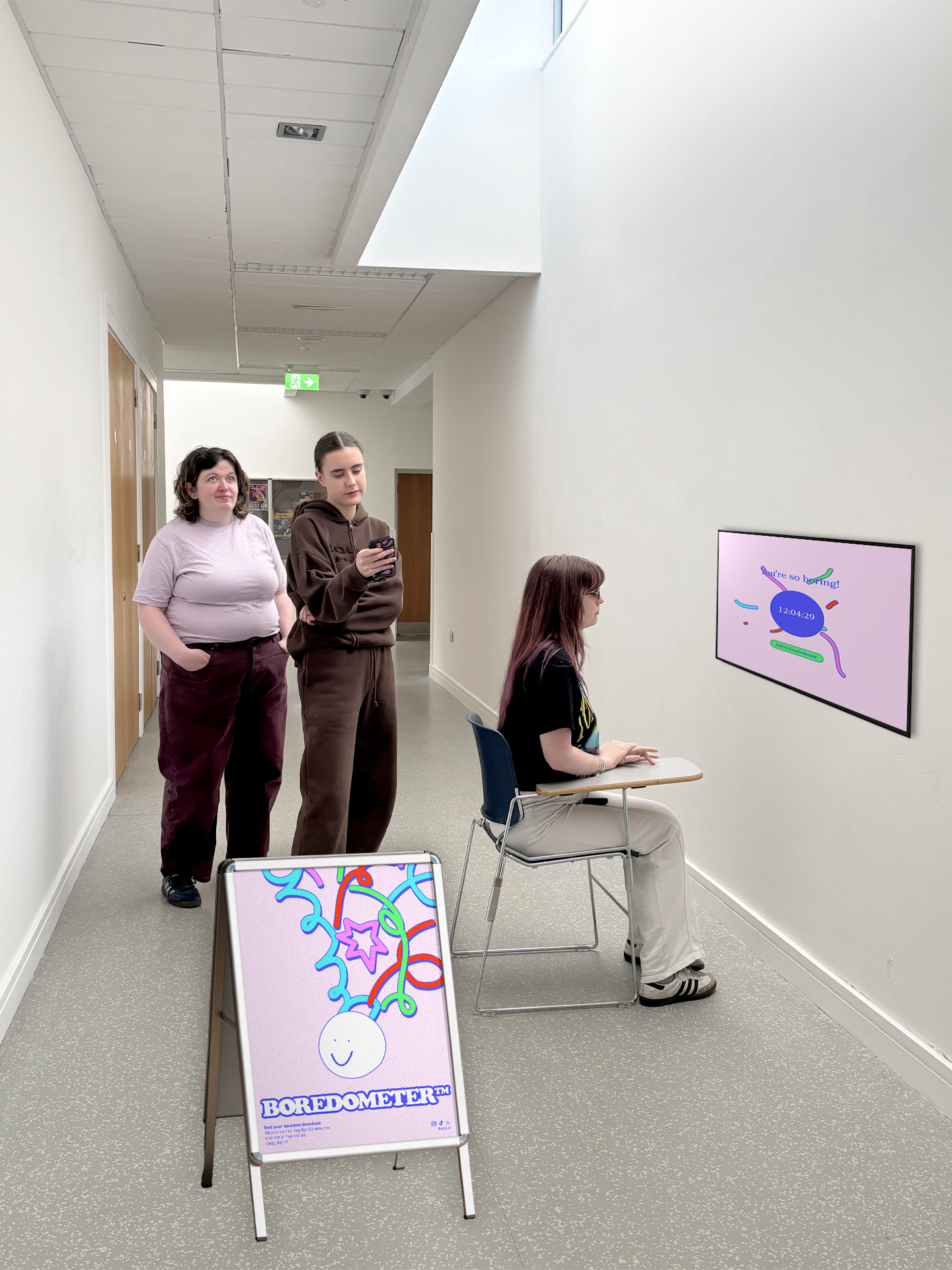
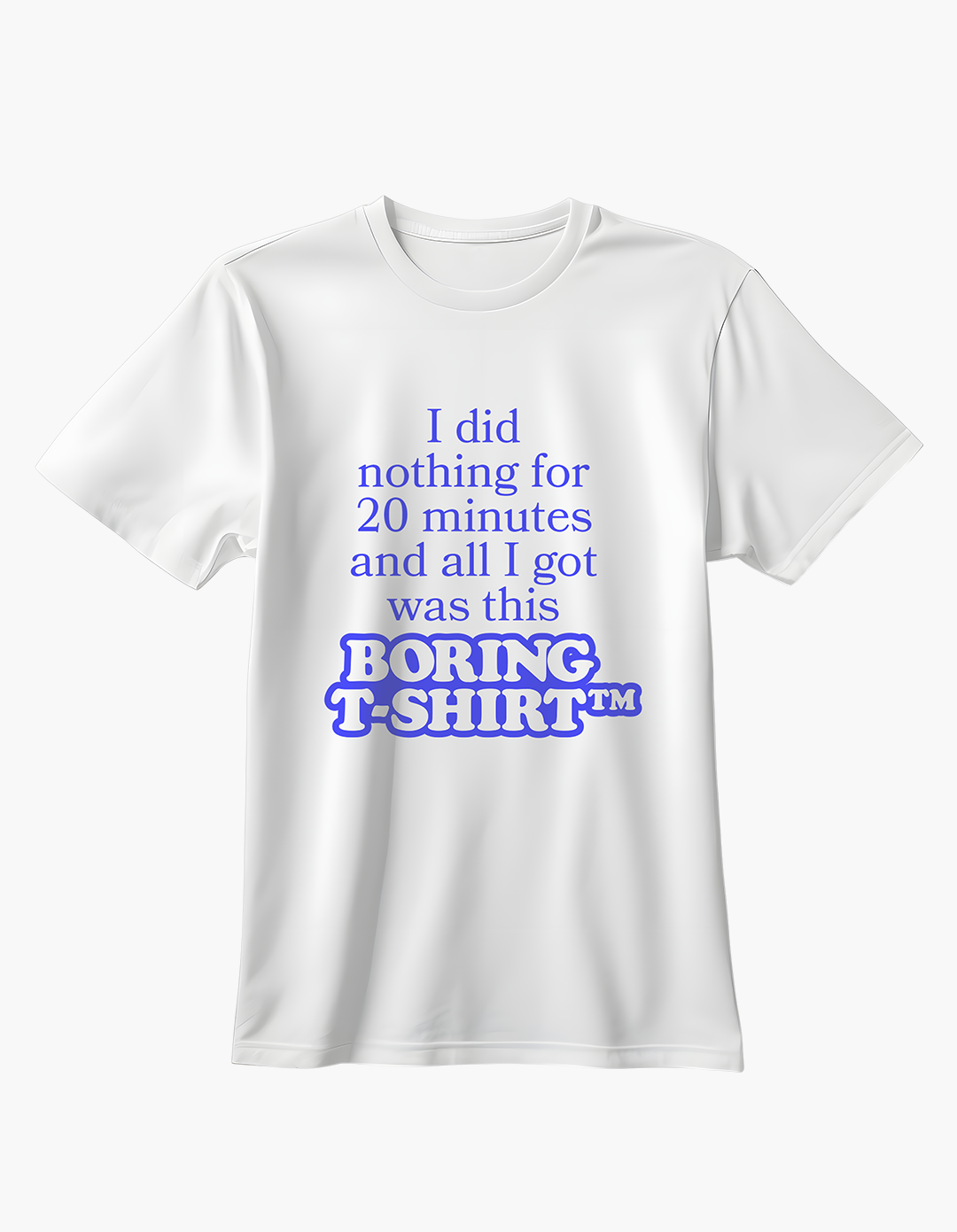
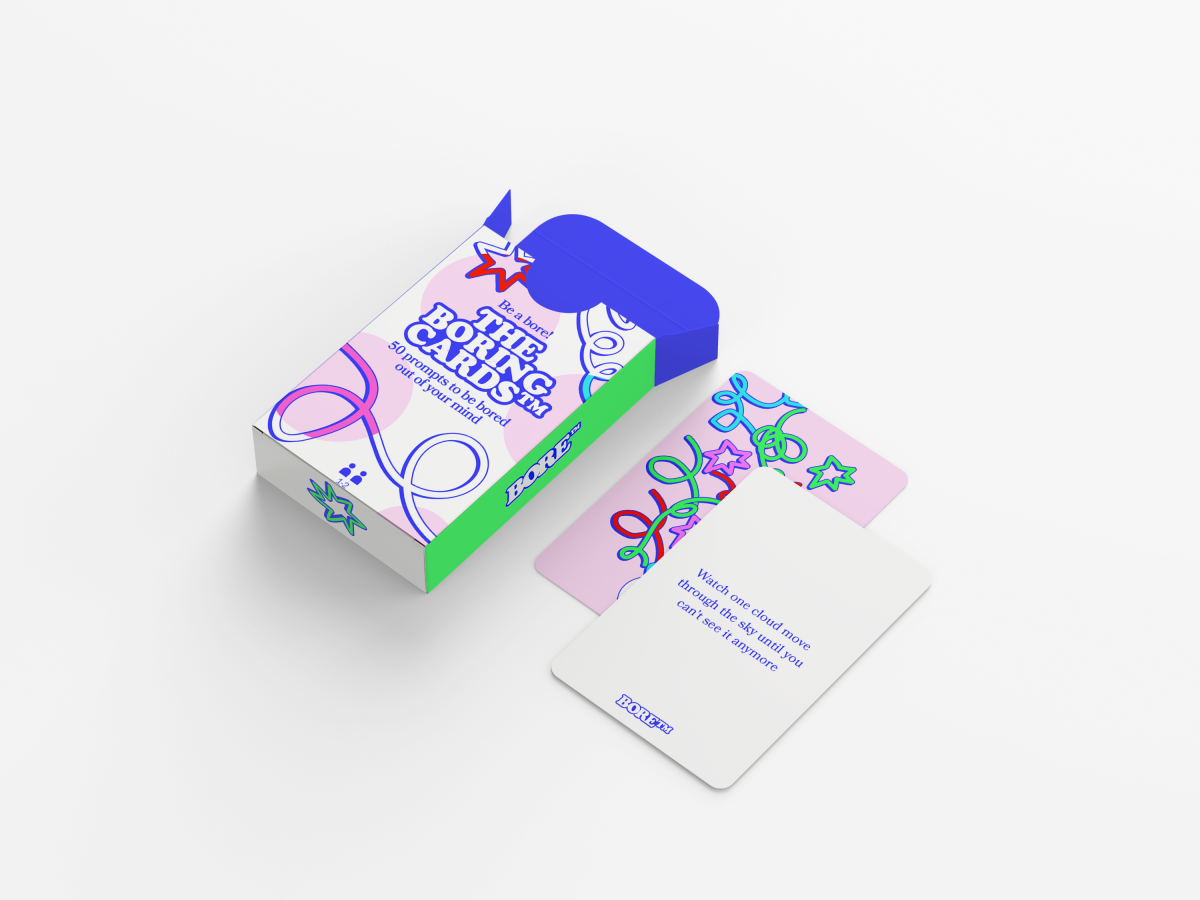
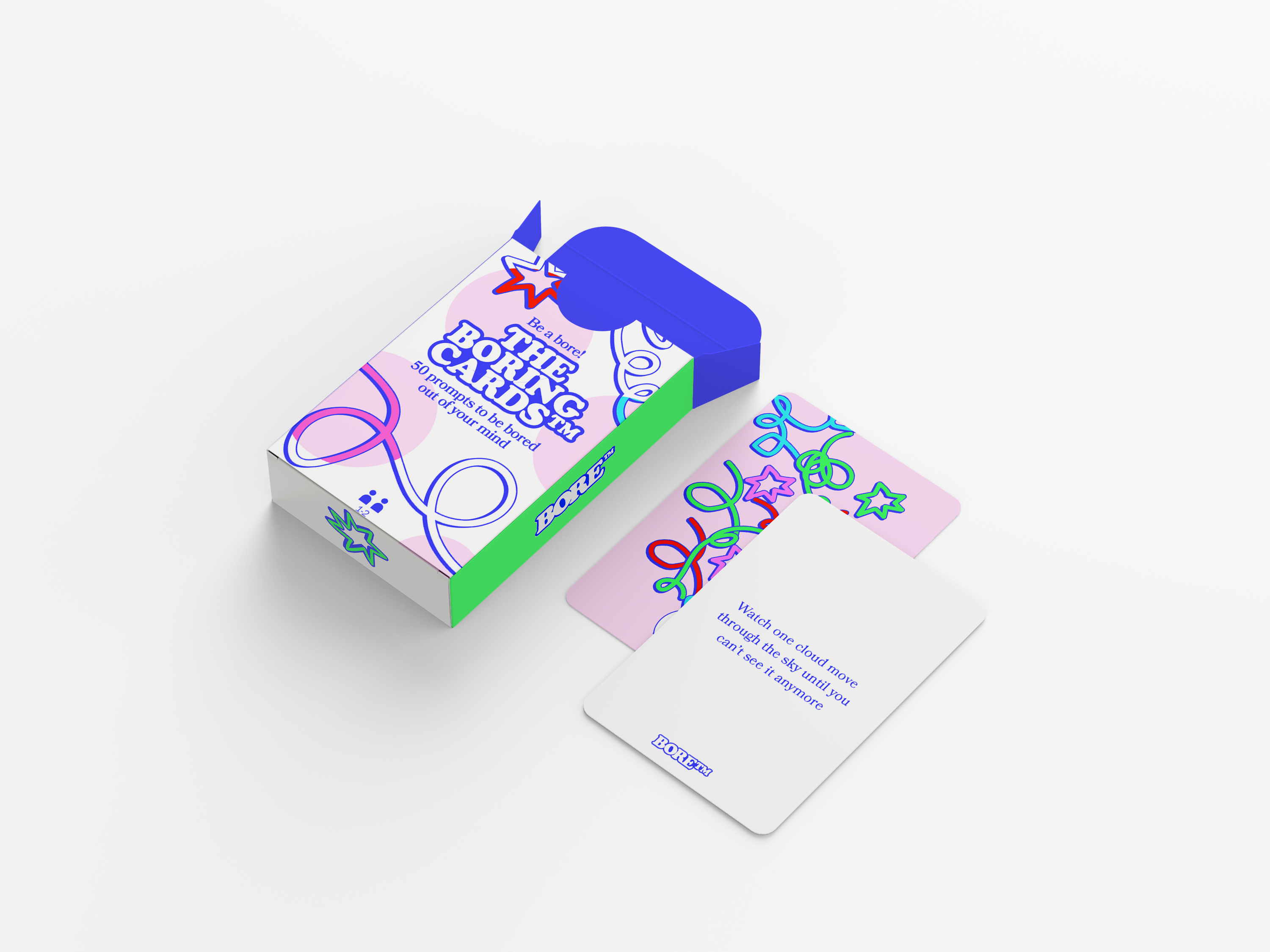
The goal of this project was to reframe boredom and encourage people to engage with it in a more positive and intentional way. I wanted to highlight the value of boredom, presenting it not as something to avoid or escape, but as a state that can support creativity, focus, and self-reflection, particularly within an attention economy designed to constantly distract us. Rather than criticising people for spending time online, the project aimed to communicate the benefits of slowing down and disconnecting. It also sought to encourage people to rebuild their attention spans, improve focus, and become more comfortable spending time in boredom. Ultimately, the main goal of BORE™ was to make boredom fun!
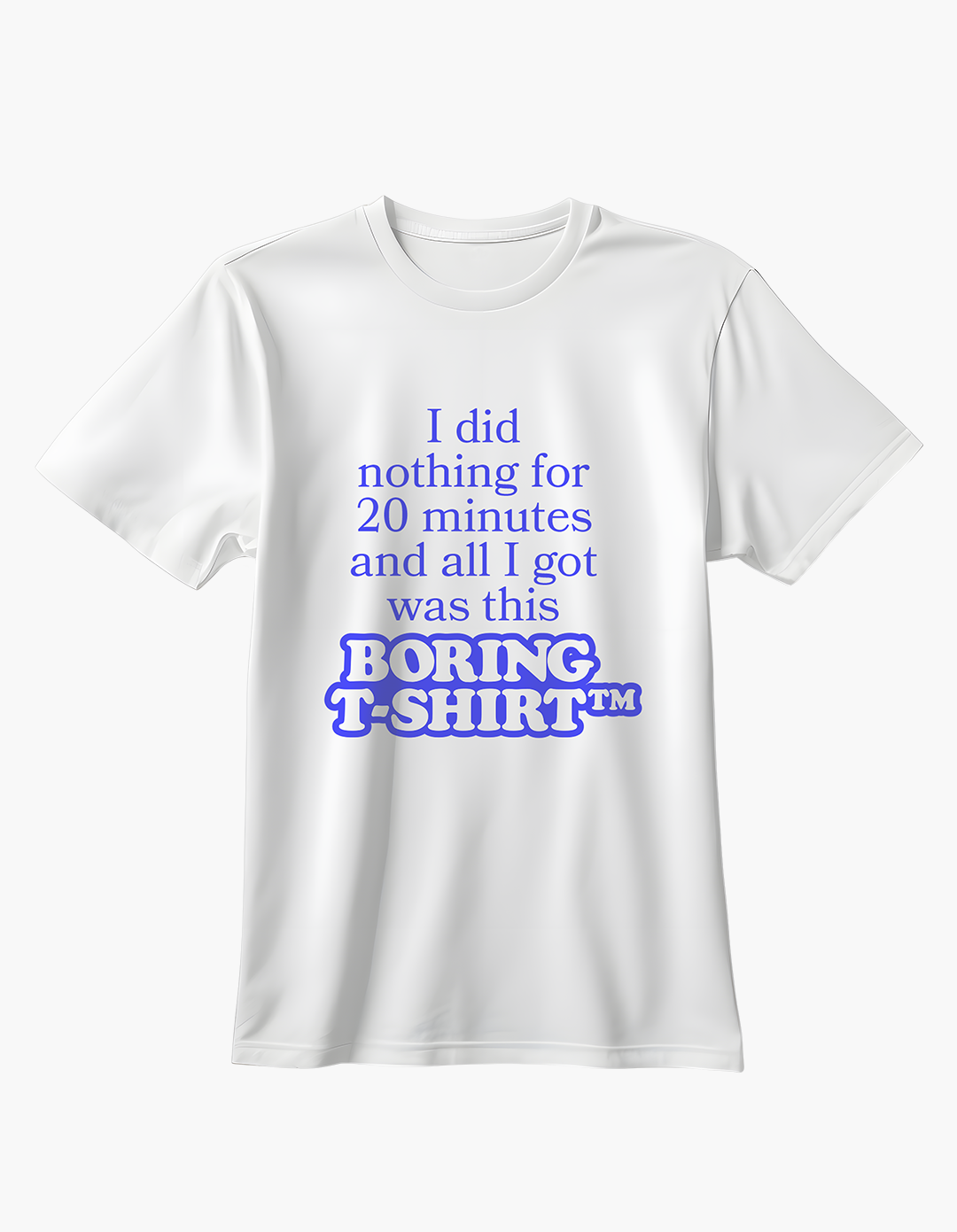
BORE™ is a brand that offers goods, services, and experiences designed to help people engage with boredom in a more positive and intentional way. Audiences are first introduced to the brand through posters and social media content, which encourage them to reconsider their relationship with boredom. They are then invited to take part in the BOREDOMETER™ pop-up experience, where they can measure their personal threshold for boredom. From there, users are directed to the BORE™ website, which acts as the central hub for the brand. The website provides resources, educational content, a three-step programme, and workshops designed to help people reconnect with boredom, improve focus, and build creativity. Users can also explore and purchase products such as the Boring Cards™, which offer prompts and activities designed to make the experience of boredom more approachable, engaging, and enjoyable.
This thesis explores the recent popularisation of Guinness among young people. Traditionally, Guinness was perceived to be an ‘old man’s drink’, closely associated with an older, working-class demographic. Today, there has been a shift in this perception, with the pint becoming increasingly popular among younger generations. This study will examine the marketing strategies of Guinness. It will explore how they have managed to create such a notable shift through careful integration into various cultural spaces and strategic partnerships. It will also interrogate the role of consumers in shaping the meaning of the brand beyond the direct influence of Guinness. Specifically, it will explore the role of social media and trends in boosting popularity. The convergence of these two areas will provide a synthesised explanation for Guinness’s evolving appeal.
Hi, I’m Bronagh! I’m a multidisciplinary designer with a passion for creative problem solving. I enjoy finding lateral and unexpected solutions through thoughtful research and iteration, and I'm drawn to projects that blend meaning, storytelling, and play. My interests span across motion, user experience, design research, and copywriting, but I also enjoy branching out and learning from different disciplines. During my time at IADT, I participated in an Erasmus exchange at Hochschule Mainz, which further developed my confidence and broadened my perspective as a designer. I’m looking forward to exhibiting my work alongside my talented classmates!