Jennifer Treacy
Daily Doom is an organisation that exposes social media algorithms by removing them, revealing that the content left behind is often pointless. This highlights how addictive these user experience (UX) strategies are.
Most phone users know that social media is designed to be engaging and entertaining. However, what is often not known is the specific strategies behind this design. UX education is often gatekept for the designer to know, not the user. This project aims to educate phone users about what keeps them scrolling and how social media platforms manipulate and take advantage of engagement.
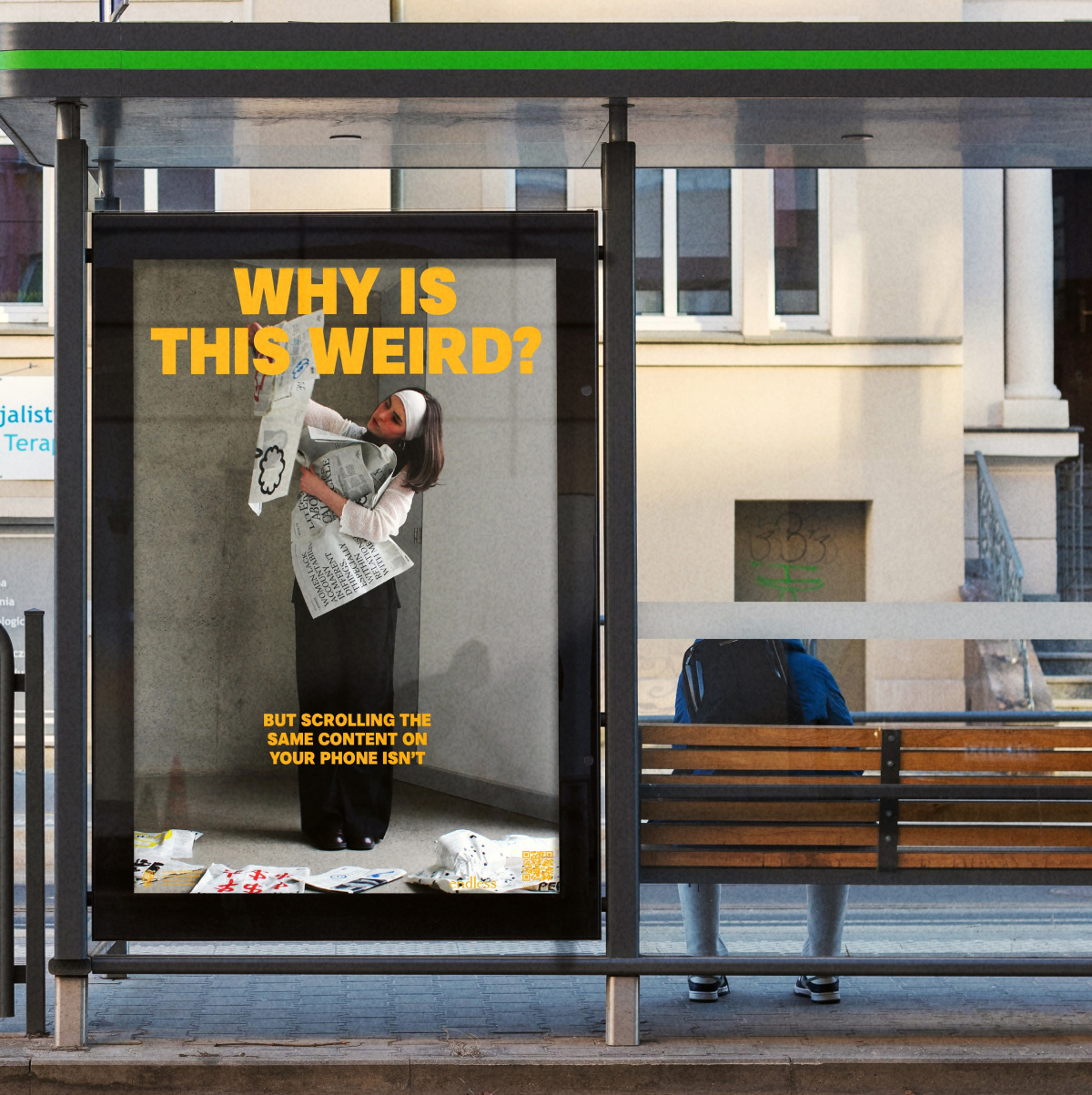
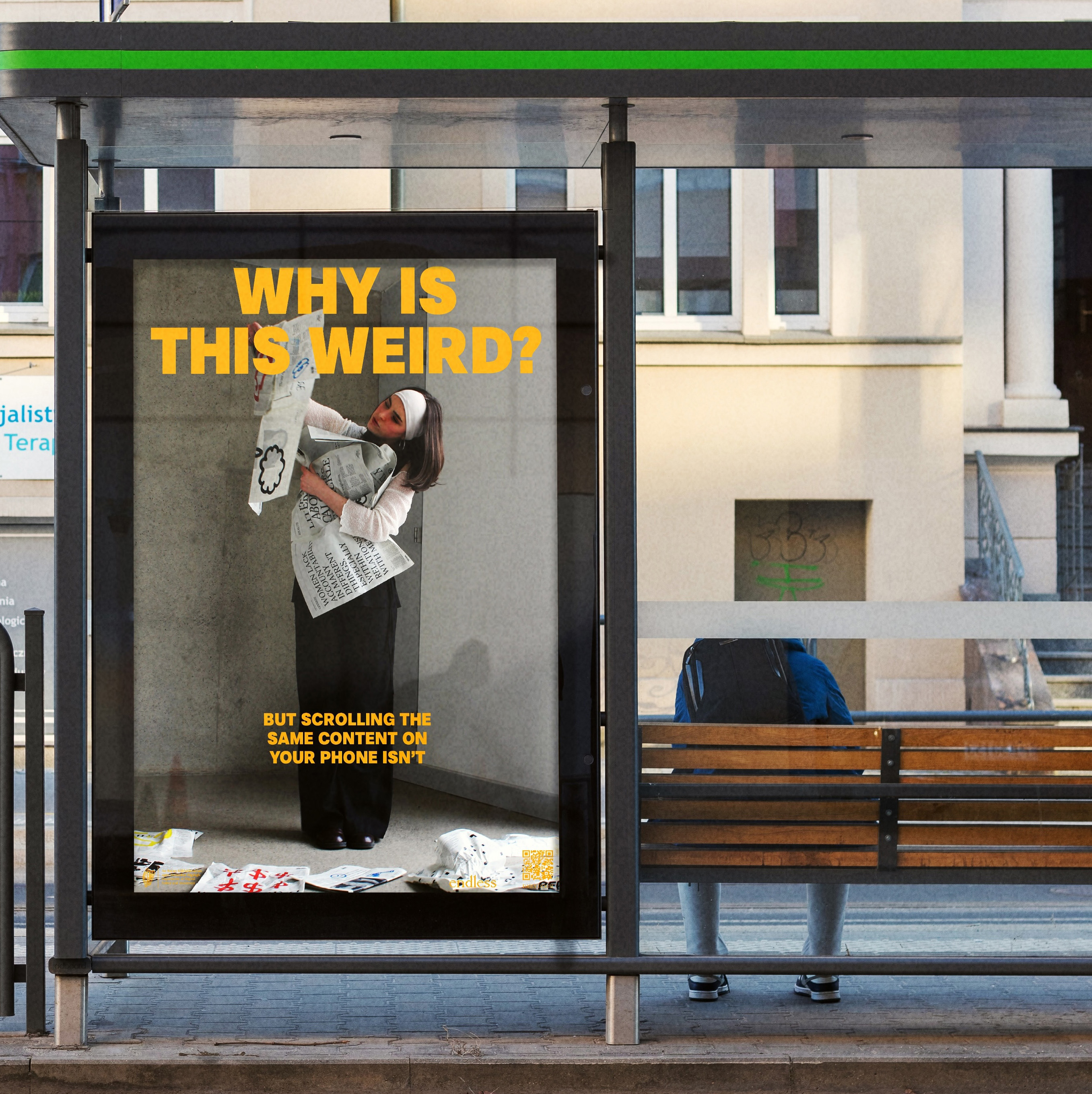
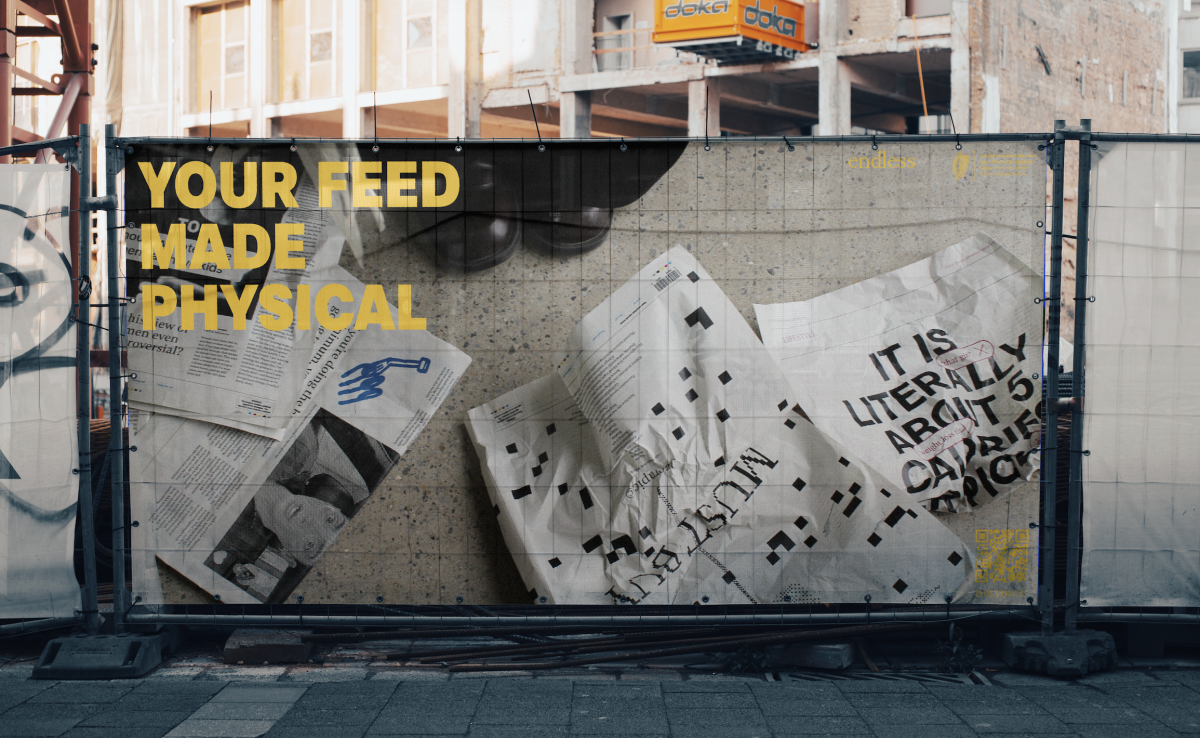
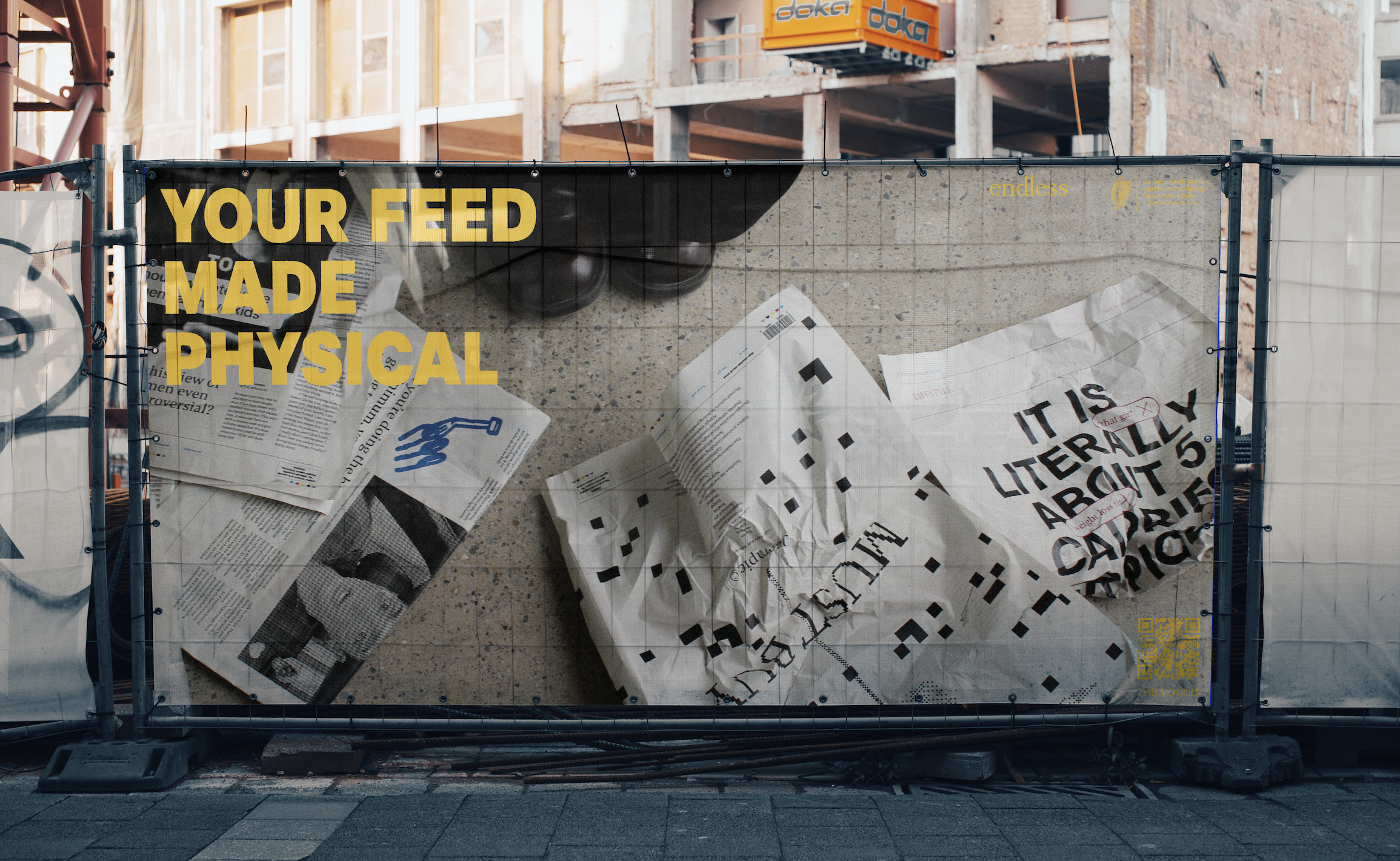
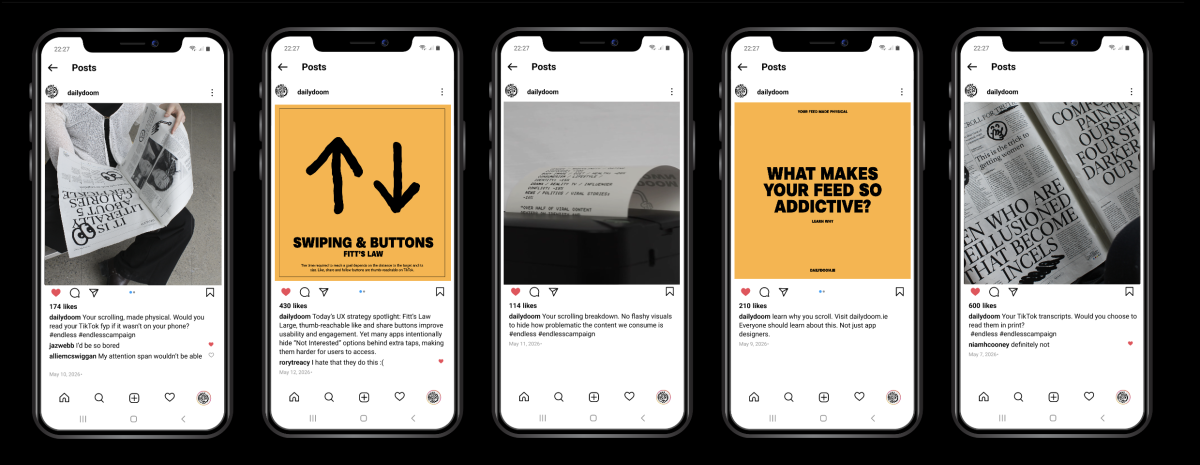
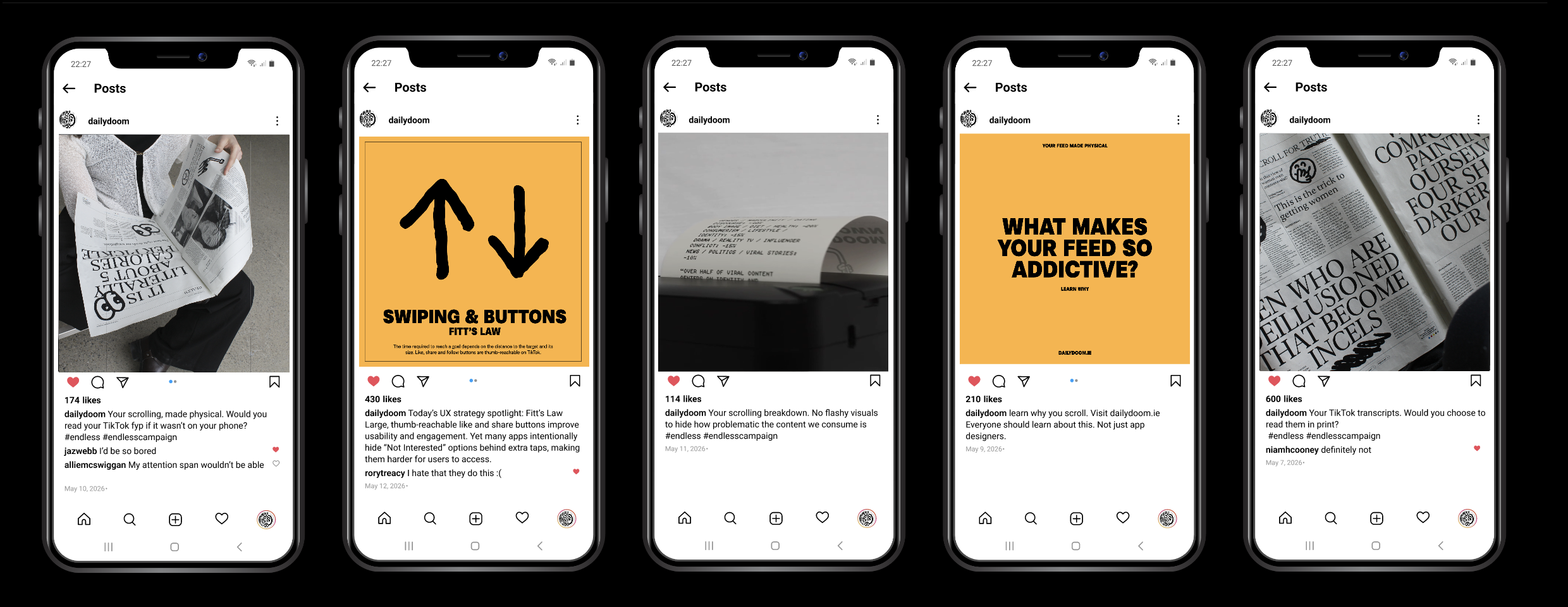


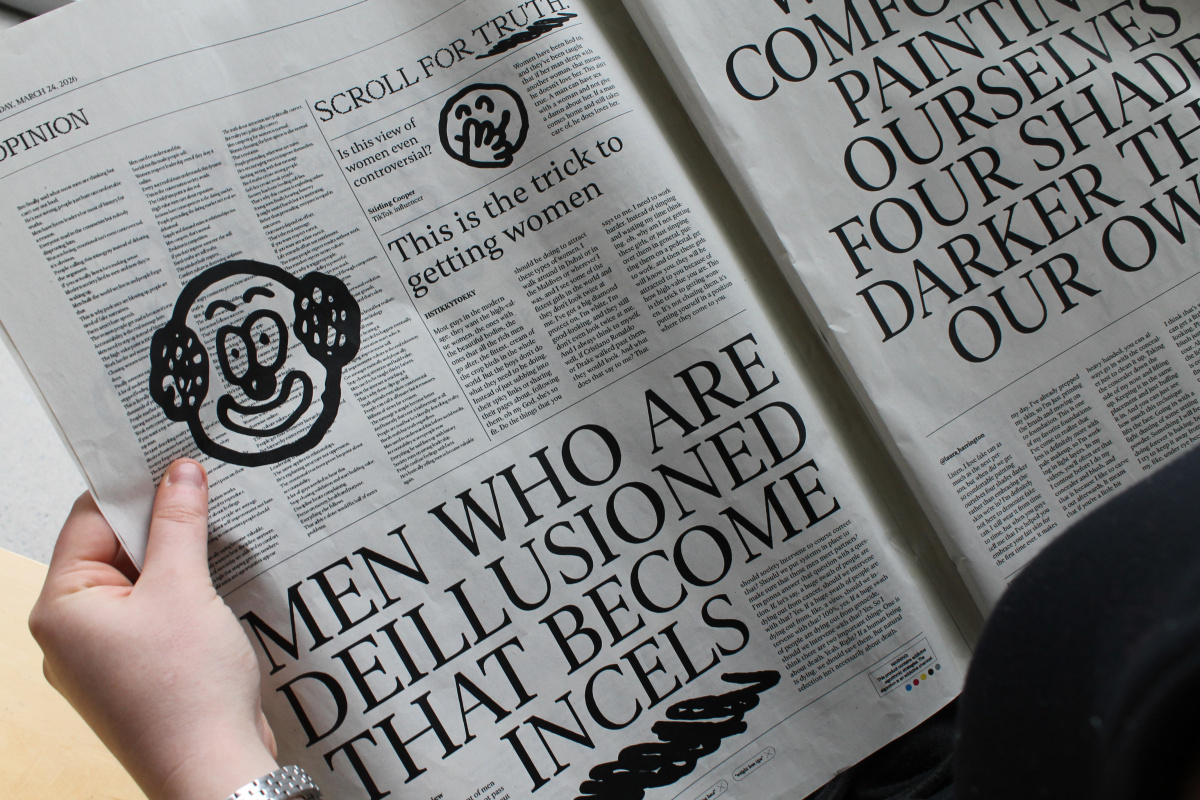
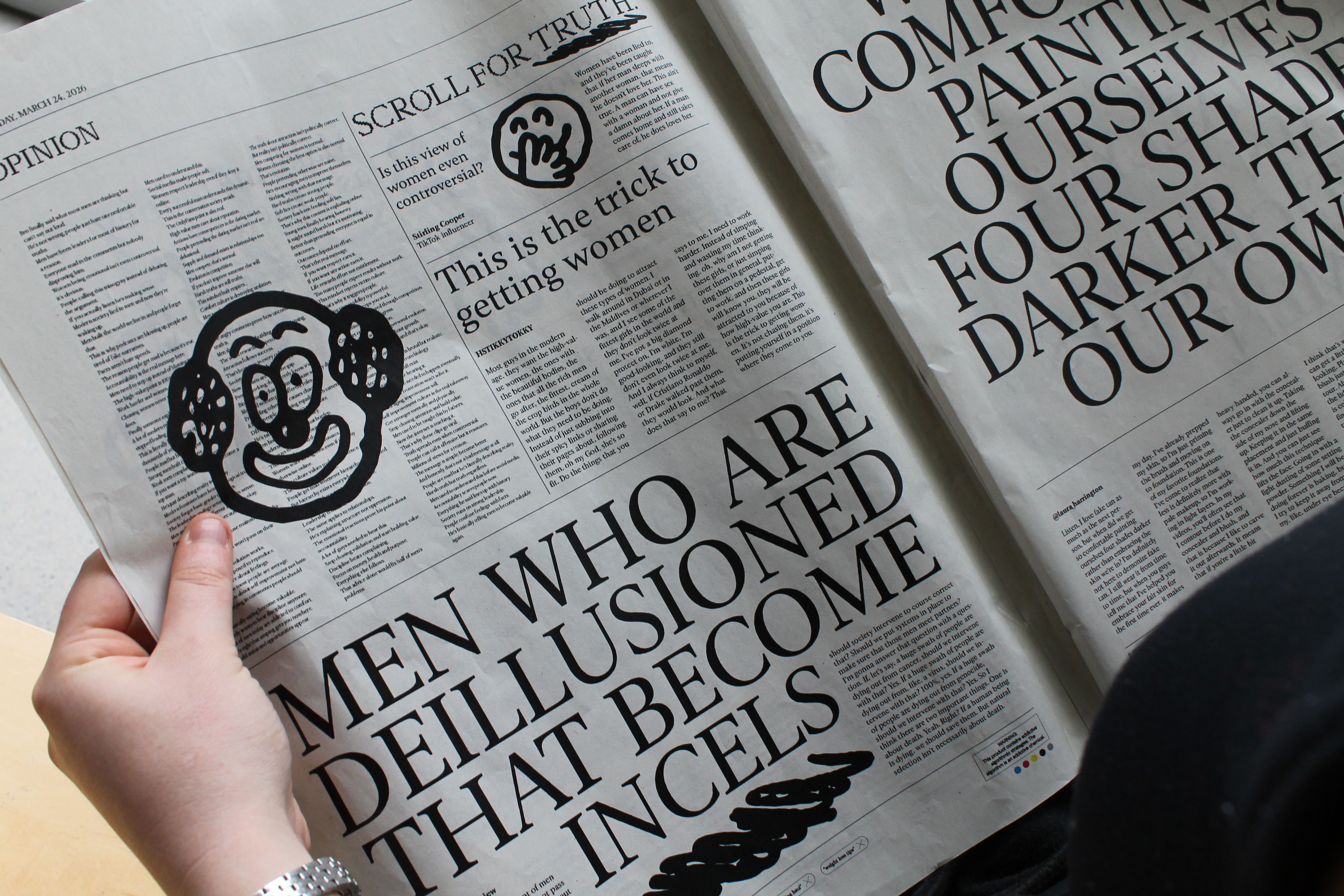
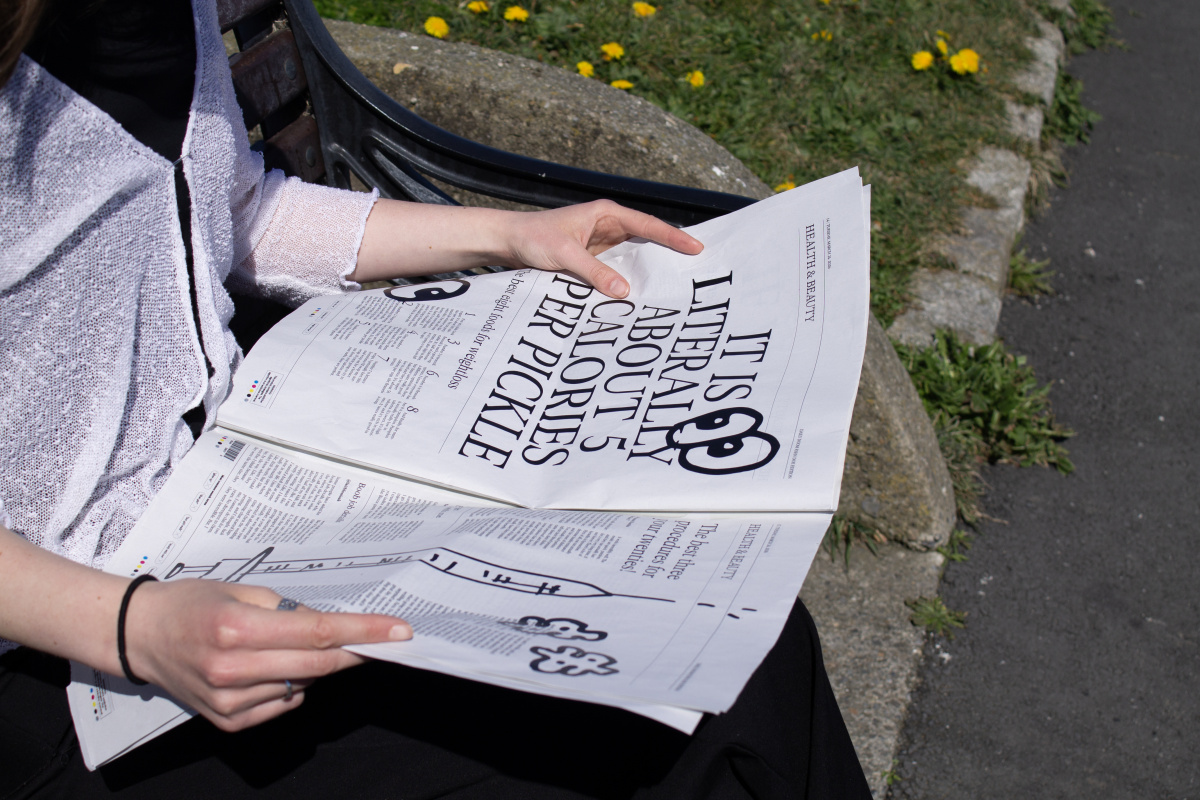
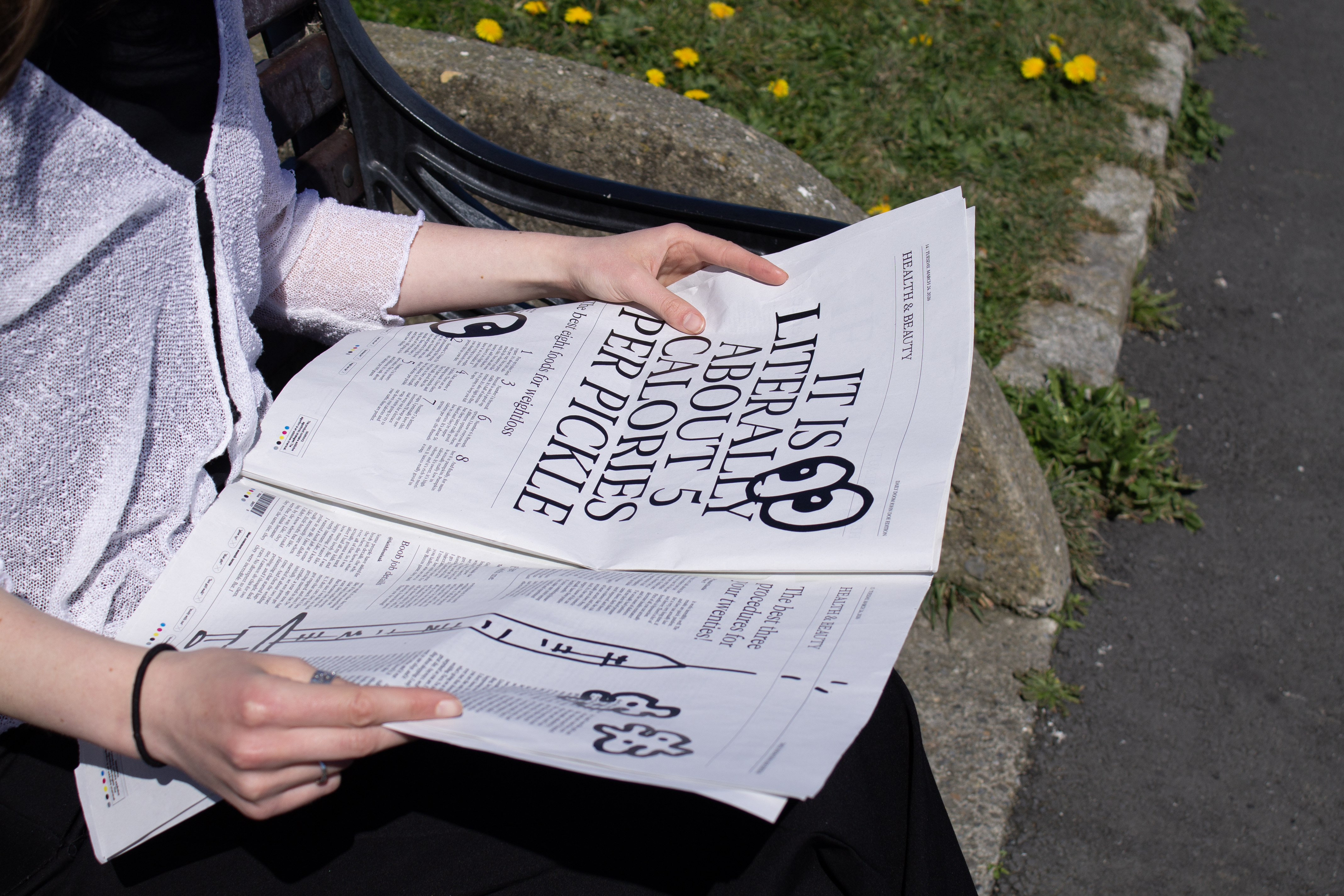
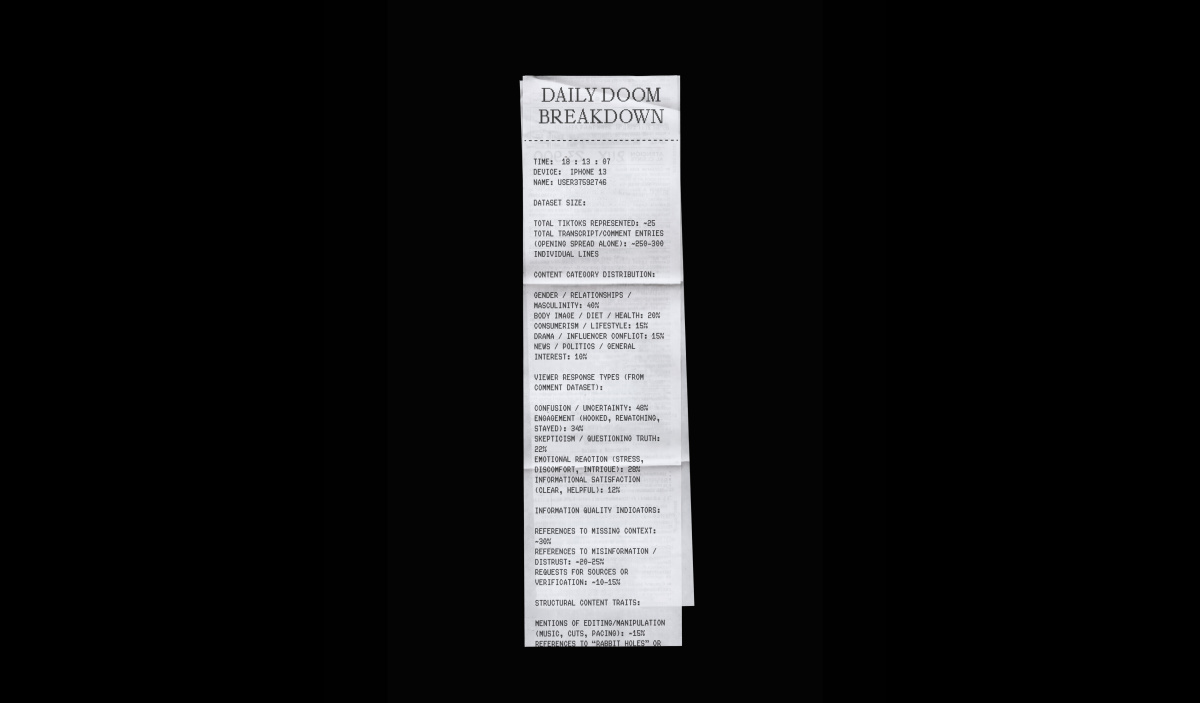
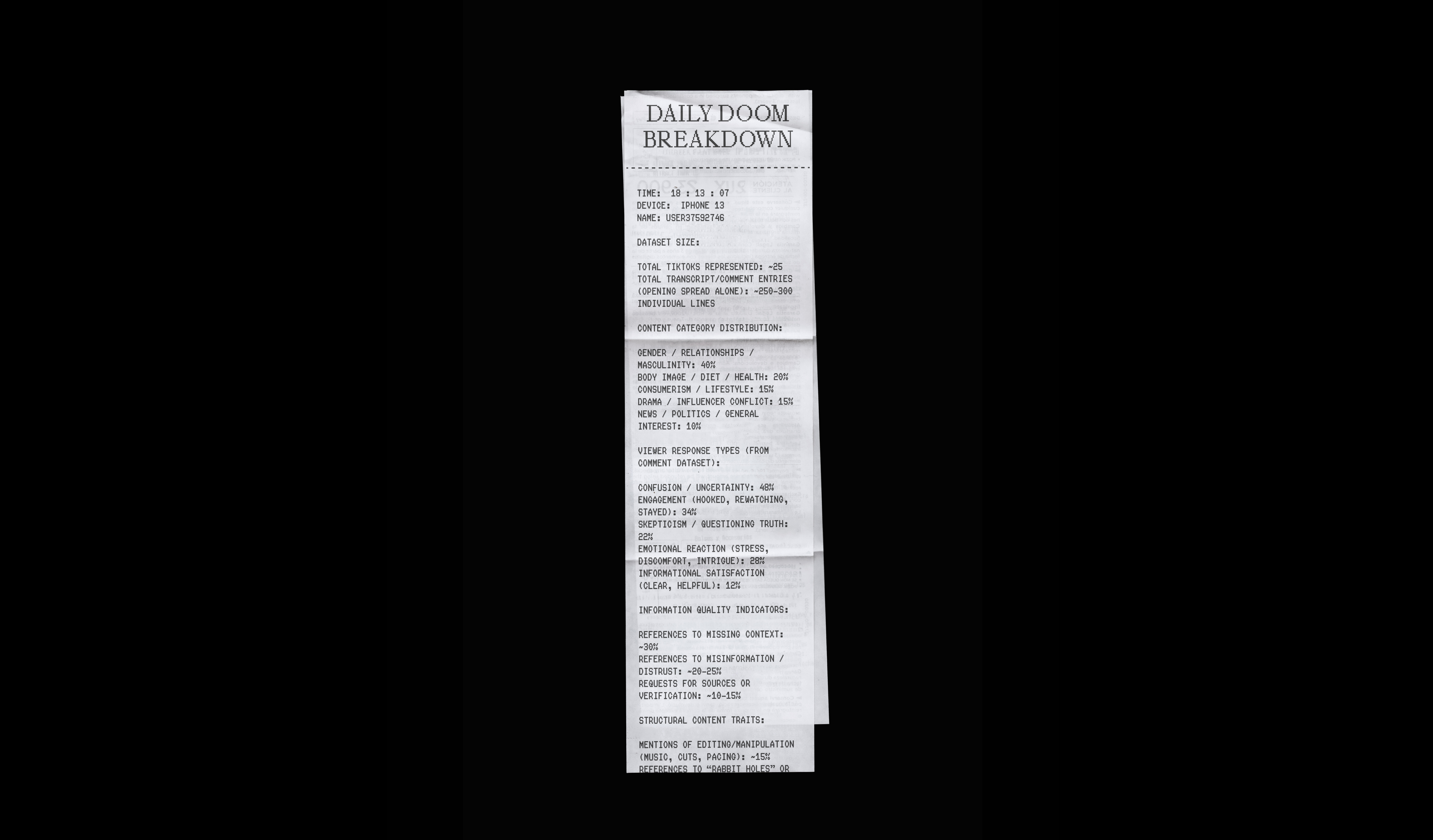
To expose the hidden mechanics of digital platforms by slowing down the fast experience of scrolling online by reimagining it in a physical form. Help phone users notice how strange or extreme social media content can seem when it is taken out of the endless feed. Connect ideas from UX design with a simple public awareness campaign that anyone can engage with. Encourage people to feel more in control of their scrolling once they understand how the system works behind it.
Feeds feel engaging because of autoplay, infinite scroll, and algorithmic stacking. Without these systems, content feels empty and absurd. I translated a five-minute scroll into physical form through The Daily Doom publication: a newspaper made from TikTok transcripts, a receipt breaking down harmful statistics from the scroll, and a double-sided poster explaining UX scrolling strategies. The accompanying website explores how engagement tactics are used to encourage app dependency. Together, the campaign plays with the absurdity of physically consuming social media feeds.
The fitness world has always been heavily commodified, with endorsement, consumption, and advertising tactics. Fitness culture during the 1980s and today remains a significant part of our society. My thesis explores the aesthetics and the hidden status behind fitness, whether for performance or conspicuous consumption. Naturally, commodification evolves as consumers' wants and needs change to reflect society. The VHS era of the 1980s democratised fitness for women, allowing them the ease of working out at home. However, today’s Pilates-inspired world and online space are built on elitism and exclusivity, which many cannot attain. Instead, they often simply consume conspicuously on platforms such as TikTok. This raises the question: are many people online genuinely working out and attending exercise classes, or are they just wearing the uniform and living the expensive lifestyle associated with fitness to create aspiration for viewers?
Hello, I’m Jen! I’m a Dublin-based designer with a passion for typography, print, and pushing ideas across different media. I’m also drawn to art direction and creating work that provokes thought and conversation. Real-world commentary and current issues are the starting point for my personal projects, whether absurd or serious. The combination of a foundation at IADT and experience in diverse design environments, such as Erasmus and international workshops, has broadened my skill set both professionally and personally. Now, I’m eager to bring my ideas and interests into the real world and continue learning as much as possible!