Robin Dennis
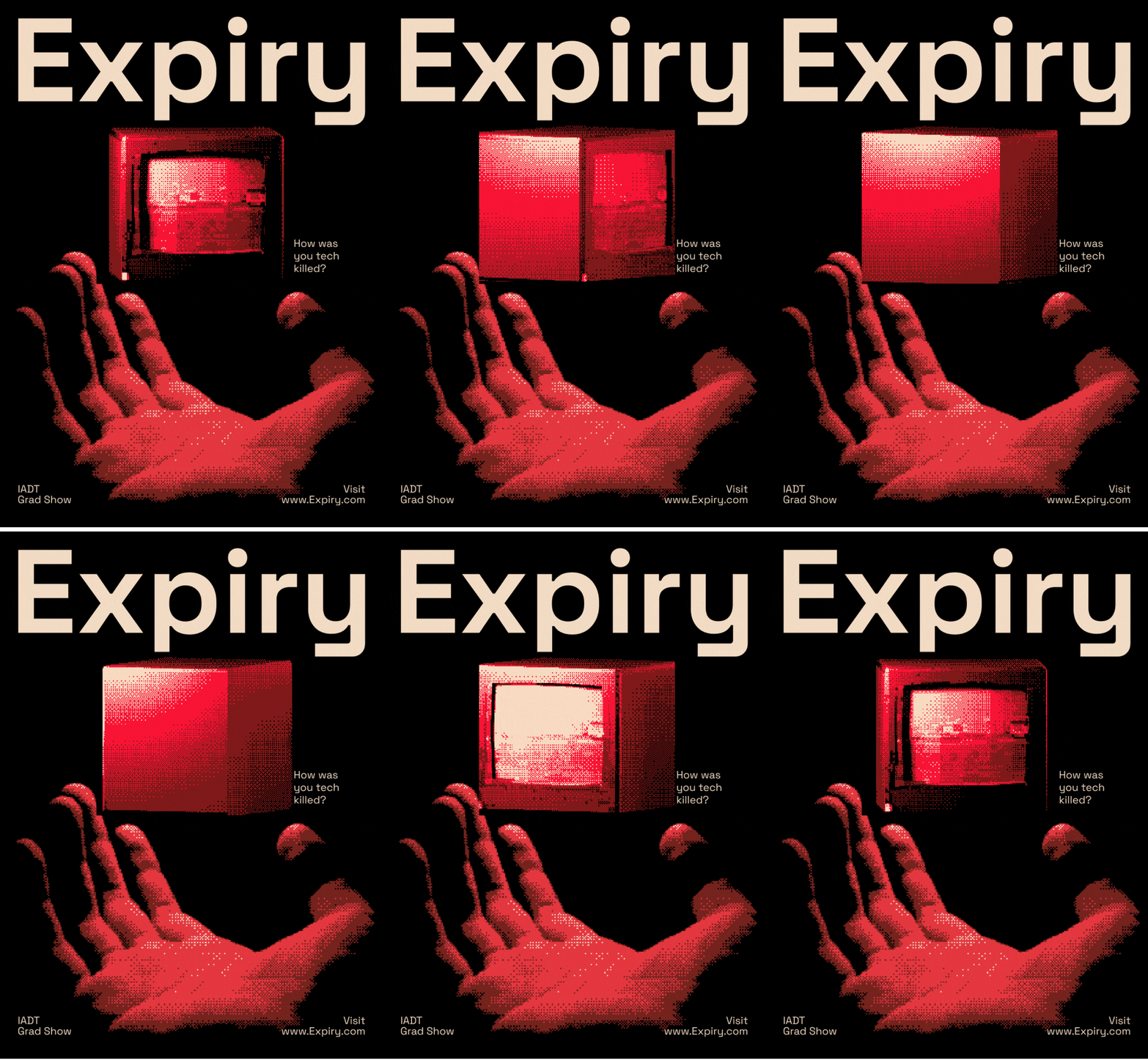
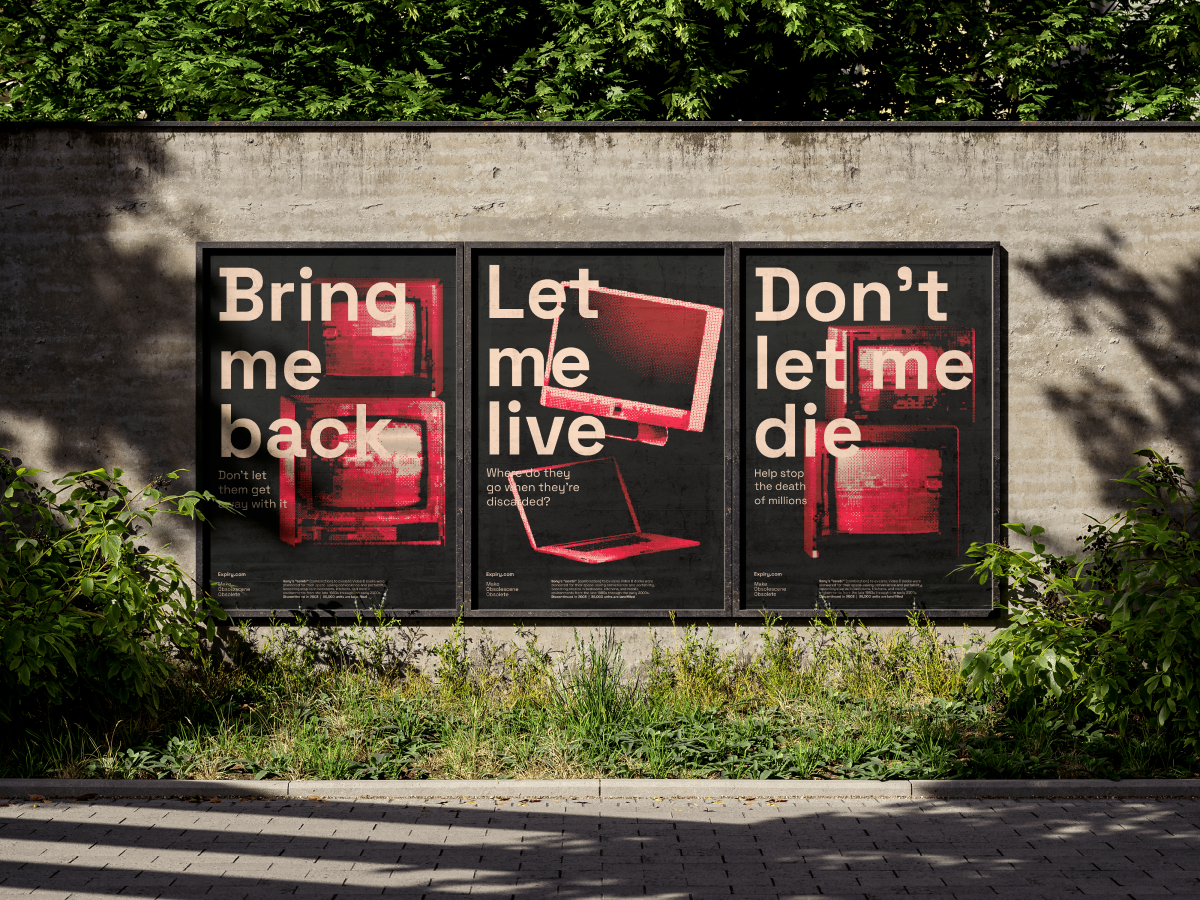
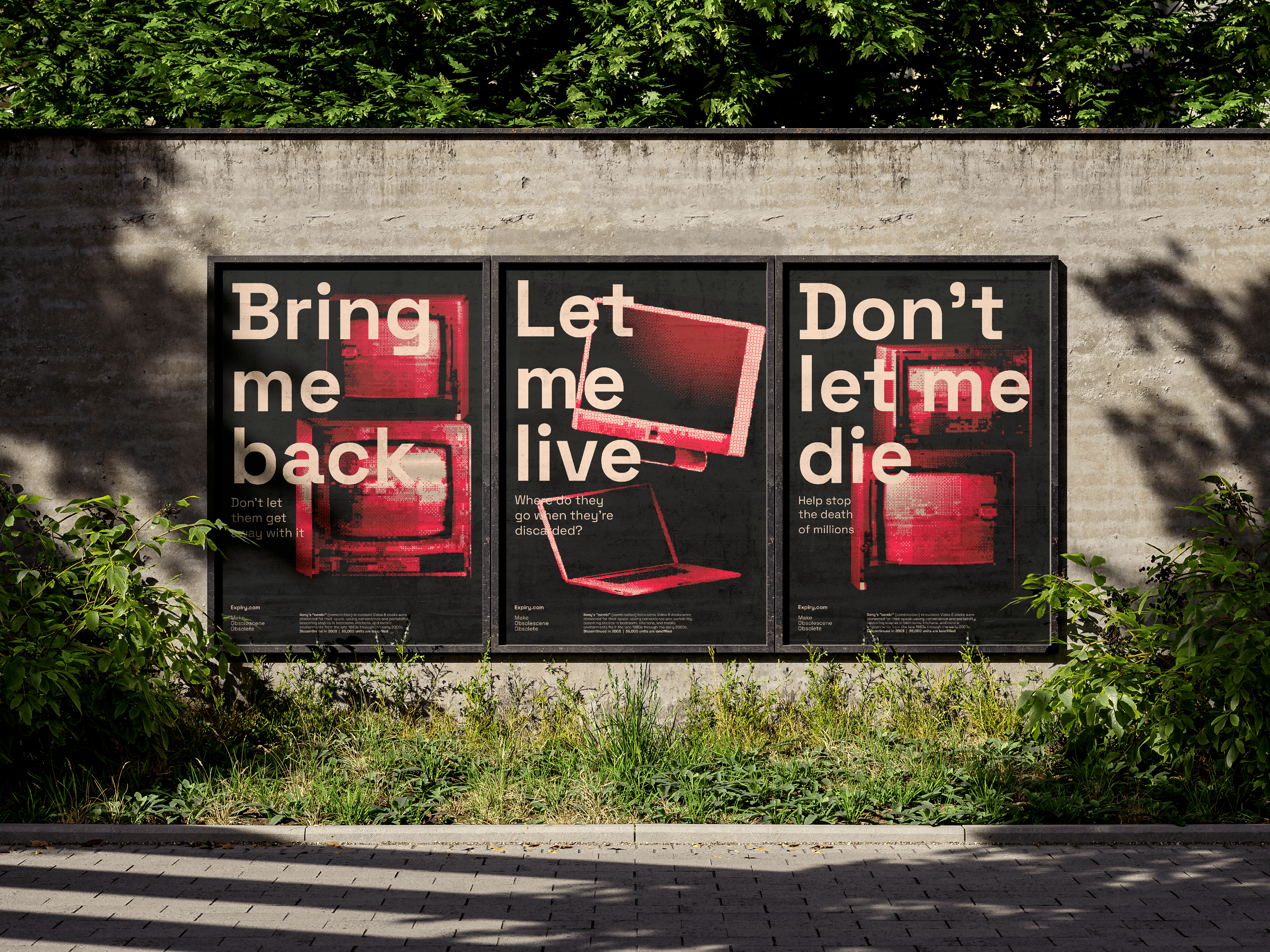
Expiry is a campaign to raise awareness of planned obsolescence. Primarily focused on tech companies, it fights against these practices by spreading information and creating avenues to oppose practices that harm both consumers and the planet.
The EU is implementing the ‘Right to Repair’ law in 2027. This project concept supports and complements the new law by highlighting that products cannot be fixed if the models are considered obsolete by the company, and petitions to the EU for support. On top of this, only 17% of all tech products are recycled properly. As waste becomes a larger issue, we need to hold the companies that are creating this accountable, as they are intentionally making products difficult to repair.


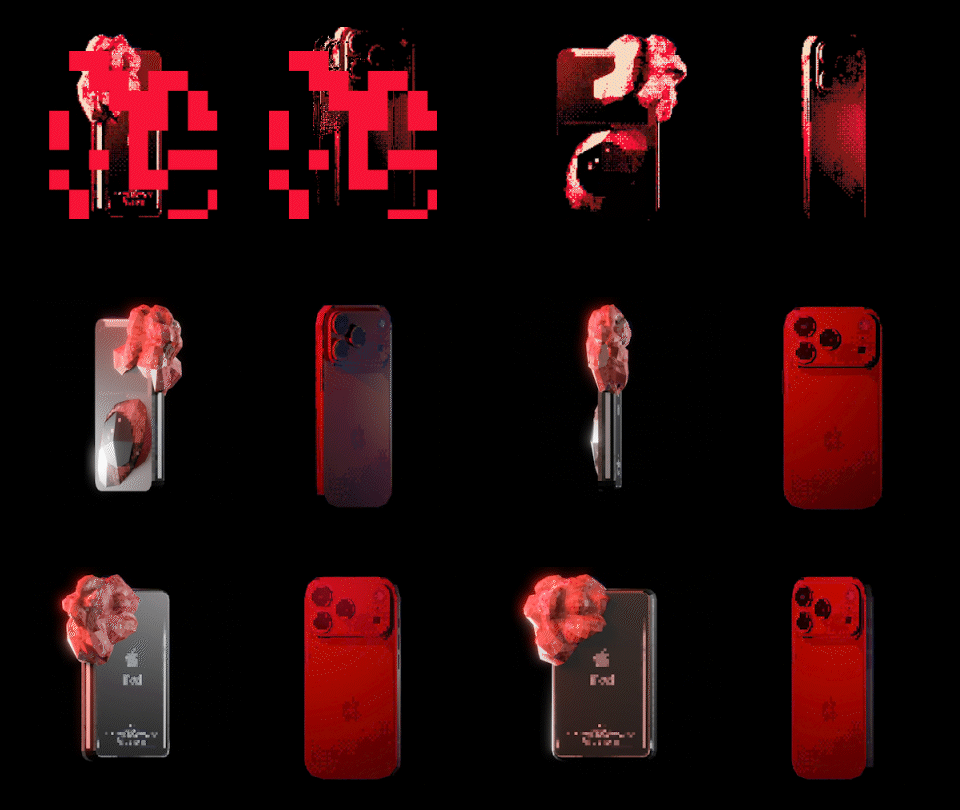


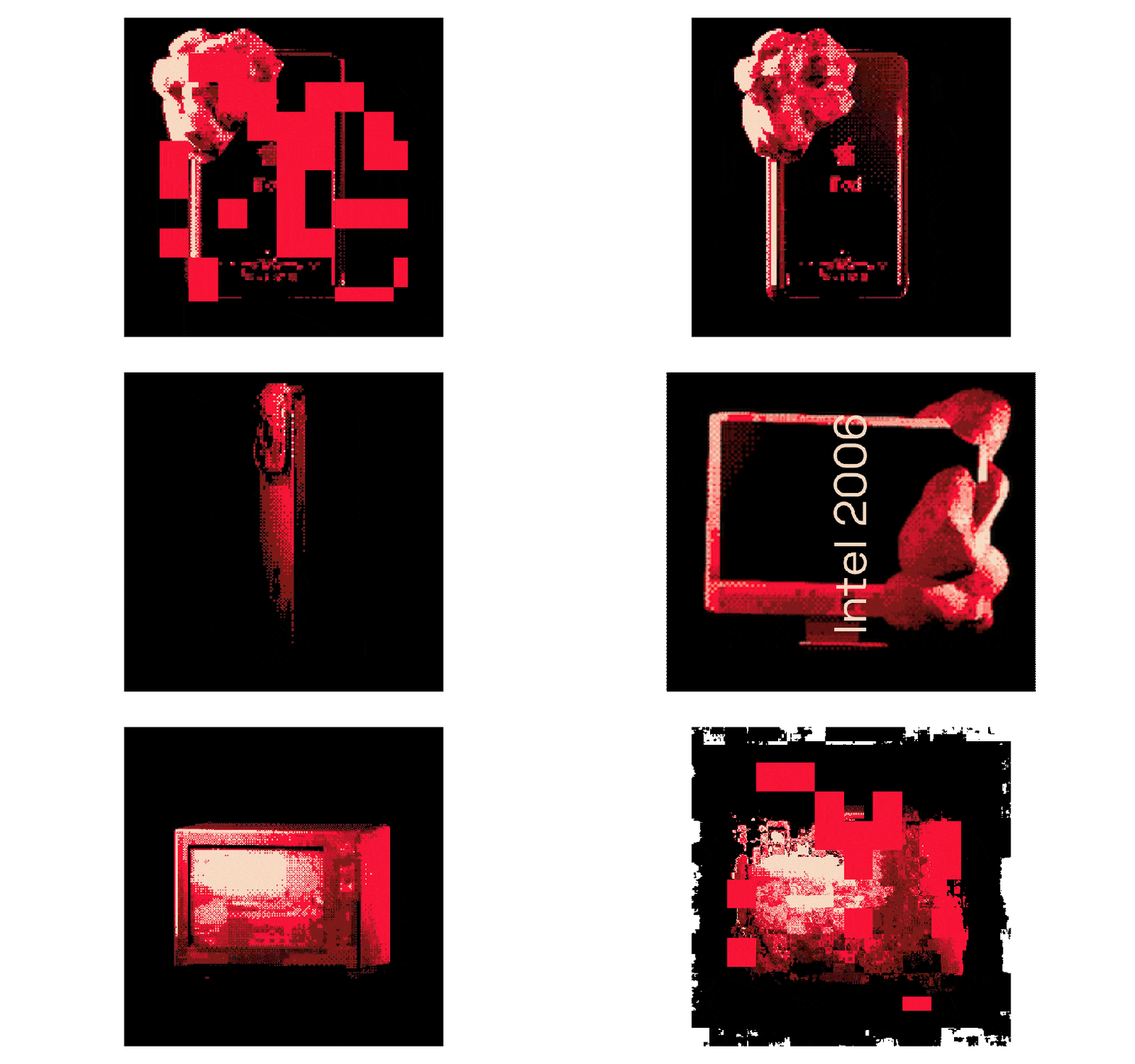
For companies to be held accountable for making products difficult to repair, spot supporting products early into their lifespans and creating more waste that will not be recycled.
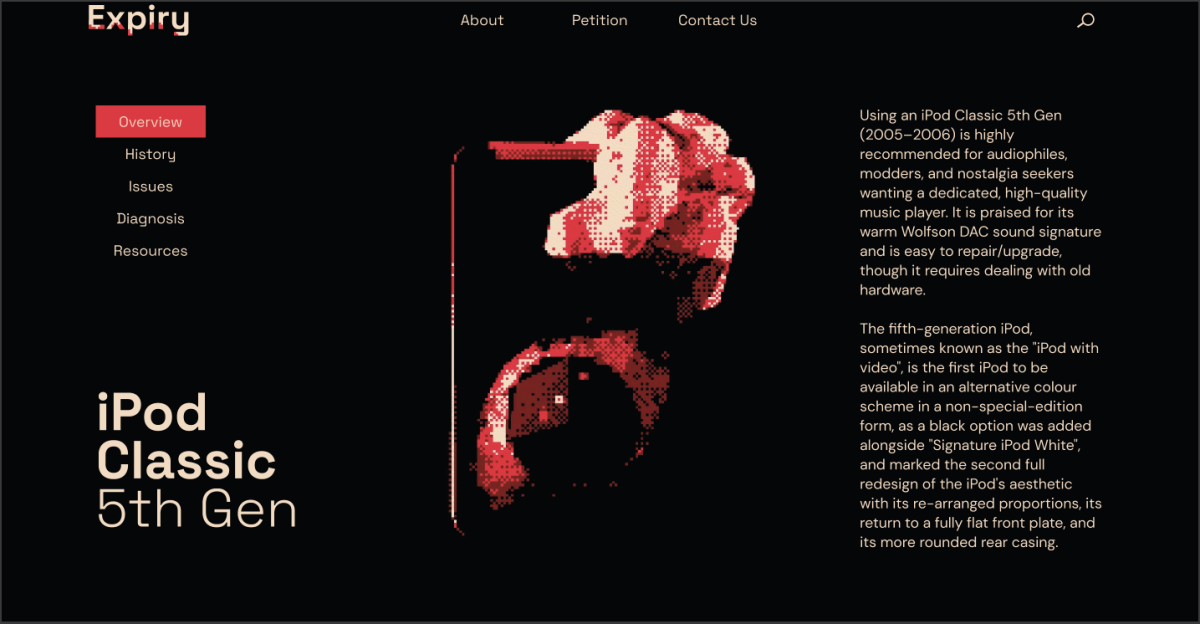
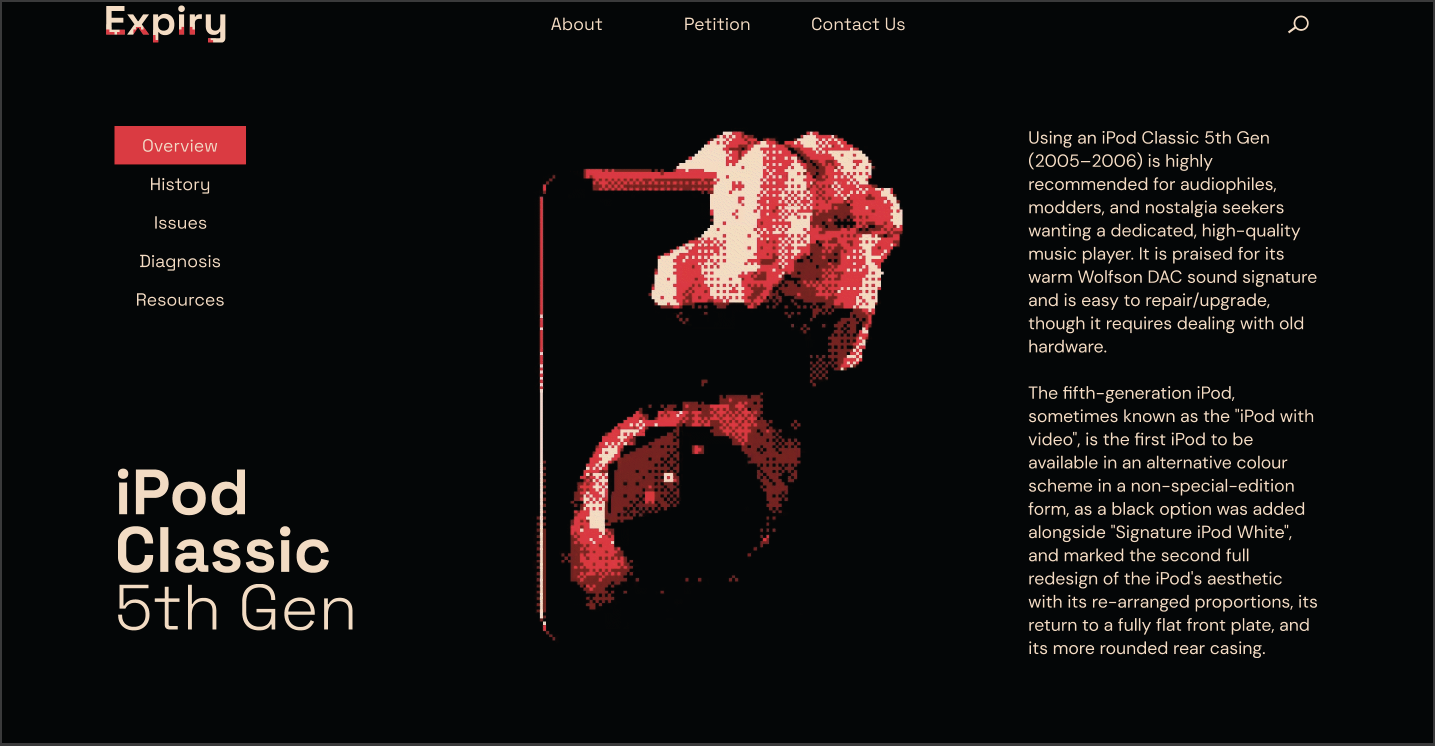
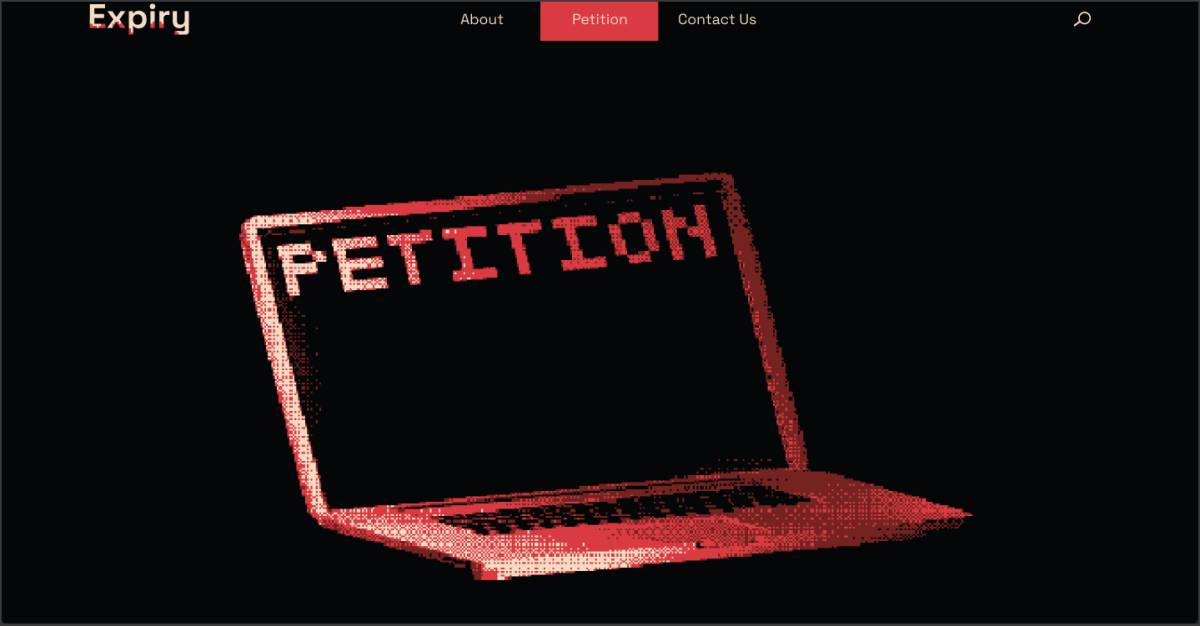
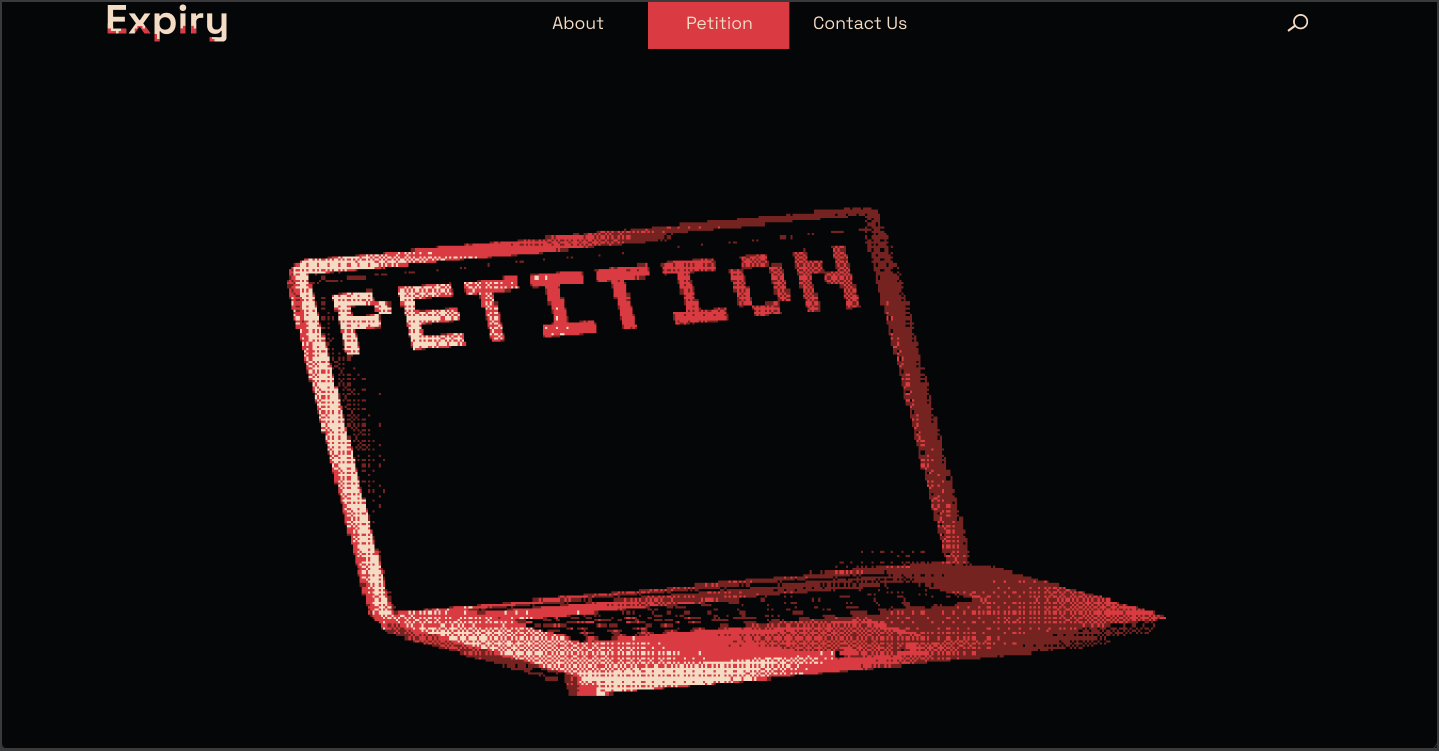
I created a website that documents tech products that have and will become obsolete. You can view how they broke down and resources for using these products. The website has a petition page for the EU to require companies to clearly declare a minimum lifetime for their products, guaranteeing support for products, and allowing consumers to know how long they will have the product.
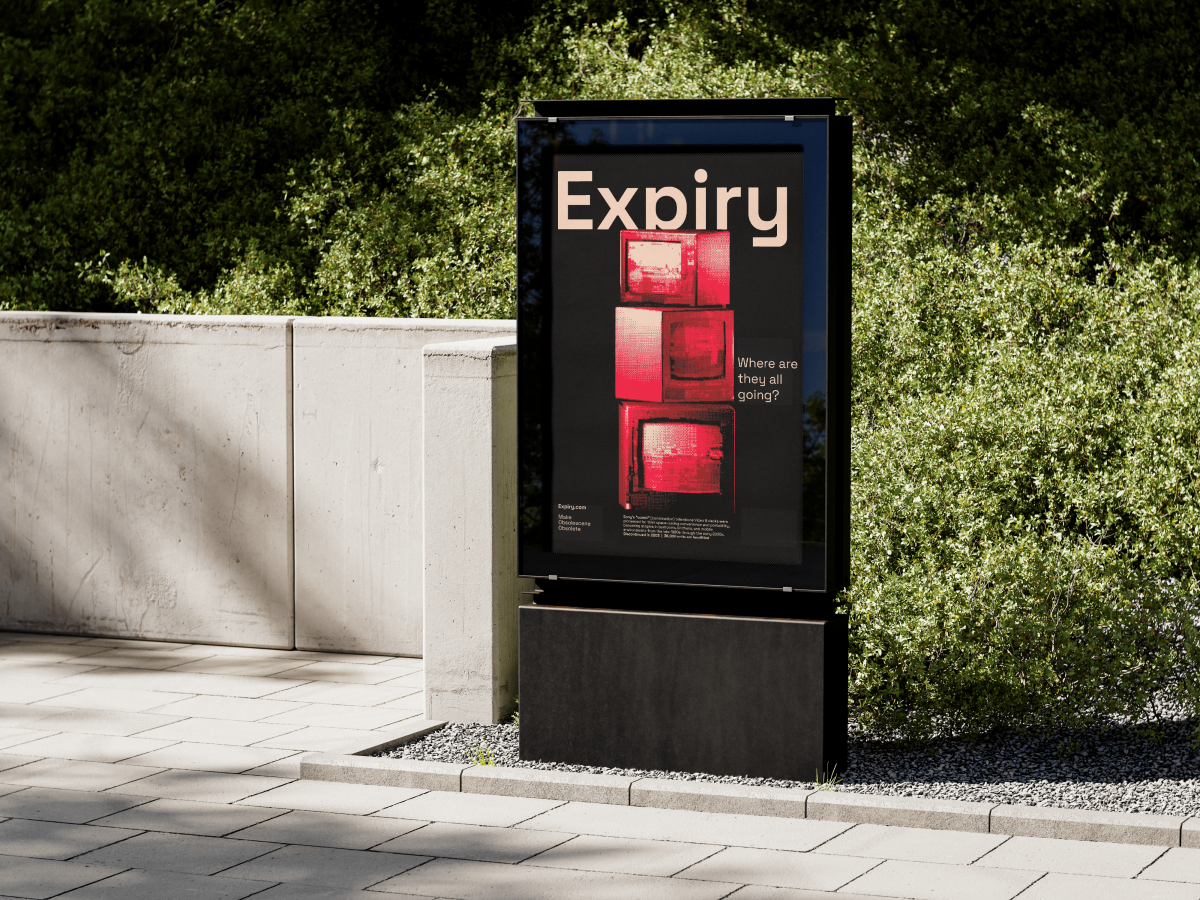
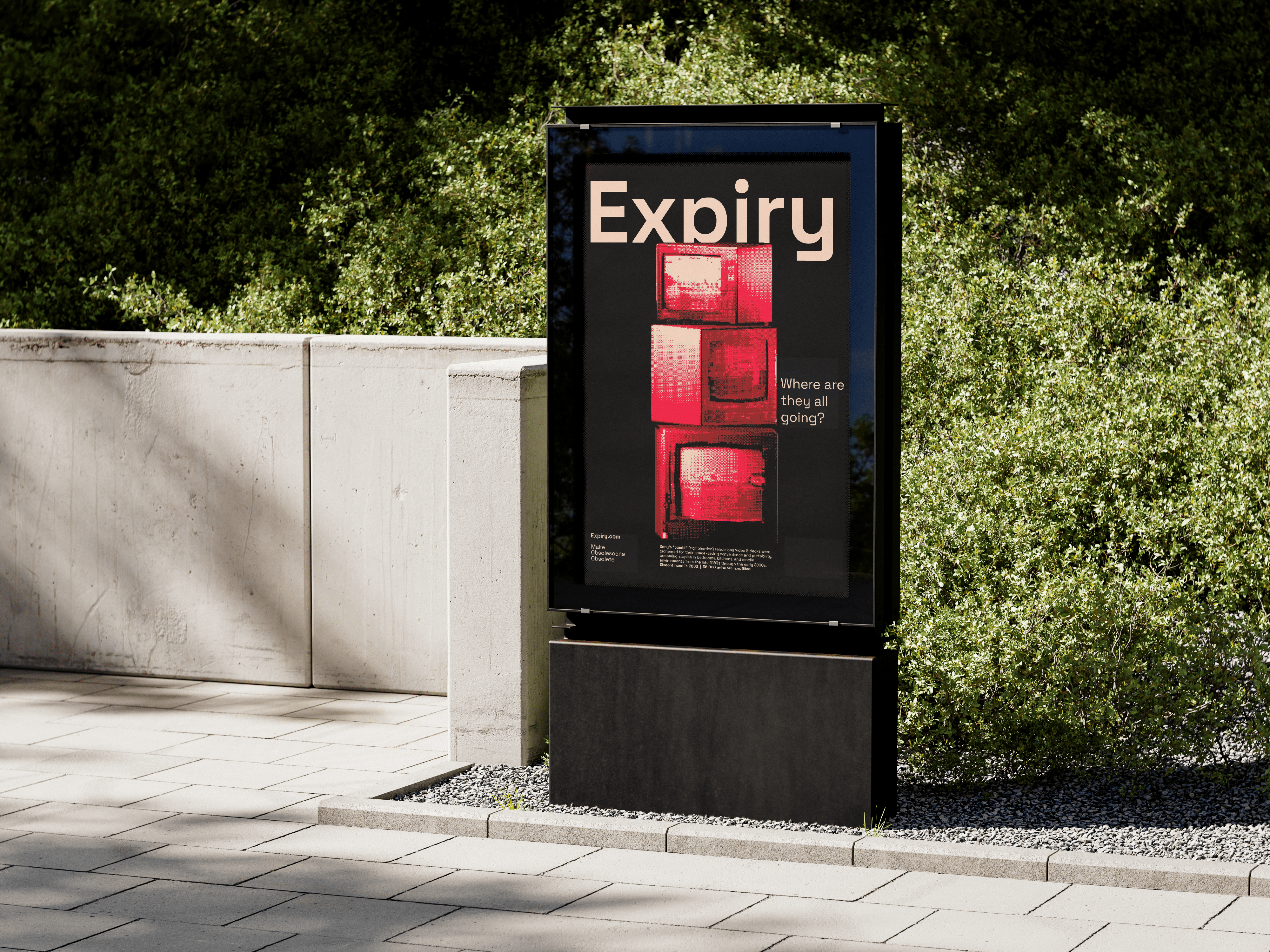
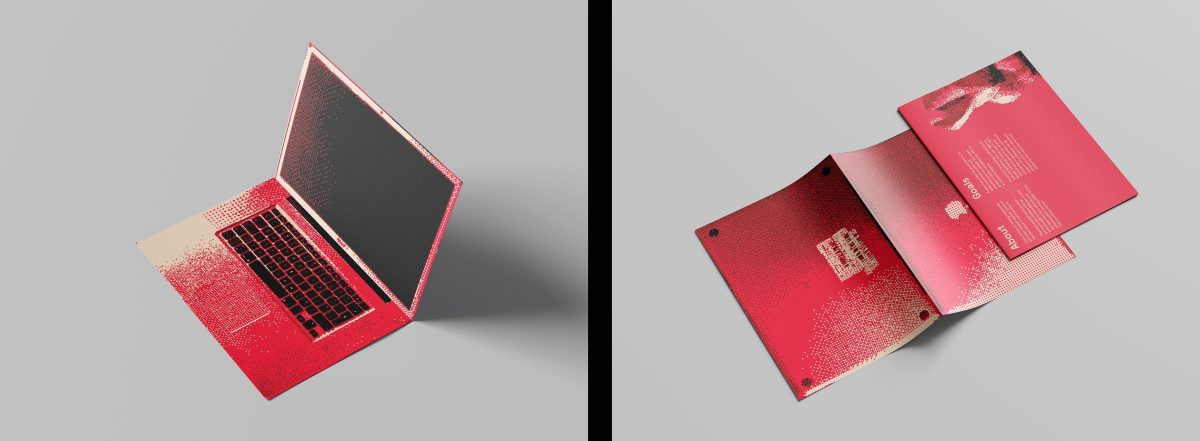
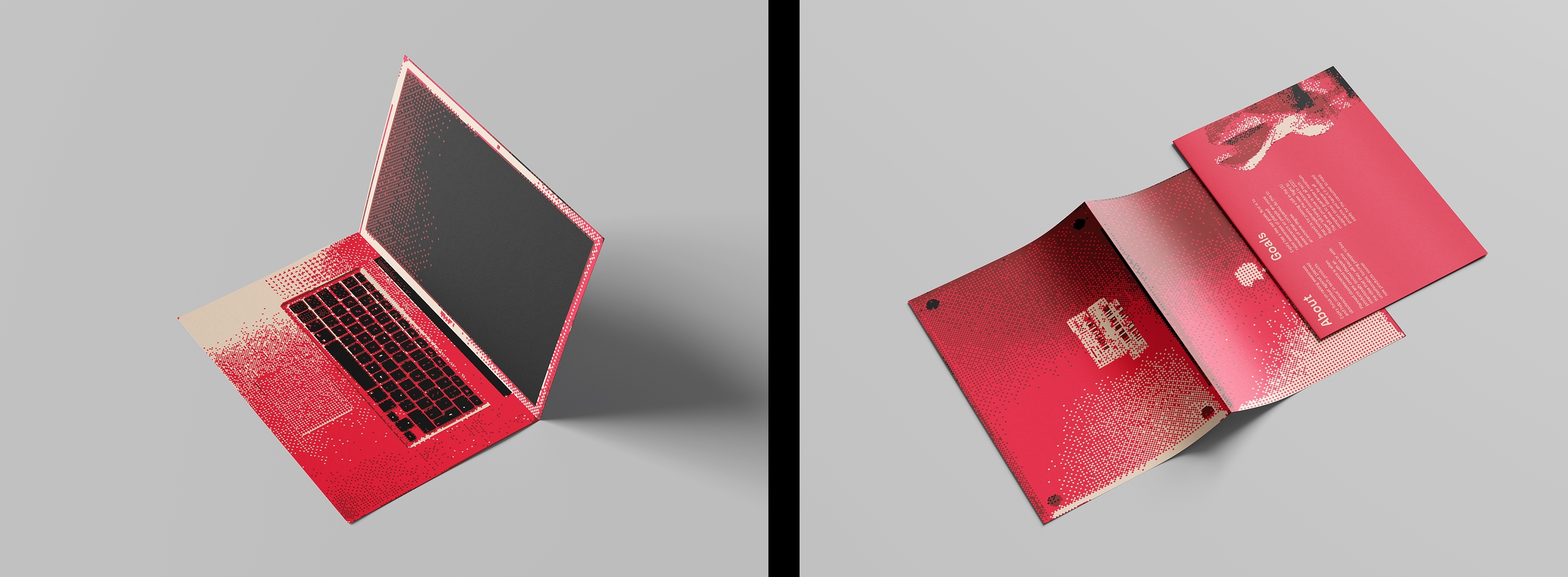
To supplement the website, I created a campaign to raise awareness of planned obsolescence and to advertise the website and petition. I created stickers and bands as a proof of concept of what the guarantee on the products could look like. Finally, I created a small booklet you could read about planned obsolescence and how you can help stop it, turning into a small dithered laptop as an artefact people can take home.
I learned so much making this project, from 3d modelling and texturing to website building. I really wanted to challenge myself for my final project, and I definitely felt like I challenged myself, alright, but I'm happy with the vibes and the outcome!
Buying online goods has become commonplace around the world, even buying goods online that have no physical value. These would include in-game items in many video games. If these items have no real-world value, why is so much money spent on them, and what lengths would people go to acquire them? Many video games offer online goods such as these not directly, but using pseudo-gambling techniques and multiple levels of currency to obscure real prices. Within the framework of gaming, how far can it go before it becomes a serious problem, and how far will the companies go to gain more capital and keep players hooked for longer? Even introducing children to gambling in the form of lootboxes, crates, rolls, etc. In this thesis, I will explore how the lines blur between gambling and gaming, showing what gaming took from gambling and vice versa, using design decisions to scrape even more money and playtime out of their players.
Hey, I'm Robin! A graphic designer from Dublin. I love utilising design to create moving concepts and immersive worlds, using design to put ideas into reality. I'm particularly interested in motion design, 3d modelling and physical design. I love learning new skills and applying them in interesting, satisfying ways. I'm excited to keep learning, developing and using my skills in design to make some pretty cool stuff.