Lauren Mckeever
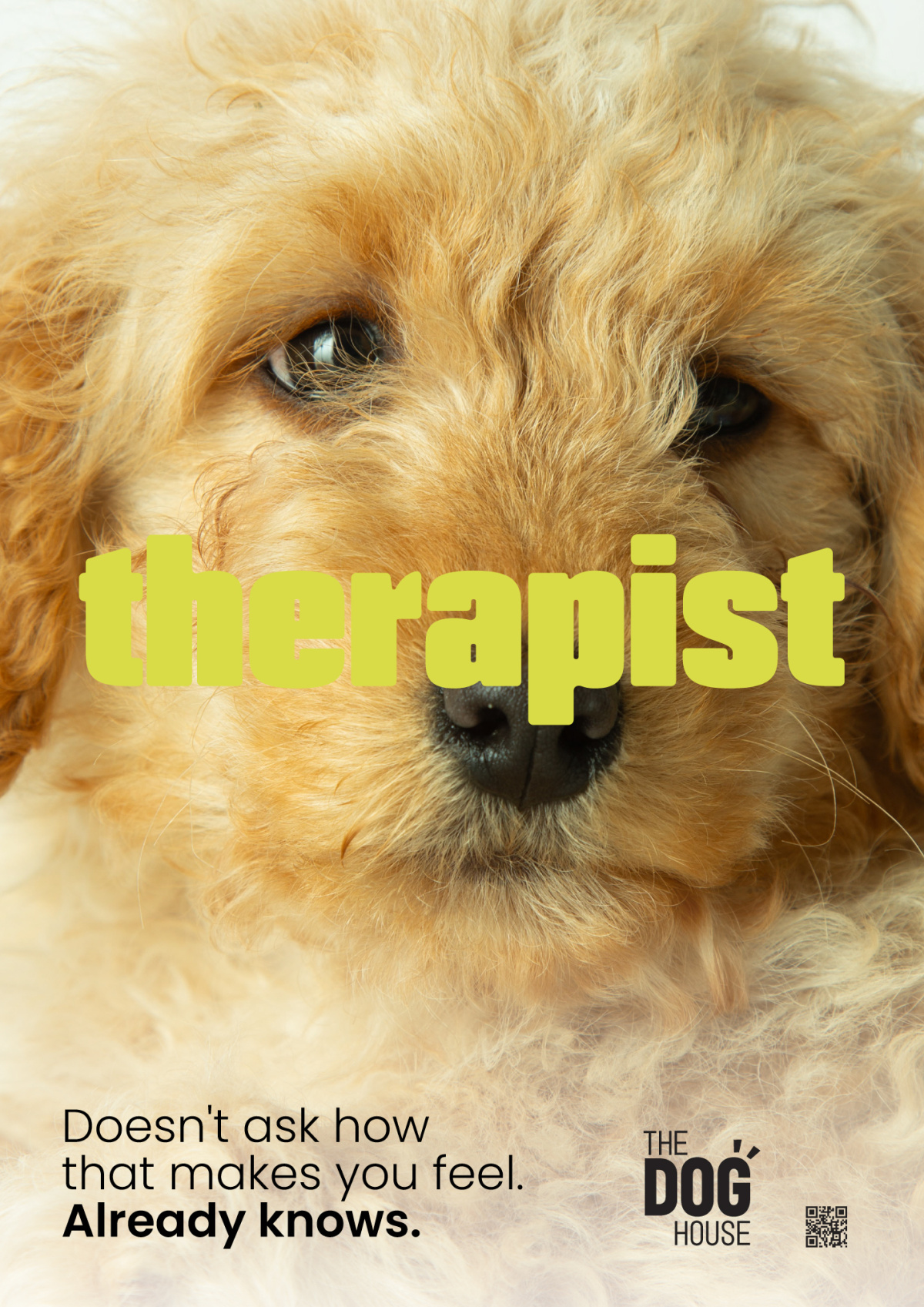
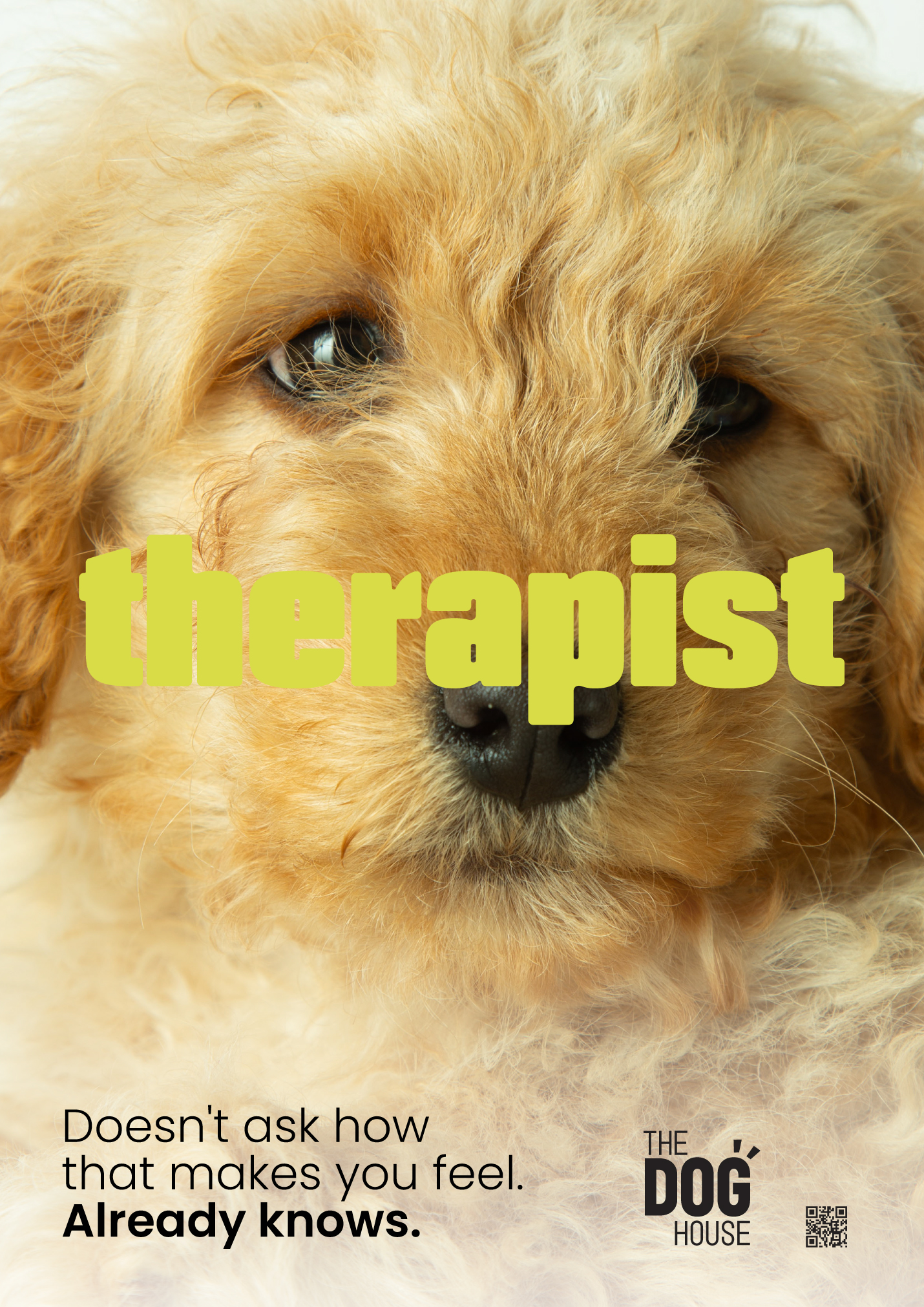
The Dog House is a socially-led service and campaign exploring the emotional role dogs play in people’s lives and how access to them could become more widely available.
Developed through research into emotional wellbeing, and the relationship between humans and dogs, the project creates opportunities for people to spend time with trained dogs.
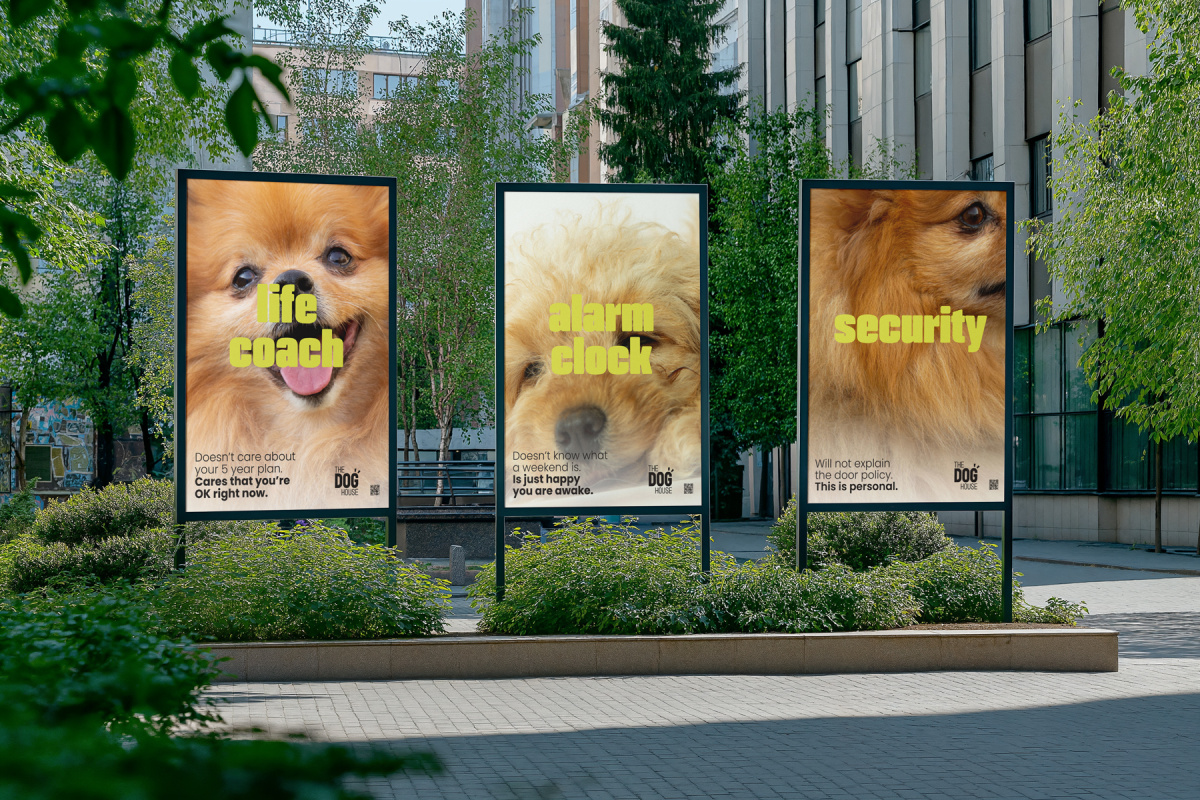
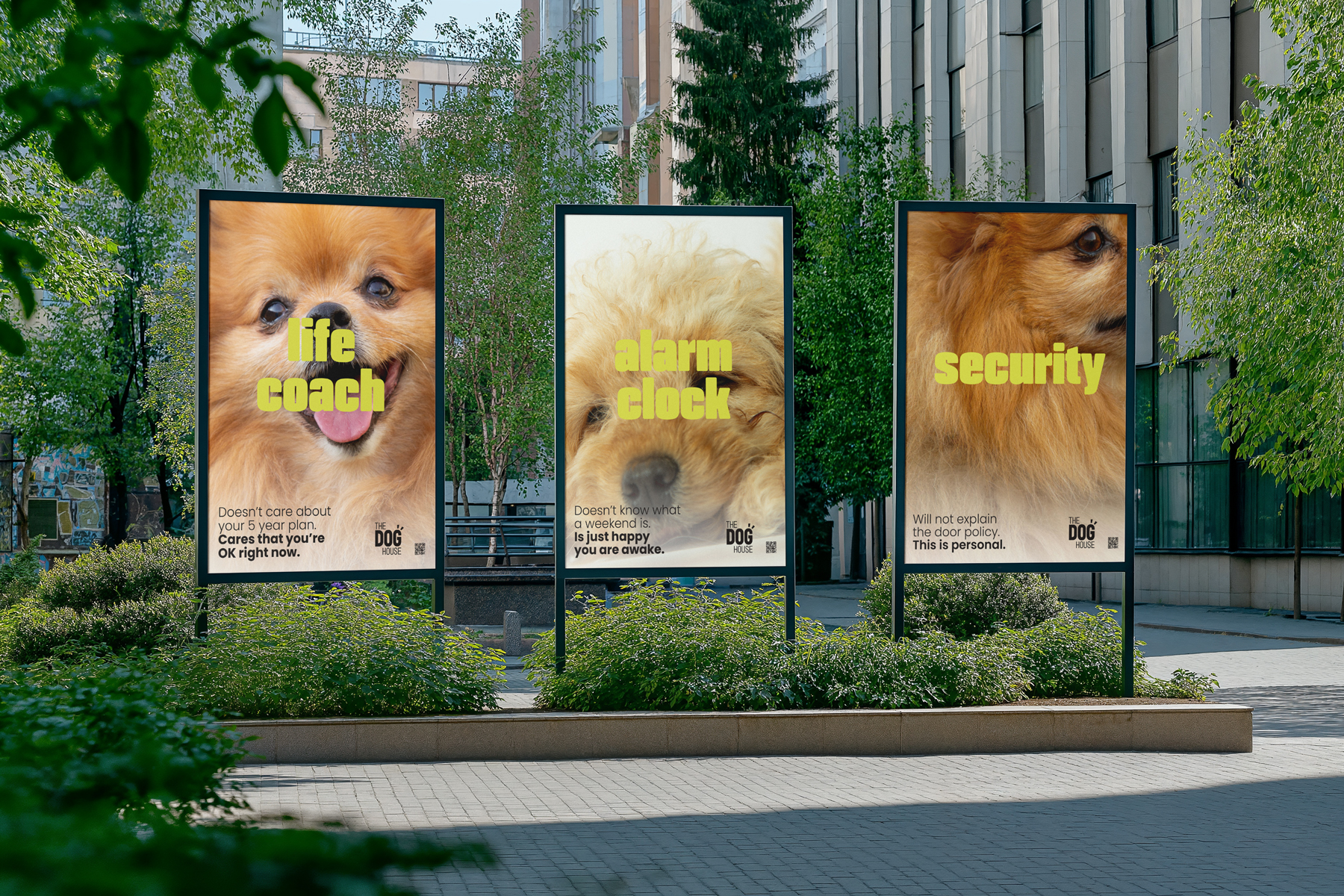
Alongside the service, the campaign highlights the everyday good dogs bring to people’s lives, repositioning them not only as pets, but as sources of companionship, comfort, and joy. Through branding, campaign design, editorial publication, and service design, The Dog House creates an approachable alternative to traditional wellbeing support.
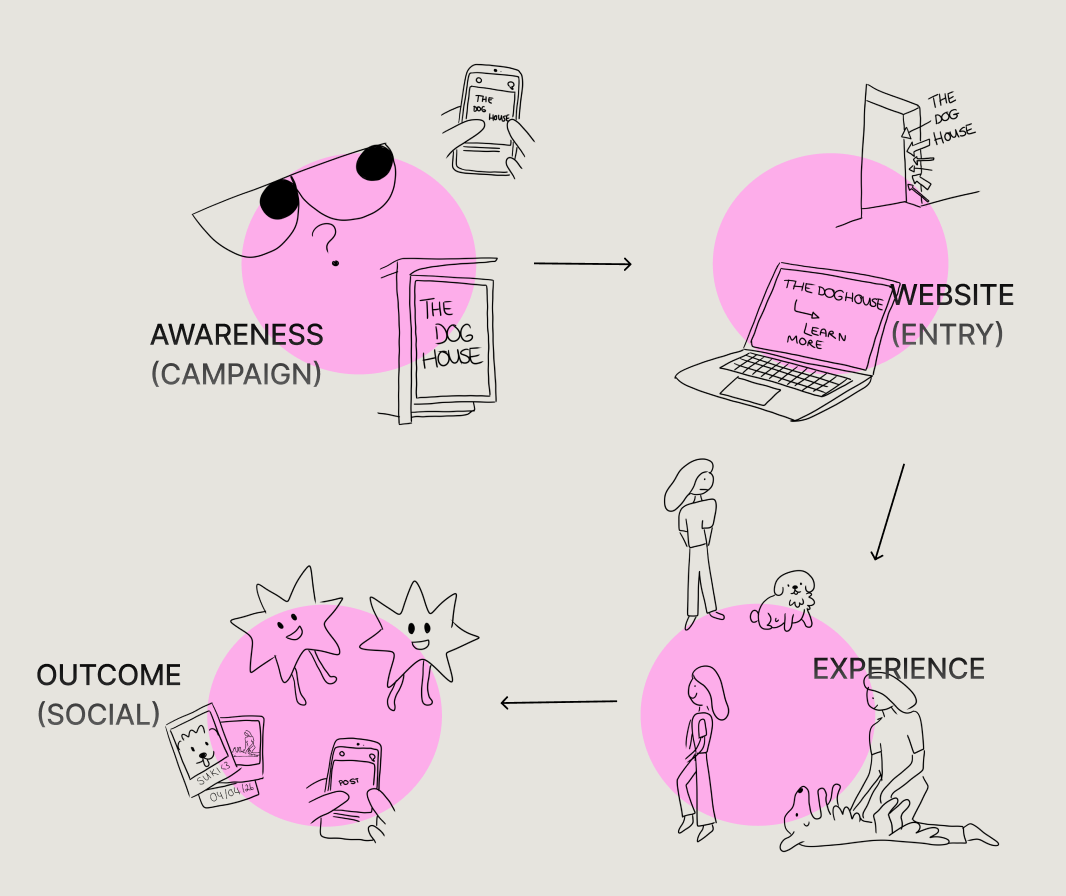
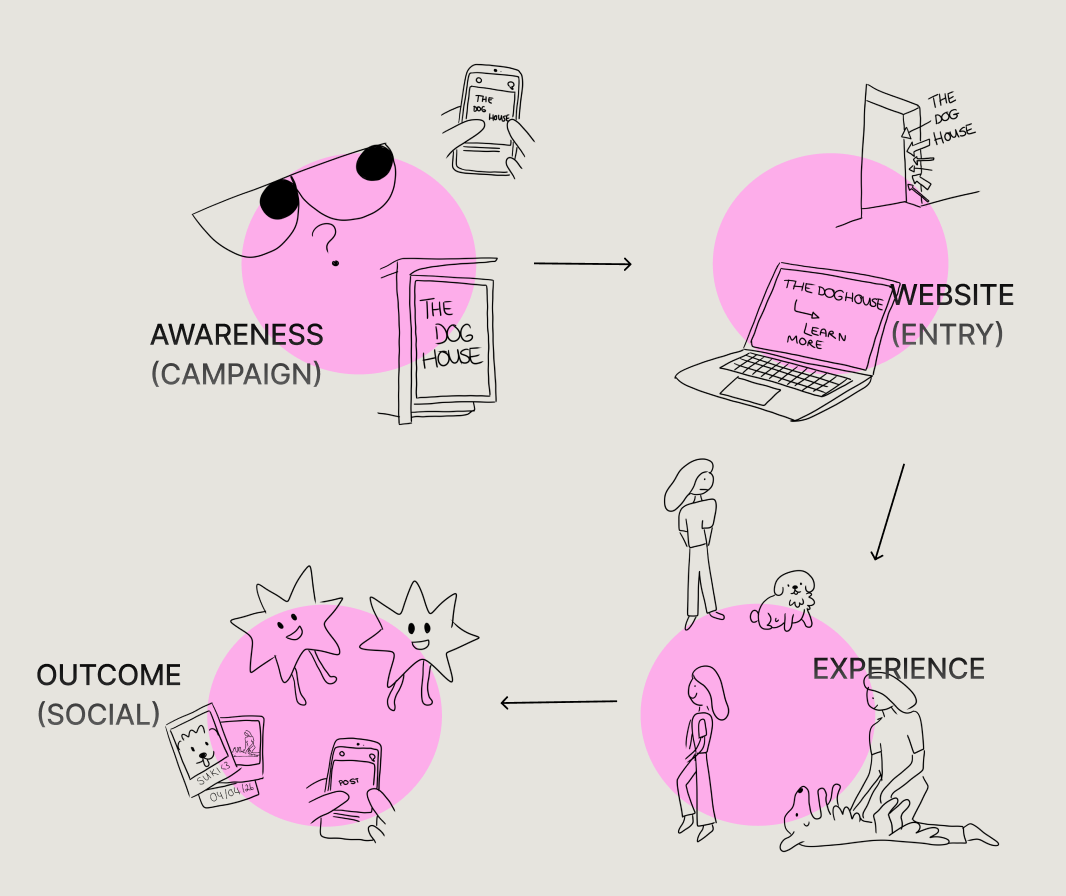
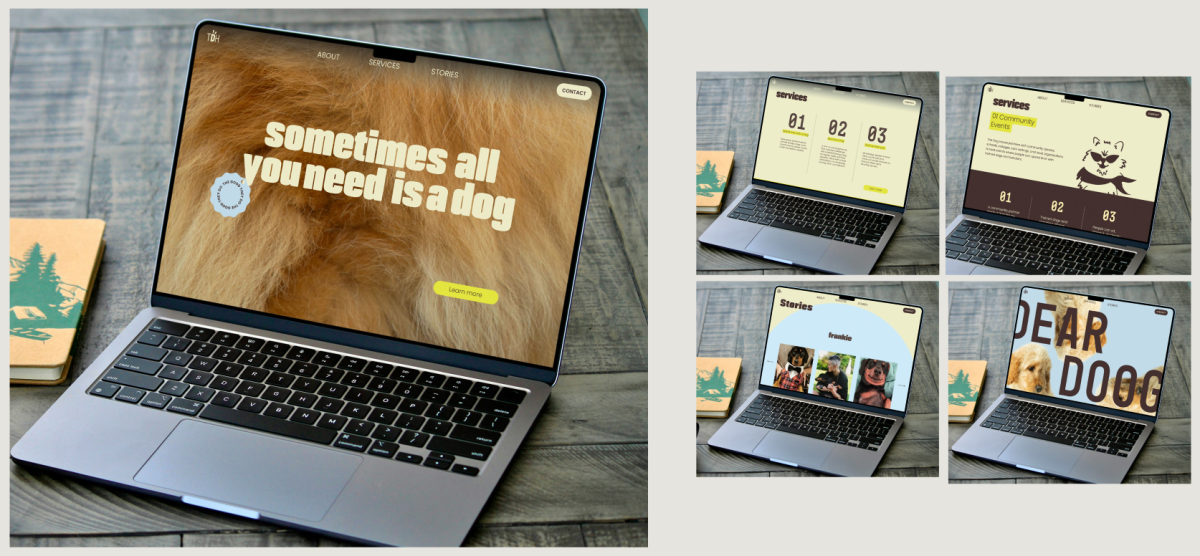
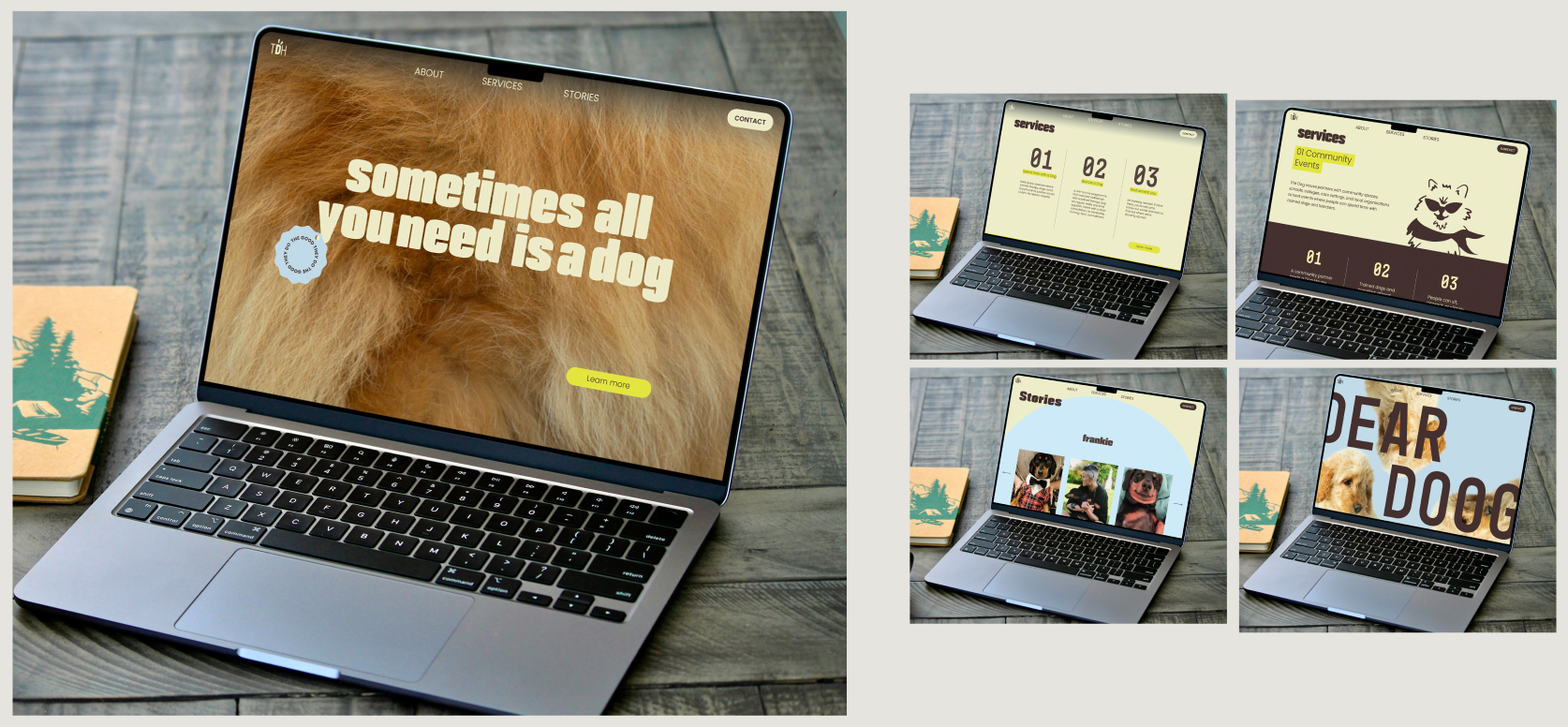
My main objectives in this project were to explore the benefits dogs can bring to people’s everyday lives, and how those experiences could become more accessible to people who may not be able to own a dog themselves.
I wanted to create something simple and approachable that could encourage people to step away from screens and experience small moments of connection through interaction with dogs.
To achieve this, I aimed to create a socially-led campaign and service that felt human, emotionally engaging, and grounded in real experiences, while also highlighting the positive role dogs can play within everyday life.
What if there was a simple way for people experiencing stress, loneliness, or anxiety to access the emotional benefits dogs can bring? The Dog House is an initiative designed to create small moments of joy through interactions with dogs.
The project was developed as a response to growing reports of people feeling overwhelmed with stress on a daily basis, the final outcomes include a public and social campaign highlighting the emotional and everyday role dogs play in people’s lives, a service model centred around access to dogs, a website promoting community engagement and participation, and an editorial publication combining research and emotional insights. Together, these outcomes aim to create a more approachable and human-centred form of emotional support through simple interactions.
Research indicates a regressive shift in gender attitudes among Gen Z men, with a growing proportion adopting more traditional and conservative views on gender. This thesis argues that algorithmic platforms do not create misogynistic attitudes in isolation but inherit a visual language from advertising that has normalised the objectification of women for over a century. Within an Irish context, this dynamic intersects with the social pressures facing young men, creating a receptivity to content that packages gendered ideology inside self-improvement and aspirational identity. Through analysis of advertising techniques, examination of platform dynamics and Irish attitude and violence data, this thesis demonstrates how everyday visual culture contributes to shaping perceptions of women and creates conditions where inequality and violence become more tolerable.
Hi, I’m Lauren! I’m a Dublin-based designer interested in creating bold, socially-led design that sparks conversation. My work focuses on combining research, strategy, and visual storytelling to explore complex topics in a way that feels engaging and human.
I’m particularly interested in research, strategy, branding, and editorial design, and enjoy approaching projects through unconventional thinking. I’m eager to learn new skills and explore how design can be used as a tool for connection, awareness, and positive social impact.
During my time at IADT, I was involved in creating the “Art for Alzheimer’s” initiative and spent 6 months working at Good as Gold.